

Emergency & Help
24/7 Emergency & General Advisory
🚨 24/7 Medical Emergency
Non-Emergency Advisory
10:00 AM – 6:00 PM, Mon–Sat
For appointments & general queries.
24/7 Emergency & General Advisory
🚨 24/7 Medical Emergency
Non-Emergency Advisory
10:00 AM – 6:00 PM, Mon–Sat
For appointments & general queries.
Journaling is more than a wellness trend — it's a scientifically validated tool for emotional processing, stress reduction, and psychological clarity. The evidence base, built over decades, reveals why putting pen to paper has such measurable effects on mental health
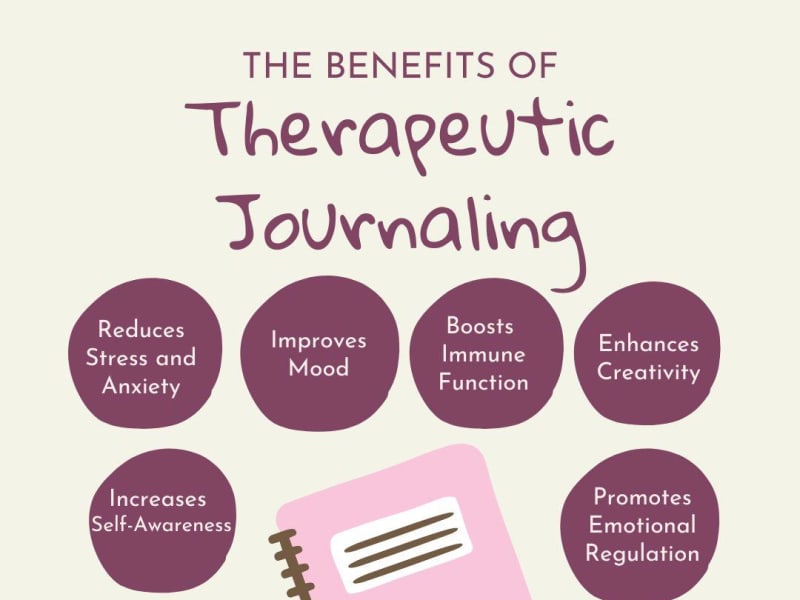
Journaling is one of the most evidence-supported self-help practices for mental health. Here's what the science says about how, why, and what to write.
Journaling occupies an interesting position in the wellness landscape — universally recommended yet rarely explained in mechanistic terms. Why exactly does writing in a journal improve mental health? The answer lies in decades of rigorous research, beginning with James Pennebaker's seminal studies in the 1980s and continuing through contemporary clinical trials testing journaling across anxiety, depression, PTSD, and chronic illness. The mental health benefits of journaling are real, specific, and surprisingly robust.
James Pennebaker, a social psychologist at the University of Texas, conducted the foundational research establishing expressive writing as a therapeutic intervention. In his classic protocol, participants wrote for 15–20 minutes on three to four consecutive days about their deepest thoughts and feelings regarding a personally traumatic or stressful event. Control groups wrote about neutral topics. Results across dozens of studies showed that expressive writing produced:
Reduced physician visits and improved immune function (measured by T-lymphocyte response)
Improved mood and reduced intrusive thinking about distressing events
Better working memory performance
Improved academic performance in college students
Faster return to work following job loss
The mechanism Pennebaker proposed — and subsequent neuroscience has supported — is inhibition theory: suppressing thoughts, emotions, and experiences requires chronic physiological effort. Writing provides a structured pathway to process and integrate these experiences, reducing the biological burden of suppression.
The evidence base has expanded significantly since Pennebaker's early work:
A 2018 study in JMIR Mental Health found that online expressive writing reduced depression and anxiety symptoms in adults with elevated psychological distress, with gains maintained at six-week follow-up
Gratitude journaling (distinct from expressive writing) activates the medial prefrontal cortex, as discussed in neuroimaging research, producing neurological changes associated with enhanced mood and prosocial behaviour
Journaling about future events (prospective writing) helps manage anticipatory anxiety by externalising worry, allowing cognitive evaluation rather than emotional flooding
A meta-analysis by Frattaroli (2006) covering 146 randomised studies found consistent positive effects of expressive writing on psychological and physiological health outcomes
The research distinguishes between several journaling modalities:
Expressive writing: Processing traumatic or stressful experiences through narrative and emotional exploration. Most studied; strongest evidence for PTSD and health anxiety
Gratitude journaling: Specific, detailed documentation of things appreciated. Best evidence for mood enhancement and depression reduction
Cognitive journaling (thought records): CBT-based structured journaling for challenging negative automatic thoughts. Used therapeutically in depression and anxiety
Worry journaling: Scheduled writing of worries with problem-solving focus. Reduces generalised anxiety by containing and organising anxious ideation
Values journaling: Clarifying personal values and self-concept. Supports identity coherence and resilience during stressful periods
The research offers practical guidance: specificity is more effective than vague positivity; writing about emotions, not just events, produces better outcomes; consistency over three to four days matters more than session length; and paper-based journaling appears to engage deeper self-reflective processing than digital typing in some studies, though digital journals still produce benefits.
The mental health benefits of journaling are among the most consistently replicated in self-help research. With no cost, no prescription required, and evidence across anxiety, depression, trauma processing, and immune health, journaling deserves consideration as a genuine therapeutic tool. Begin with 15 minutes, three times per week, writing honestly about emotions and experiences — without editing, without performance.
1. How does journaling help mental health?
It helps process emotions, reduce stress, and improve mood by organizing thoughts.
2. What type of journaling is most effective?
Expressive writing and gratitude journaling have the strongest scientific support.
3. How often should you journal?
About 15–20 minutes, 3–4 times a week is effective.
Author: Doctar Team
Disclaimer: For more information contact Doctar Team
Visit Hospital
Near You

Could your daily coffee habit be protecting your brain? A massive 2026 study following more than 130,000 people for up to 43 years found that people who drank the most caffeinated coffee had an 18% lower risk of dementia. This piece breaks down what the study actually found, why decaf didn't show th
July 23, 2026
Seeking a migraine specialist in Uluberia? Discover where to find expert diagnosis and treatment for severe headaches. Get relief now.
May 20, 2026
Seeking a male fertility doctor in Jalpaiguri? Discover expert insights on male infertility, treatments, and how to find the right specialist.
May 20, 2026