

Emergency & Help
24/7 Emergency & General Advisory
🚨 24/7 Medical Emergency
Non-Emergency Advisory
10:00 AM – 6:00 PM, Mon–Sat
For appointments & general queries.
24/7 Emergency & General Advisory
🚨 24/7 Medical Emergency
Non-Emergency Advisory
10:00 AM – 6:00 PM, Mon–Sat
For appointments & general queries.
ADHD in adults is far more common — and far more frequently missed — than most people realise. The stereotypical presentation of a hyperactive child bears little resemblance to how ADHD often looks in adult women, professionals, and those who have masked the symptoms for decades. Here's what to lo
Adult ADHD is significantly underdiagnosed, particularly in women. Discover the often-missed signs and the most effective evidence-based coping strategies.
Attention Deficit Hyperactivity Disorder is not a childhood condition that resolves with age. Approximately 60–70% of children diagnosed with ADHD continue to experience clinically significant symptoms in adulthood, and a substantial proportion of adults — estimated at 4–5% of the global population — have ADHD that was never diagnosed. The gap between prevalence and diagnosis is widest for adult women, for high-achieving individuals who have developed compensatory strategies, and for those whose ADHD presents primarily as inattentive rather than hyperactive subtype. ADHD in adults is one of the most underrecognised and undertreated conditions in mental healthcare.
The historical clinical picture of ADHD — a hyperactive, disruptive young boy unable to sit still in class — has dominated both diagnostic criteria and public understanding. This profile fails to capture the majority of adult ADHD presentations:
Inattentive ADHD (previously "ADD") is characterised not by visible hyperactivity but by difficulty sustaining attention, chronic disorganisation, forgetfulness, and mental inconsistency — symptoms that are invisible in public but devastating in private
ADHD in women frequently presents with emotional dysregulation, rejection sensitivity, social anxiety, and internalising symptoms (anxiety, depression) that mask the underlying disorder and redirect clinical attention toward mood presentations
High masking: Intelligent adults often develop elaborate compensatory systems — over-preparing, relying on adrenaline deadlines, exhausting themselves maintaining performance — that conceal impairment until demands exceed compensatory capacity
Diagnostic barriers: Many adult ADHD screening tools were validated on children; adult-specific tools like the DIVA-5 or Conners' Adult ADHD Rating Scales are underused in primary care
Beyond classic inattention and hyperactivity, these presentations are frequently missed:
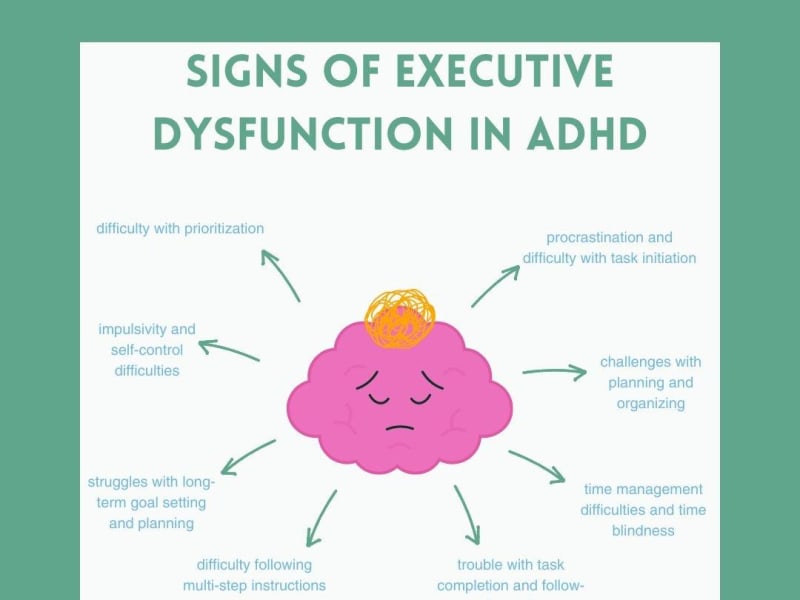
Hyperfocus: The ability to intensely and involuntarily focus on stimulating tasks for hours, while being unable to engage with non-stimulating ones — often misunderstood as a strength that "disproves" ADHD
Time blindness: A profound difficulty perceiving elapsed time, leading to chronic lateness, missed deadlines, and difficulty transitioning between tasks
Emotional dysregulation: Intense, rapid mood shifts and rejection-sensitive dysphoria (RSD) — extreme emotional pain triggered by perceived criticism or failure — which is reported in 99% of adult ADHD patients
Chronic overwhelm with basic tasks: Paralysis in the face of mundane administrative tasks (bills, emails, forms) that feel disproportionately difficult to initiate
Sleep dysregulation: Delayed sleep phase syndrome is common in ADHD; the ADHD brain often becomes most alert in the evening
Inconsistent performance: Excellence in some areas coexisting with inexplicable failure in others — the "could do better" narrative of a lifetime
Impulsivity in relationships, spending, and health decisions
Whether or not medication is part of the picture, these strategies have strong evidence for improving ADHD functioning:
External structure: The ADHD brain struggles to generate internal structure, so externalising it matters — physical timers (not phone timers), visual calendars, body-doubling (working alongside another person), and environmental organisation systems reduce the cognitive load of self-management
Time-blocking with artificial deadlines: Breaking work into defined time units (Pomodoro technique: 25 minutes focused work, 5 minutes break) works with ADHD's need for immediate, structured feedback
Reducing task initiation friction: The hardest part of most tasks for ADHD brains is starting. The two-minute rule (if it takes less than two minutes, do it now) and task decomposition (breaking large tasks into their smallest possible first step) reliably reduce initiation paralysis
Exercise as a neurological intervention: Aerobic exercise increases dopamine, norepinephrine, and serotonin availability in the prefrontal cortex — the same mechanism as stimulant medication. A 2012 study by Ratey and colleagues found that 20–30 minutes of vigorous exercise before demanding cognitive work significantly improved ADHD symptoms
CBT adapted for ADHD: Standard CBT requires modification for ADHD (shorter sessions, more structure, concrete homework), but ADHD-specific CBT addressing disorganisation, procrastination, and emotional dysregulation has strong RCT support
Sleep hygiene as priority one: ADHD symptoms worsen dramatically with sleep deprivation; maintaining consistent sleep-wake times and blue light reduction is disproportionately impactful
Medication (when appropriate): Stimulant medications (methylphenidate, amphetamine salts) remain the most effective single intervention for ADHD, with response rates of 70–80%. Non-stimulant options (atomoxetine, guanfacine) offer alternatives. Medication works best as one component of a comprehensive management plan.
Adult ADHD is not about intelligence, effort, or character. It is a neurodevelopmental condition with well-established biological underpinnings and highly effective management strategies. If these patterns resonate — the time blindness, the hyperfocus paradox, the emotional sensitivity, the lifelong "not reaching potential" — formal assessment by a clinician experienced in adult ADHD is worth pursuing. Understanding your brain is the beginning of working with it.
1. What are common signs of ADHD in adults?
Inattention, time blindness, emotional sensitivity, disorganization, and inconsistent performance are key signs.
2. Why is adult ADHD often undiagnosed?
Symptoms are subtle, masked by coping strategies, or mistaken for anxiety or depression.
3. How can adults manage ADHD effectively?
Using structure, time management techniques, exercise, therapy, and sometimes medication helps control.
Author: Doctar Team
Disclaimer: For more information contact Doctar Team
Visit Hospital
Near You

Check the list of medical colleges in Jharkhand 2026-27, including government, private and AIIMS institutions, MBBS seats and admission details.
August 20, 2026

MBBS NEET counselling Jharkhand 2026 is being conducted through the Jharkhand Combined Entrance Competitive Examination Board (JCECEB) for eligible NEET-UG candidates.
August 20, 2026

You can text fifty people a day and still feel completely alone. That's the frequent contact loneliness paradox, and it trips up a lot of people who assume loneliness is just about how often you talk to someone. This article looks at why frequency of contact and the actual feeling of connection are
August 10, 2026