

Stress Management for Working Women: A Practical Guide
Stress management for working women, explained simply: real signs, why it's different, and daily habits that actually help. (128 characters)
Why Working Women Carry a Different Kind of Stress
Ask a working woman what stress feels like, and she'll rarely describe just one thing. It's the client call at 9, the school pickup at 3, and the mental list of what's missing from the fridge — all running at once. Researchers call this "role overload," but honestly, most women don't need the term explained to them.
There's also a biological layer that often gets left out of workplace wellness talks. Hormonal shifts — during the menstrual cycle, pregnancy, or perimenopause — can change how the body responds to stress hormones like cortisol. That doesn't mean stress is "all hormonal." It means the same workload can feel heavier at different points in a month, and that's worth acknowledging instead of pushing through.
The Physical Signs Often Get Missed
Stress doesn't always show up as anxiety or tears. Sometimes it's a stiff jaw, a stomach that's been off for weeks, or sleep that never feels deep enough.
In clinical practice, this is often missed because women tend to present with physical complaints first — headaches, digestive issues, fatigue — and stress isn't asked about until later in the conversation. That's not a criticism of doctors; it's just how symptoms get triaged. But it means women sometimes go through several rounds of tests before anyone connects the dots. If you've had unexplained fatigue or digestive trouble for more than a few weeks, it's worth raising stress and mental load explicitly with a general physician rather than waiting for them to ask.
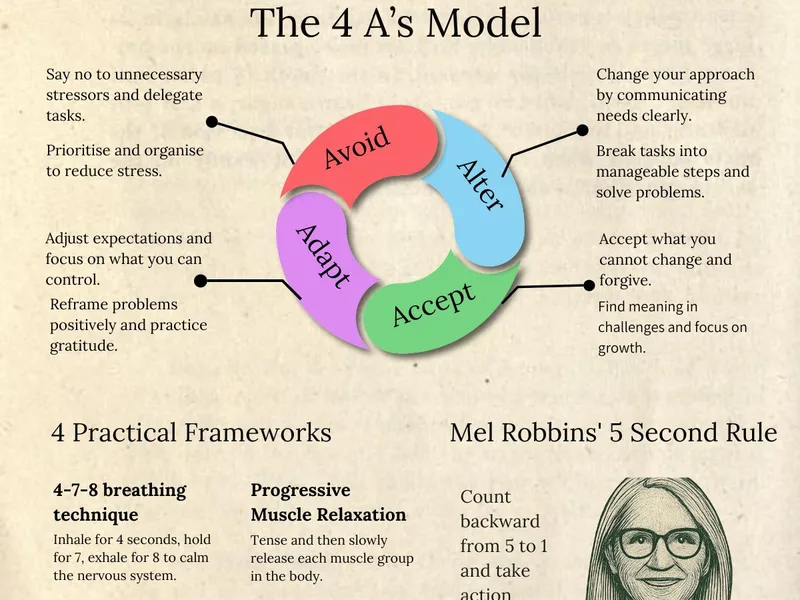
Practical Stress Management Strategies That Actually Work
Most stress advice online falls into two camps: vague ("just relax") or unrealistic ("wake up at 5am for a two-hour routine"). Neither helps someone juggling a 9-to-6 and a household. Here's what tends to hold up better.
Reclaim small pockets of time, not big blocks. Waiting for a free hour that never comes is a losing strategy. Ten minutes between meetings, or the drive home, can work if you use it deliberately — even just sitting in silence instead of scrolling.
Set boundaries at work, without over-explaining. You don't owe a paragraph of justification for leaving on time or turning off notifications after hours. A short, clear line ("I'm offline after 7, will pick this up tomorrow") does more than a long apology.
Move your body, even briefly. This doesn't mean a gym membership. A 15-minute walk lowers stress hormone activity measurably in the short term — not a miracle fix, but a real, low-cost one that fits into an actual day.
Protect sleep like it's a meeting you can't skip. Sleep debt makes every other stressor feel bigger the next day. If work stress is bleeding into 1am scrolling or racing thoughts at bedtime, that's a pattern worth addressing directly rather than accepting as normal.
Watch your diet on stretched days. Skipping meals or living on coffee raises the physical stress load on top of the mental one. Simple, regular meals matter more here than any specific "anti-stress" diet — though if eating patterns feel genuinely out of control, a dietitian can help untangle whether it's habit, stress, or something else.
Doctar's own top stress management tips and this list of natural ways to relieve stress and anxiety go deeper into specific techniques if you want more options to try.
When Everyday Stress Crosses a Line
Here's a fair question: how do you know if this is normal work stress or something that needs professional help? There's no single number or checklist that decides it for you, but a few signs matter.
If stress is affecting sleep most nights, if you've lost interest in things you used to enjoy, or if physical symptoms like chest tightness or persistent headaches keep showing up, that's no longer "just stress." It's worth reading about the actual difference between stress and mental illness — the line is more specific than most people assume. High-functioning anxiety is another pattern worth knowing about, since it often hides behind being "the reliable one" at work — this piece on signs of high-functioning anxiety explains it well.
Stress that comes with dizziness or a spinning sensation is also more common than people realize — there's a real, documented link between stress, anxiety, and vertigo that's easy to dismiss as "just tiredness."
None of this is about self-diagnosing. It's about knowing when to stop managing something alone. You can search for doctors near you or check hospitals in your area if symptoms are persistent — and for anything tied to your cycle or hormonal changes, a gynecologist is a reasonable first stop, not a last resort.


