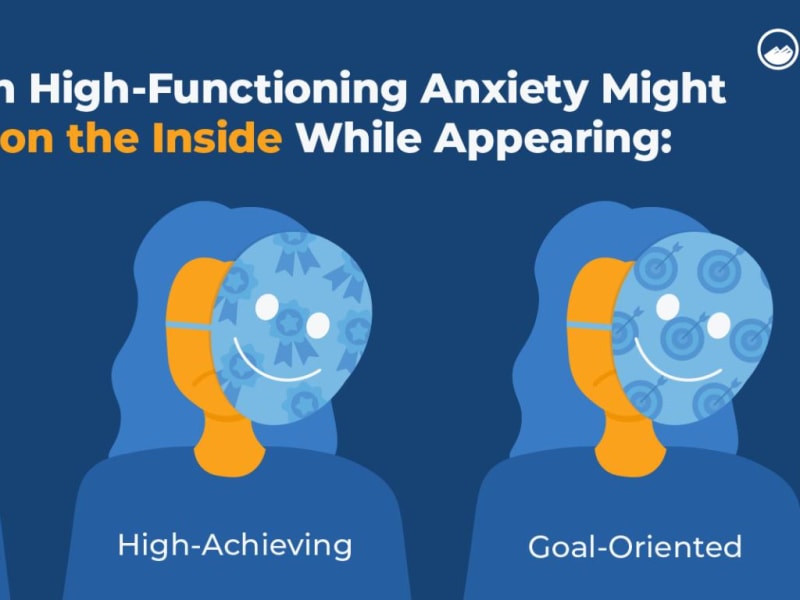
High-functioning anxiety often looks like success from the outside. Discover the subtle signs, underlying patterns, and why it's more harmful than it appears.
Signs You Might Have High-Functioning Anxiety
High-functioning anxiety is not an official DSM-5 diagnosis — but it describes a recognisable and widely experienced pattern that sits within or adjacent to generalised anxiety disorder (GAD). People with high-functioning anxiety often appear accomplished, reliable, driven, and socially adept. Internally, they are frequently exhausted, self-critical, chronically anticipatory of catastrophe, and running on a fuel mixture of fear and adrenaline rather than genuine motivation. The paradox is that the outward presentation masks the disorder — and makes it harder to seek help.
What Defines High-Functioning Anxiety
Unlike severe anxiety disorders that impair daily functioning, high-functioning anxiety operates in a peculiar register: the anxiety is channelled into productivity, people-pleasing, over-preparation, and control-seeking in ways that appear adaptive — and often are, in the short term. The person meets deadlines early, volunteers for extra responsibility, and rarely seems flustered. What others observe as competence is often, internally, a relentless avoidance of the feared outcome (failure, rejection, uncertainty).
The clinical territory most associated with high-functioning anxiety includes:
Generalised Anxiety Disorder (GAD): Characterised by excessive, uncontrollable worry about multiple domains for more than six months
Social Anxiety Disorder with high masking ability
Anxious attachment styles in interpersonal relationships
OCD-spectrum patterns of checking and reassurance-seeking
Recognising the Signs
High-functioning anxiety tends to present with these distinctive patterns:
Overthinking and rumination: Replaying conversations, anticipating worst-case scenarios, and mentally rehearsing future events compulsively — even when outcomes are positive
Perfectionism driven by fear of failure rather than genuine standards of excellence
Difficulty resting: Inability to relax without guilt; downtime feels threatening or unproductive
People-pleasing and conflict avoidance: Chronic difficulty saying no, driven by fear of rejection or disapproval
Proactive over-preparation: Preparing exhaustively for situations that most people approach with minimal planning
Nervous habits: Nail biting, skin picking, jaw clenching, or hair pulling as tension release mechanisms
A persistent sense of impending doom even when life is objectively going well
Fatigue beneath the surface: Despite appearing energetic, people with high-functioning anxiety are often chronically drained by the internal noise
Irritability: Low frustration tolerance from sustained hyperarousal, often surprising to those who see the calm external presentation
The Hidden Cost
The very functionality of this anxiety pattern is what makes it self-sustaining and dangerous. When anxious behaviour produces good outcomes (the early deadline, the avoided conflict, the prepared presentation), the anxiety is reinforced as effective — even necessary. Over time, this relationship with anxiety can become identity-defining: "This is just who I am. I perform better under pressure." The cost is chronic stress physiology, relationship difficulties, and, frequently, eventual burnout or full anxiety disorder as the coping capacity is exhausted.
Conclusion
If these patterns feel familiar, know that recognising high-functioning anxiety is the most important first step — and it's one that many high-achieving, privately struggling people never take. The goal isn't to eliminate drive or conscientiousness; it's to detach those qualities from their anxious root so they can function from genuine motivation rather than fear. A therapist trained in CBT or ACT can make a significant difference.
FAQ
1. What is high-functioning anxiety?
A form of anxiety where a person appears successful outwardly but struggles with constant internal stress and worry.
2. What are common signs of it?
Overthinking, perfectionism, people-pleasing, and difficulty relaxing despite being productive.
3. Can it be treated?
Yes, therapy like CBT or lifestyle changes can help manage and reduce symptoms.
Author: Doctar Team
Disclaimer: To more information contact with Doctar Team