AI Diagnosis Tools: What They Can and Can't Do Yet
AI is no longer just a buzzword in hospital boardrooms. It's showing up in radiology departments, diabetic eye screening camps, and even in the apps some people use to check a worrying mole before they ever see a dermatologist. But how much of this is genuinely useful, and how much is still marketing?
That's the question worth answering honestly, especially since a wrong diagnosis isn't like a wrong product recommendation. It can cost time, money, and in serious cases, a life.
What AI Diagnostic Tools Actually Do
Most AI diagnosis tools aren't trying to replace a doctor's judgment. They're pattern-recognition systems trained on thousands, sometimes millions, of medical images or data points. Show the system enough chest X-rays labeled "pneumonia" or "normal," and it learns to spot the visual patterns that separate the two.
This works best in narrow, well-defined tasks. Detecting diabetic retinopathy from a retina photo. Flagging a suspicious lung nodule on a CT scan for a radiologist to review. Sorting through thousands of pathology slides to highlight the ones that need a closer look. In these specific jobs, some tools perform close to, and occasionally on par with, trained specialists — though results vary a lot depending on the study, the population, and how the tool was tested.
What AI is not doing, at least not reliably yet, is open-ended diagnosis. Feed a symptom checker "tired, headache, mild fever" and you'll get a list of dozens of possible conditions, from harmless viral fatigue to something far more serious. The tool has no way to examine you, ask a smart follow-up question, or notice that you look pale and are speaking with difficulty. That's still a job for a general physician.
Where AI Is Already Helping in Indian Healthcare
A few areas stand out where AI-assisted screening is genuinely making a dent.
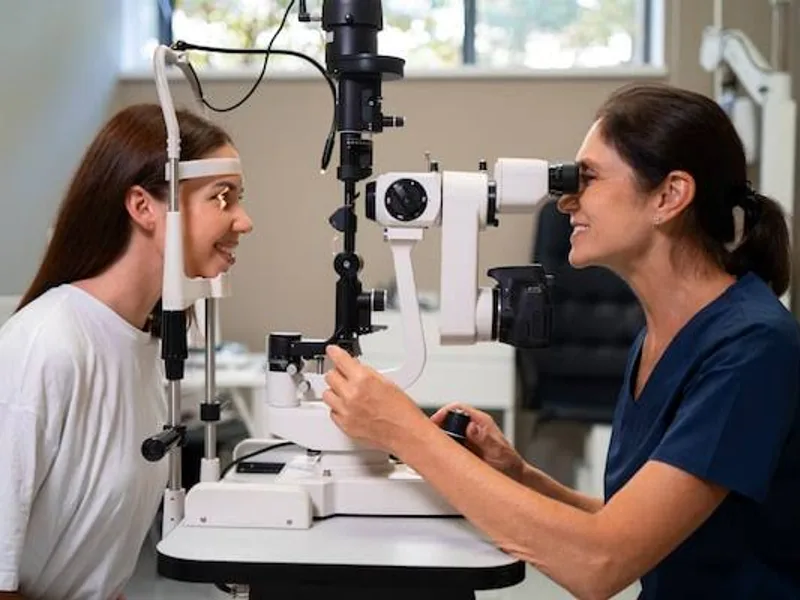
Diabetic eye screening. India has a massive diabetes burden, and diabetic retinopathy screening is a natural fit for AI, since it's essentially an image classification task. Camps using AI-assisted retina cameras can screen far more people than a limited number of ophthalmologists could manage alone, flagging the ones who need urgent review from a specialist.
Radiology triage. AI tools that pre-sort chest X-rays or CT scans by urgency are being piloted in several hospitals, helping radiologists prioritize the cases that can't wait.
Cancer screening support. In gynecological and dermatological screening, AI-assisted tools are being used to flag abnormal cells or lesions for a second human look — not to make the final call. Anyone noticing unusual symptoms should still book time with a gynecologist or dermatologist rather than rely on an app's verdict.
Cardiac risk scoring. Some AI models now analyze ECG patterns to flag irregularities that might be missed on a quick manual read, which is useful support for a cardiologist working through a high patient volume.
In clinical practice, this is often missed because patients assume "AI-reviewed" means "AI-diagnosed." It doesn't. It means a machine flagged something for a human to look at more closely — which is exactly how it should work.
The Real Limits of AI Diagnosis
Here's where things get less comfortable to talk about.
AI models are only as good as the data they were trained on. A tool trained mostly on scans from one hospital, one population, one type of equipment, can perform noticeably worse when used somewhere else. This is a known issue in medical AI research, and it's a big reason regulators are cautious about approving these tools for unsupervised use.
There's also the "black box" problem. Many AI systems can't fully explain why they flagged something, which makes it hard for a doctor to sanity-check the result the way they would with a colleague's opinion.
And then there's the human cost of getting it wrong. A false negative from an AI screening tool can mean a real condition goes unnoticed for months. A false positive can mean unnecessary anxiety, extra tests, and unnecessary cost. Neither is acceptable at scale, which is exactly why most credible AI diagnostic tools are designed as a second opinion, not a replacement for one.
How to Use AI Health Tools Wisely, as a Patient
Should you avoid AI-based health apps altogether? Not necessarily. They can be a reasonable first step, especially in areas with a shortage of specialists. But treat the output as a prompt to act, not a diagnosis to trust blindly.
A few practical habits help:
Don't self-treat based on an app's suggestion. If a symptom checker or AI scan flags something, book an appointment with the right specialist — a general surgeon for a suspicious lump, an orthopedist for unexplained joint pain, a pediatrician if it's your child, or a gastroenterologist for persistent digestive symptoms.
Get the follow-up test done properly. If an AI tool flags a scan as abnormal, get it reviewed at an accredited diagnostic center near you, not just re-run on another app.
Know when it's urgent. Chest pain, breathing trouble, or sudden weakness aren't situations to wait on an app for. Call emergency services or head to the nearest hospital.
Use trusted platforms to find real doctors. Whether you need a dentist, an endocrinologist for thyroid or diabetes concerns, a pulmonologist for breathing issues, or a dietitian to build a plan around a new diagnosis, search for verified doctors rather than relying on an app's built-in recommendation engine.
For ongoing care, especially with elderly family members, home-based options are worth knowing about too — from a home visit doctor to a nurse or physiotherapist who can come to you, or an ambulance if things escalate quickly.
If you'd rather browse hospitals directly, you can search hospitals near you or check hospitals nearby for facilities that offer both diagnostics and specialist consultations under one roof. For anyone researching a specific procedure flagged by a scan, it also helps to look up relevant surgeries and understand what's actually involved before the appointment.
For related reading, our piece on genetic testing and cancer risk covers a similar theme: powerful technology that's only useful when paired with proper medical guidance, not used as a replacement for it. You can also browse more explainers on our health blog, or read more about Doctar and how we connect patients with genuine, verified care. If you're outside a metro city, it's worth checking doctor listings across India since AI-assisted screening camps are increasingly reaching smaller towns too. And if a diagnosis touches on medicine management, you can also arrange delivery through a nearby pharmacy once your doctor has prescribed a course of treatment.