Vitamin D deficiency is more complicated than “not getting enough sun”
Vitamin D is often called the “sunshine vitamin,” but the story is less simple than that. Your body can make vitamin D when skin is exposed to ultraviolet B, or UVB, light, while food and supplements can provide additional sources.
The vitamin matters particularly for calcium absorption, bone health and normal muscle function. It also has roles in immune and other body systems, although claims that vitamin D supplements prevent or treat a wide range of unrelated diseases often run ahead of the evidence.
Doctar's [guide to vitamins and supplements] Vitamins and Supplements: A Guide for Indian Consumers explains vitamin D alongside other nutrients and cautions against self-diagnosing a deficiency.
Why can vitamin D be low in India?
Plenty of sunshine does not guarantee adequate vitamin D. Someone who spends most of the day indoors, covers most of their skin outdoors or gets limited direct sun exposure may produce less vitamin D.
Skin pigmentation also matters because melanin reduces the skin's production of vitamin D from UVB exposure. Air pollution, clothing, season, latitude and sunscreen use can also influence how much vitamin D the skin produces.
Doctar's [article on sunlight and vitamin D] The Sunny Side Up: Understanding Sunlight and Vitamin D discusses the relationship between sunlight and vitamin D production, while its [window-sunlight guide] Can You Get Vitamin D Through a Window? explains why sitting behind ordinary glass is not an effective way to make vitamin D.
Diet can be another piece of the puzzle. Naturally vitamin-D-rich foods include fatty fish and egg yolks, while some milk, cereals and other products may be fortified.
Doctar's [nutrition guide for athletes] Essential Vitamins and Supplements for Athletes in India also highlights dietary sources of vitamin D for people whose training or work keeps them indoors.
What are the symptoms of vitamin D deficiency?
Mild vitamin D deficiency may cause no obvious symptoms. That is one reason guessing from symptoms alone is unreliable.
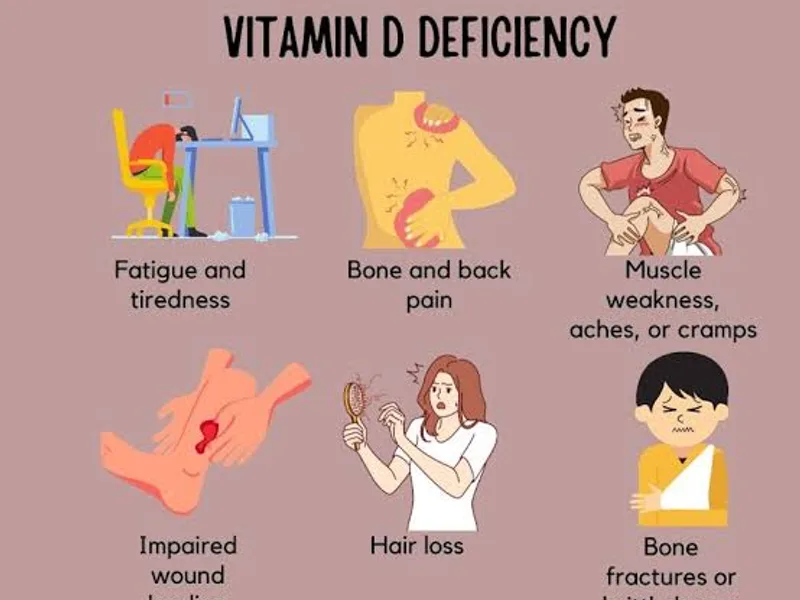
When deficiency is more significant, people may experience muscle weakness, aches, bone pain or fatigue. Severe and prolonged deficiency can affect bone mineralisation and contribute to conditions such as osteomalacia, in which bones become softer.
The symptoms overlap with many other problems. Fatigue, for example, can be related to anaemia, thyroid disease, poor sleep, infection, stress or other medical conditions.
Doctar's [article on vitamin D and joint pain] Vitamin D and Joint Pain: Understanding the Connection makes the same broader point: low vitamin D may be associated with some musculoskeletal symptoms, but joint pain has many possible causes.
In clinical practice, this is often missed because people see fatigue or body aches and immediately blame vitamin D. A symptom is a reason to investigate, not proof that a vitamin deficiency is responsible.
Who is more likely to become deficient?
Risk varies from person to person. People with little sun exposure, darker skin, older age or diets low in vitamin-D-containing foods may be at greater risk.
Certain health conditions can also interfere with vitamin D absorption or metabolism. These include some disorders affecting the intestine, liver or kidneys. Obesity and some medicines can also influence vitamin D status.
Pregnancy is another situation where nutritional needs deserve closer attention. Doctar's [guide to vitamin D during pregnancy] Vitamin D in Pregnancy: Maternal and Baby Health discusses risk factors and why pregnant women should discuss testing and supplementation with their obstetrician rather than treating themselves.
Menopause can bring additional bone-health concerns. Doctar's [vitamin D and menopause guide] Vitamin D and Menopause: Bone Health and Well-being covers the overlap between vitamin D, ageing, hormonal changes and bone health.
How is vitamin D deficiency diagnosed?
A blood test is the usual way to assess vitamin D status. Doctors generally look at 25-hydroxyvitamin D, written as 25(OH)D, which is the main blood marker used to assess vitamin D stores.
The number should not be interpreted in isolation. Laboratories can use different reference ranges, and the appropriate target can depend on a person's health, age and clinical circumstances.
Doctar's [blood-test preparation guide] Blood Tests: Preparation and What to Expect explains what patients can expect when having blood work done.
A useful rule is simple: don't order a large panel of vitamin tests just because you are tired. Discuss your symptoms and risk factors with a doctor first.
Vitamin D and calcium work together
Vitamin D helps the body absorb calcium, which is essential for normal bones and several other functions. Low vitamin D can therefore become particularly relevant when someone also has poor calcium intake or another condition affecting bone health.
Doctar's [calcium-rich foods guide for Indian diets] Calcium-Rich Foods for Indian Diets explains how food choices can support calcium intake.
Long-term problems with bone mineralisation can increase concerns about bone strength. Doctar's [osteoporosis prevention guide] Preventing Osteoporosis: A Guide to Stronger Bones and its [osteoporosis and bone-density guide] Can Osteoporosis Bone Loss Be Reversed? discuss the broader picture of calcium, vitamin D, exercise and medical care.
But vitamin D deficiency does not automatically mean someone has osteoporosis. These are separate conditions, and a doctor may recommend additional assessment when there are risk factors.
Do you need a bone-density scan?
Usually, a vitamin D deficiency alone does not mean you need a DXA or DEXA scan. Bone-density testing is used to assess bone mineral density and is generally considered when age, fracture history or other risk factors make it appropriate.
Doctar's [bone-density scan guide for younger adults] Understanding Bone Density Scan Results for Younger Adults explains why DEXA results are interpreted differently in younger people.
Its [T-score versus Z-score guide] T-Score vs Z-Score in Osteoporosis provides more detail on how bone-density results are assessed.
For older adults, Doctar's [bone-density guide after 60] Boosting Bone Density After 60 looks at age-related bone loss and the role of nutrition, exercise and medical care.
Can you fix vitamin D deficiency with sunlight alone?
Sometimes sunlight contributes meaningfully to vitamin D production, but there is no universal “correct” number of minutes for everyone.
Skin tone, season, location, time of day, clothing and the amount of exposed skin all change the result. Excessive ultraviolet exposure also raises skin-cancer risk, so deliberately getting sunburned is never a sensible treatment strategy.
Doctar's [sunbathing and vitamin D article] Sunbathing, Vitamin D and Sun Safety discusses this balance.
Food can help too, particularly fatty fish, fortified products and other dietary sources. Doctar's [general vitamin and supplement guide] Vitamins, Supplements and Nutrient Deficiencies provides a broader overview of dietary sources and supplementation.
What about vitamin D supplements?
Supplements can be useful when a deficiency has been diagnosed, but more is not necessarily better. Vitamin D is fat-soluble, meaning excessive amounts can build up in the body and cause harm.
Treatment depends on the person's blood level, age, medical history and the reason for the deficiency. Someone with kidney disease, certain endocrine disorders or other health problems may need a different approach.
Doctar's [vitamin D and menopause article] Vitamin D During Menopause also stresses medical assessment when deficiency is suspected.
Do not copy someone else's high-dose vitamin D schedule from social media. A prescription or supplement plan should come from a qualified clinician.
When an endocrinologist may help
An endocrinologist specialises in hormones and metabolic conditions. They may become involved when vitamin D deficiency is persistent, unusually severe, associated with calcium or parathyroid problems, or complicated by another endocrine condition.
Doctar lists endocrinologists such as [Dr. Sudipta Dutta in Kolkata] Dr. Sudipta Dutta, Endocrinologist in Kolkata, [Dr. Subir Ray] Dr. Subir Ray, Endocrinologist in Kolkata, [Dr. Sagarika Mukherjee] Dr. Sagarika Mukherjee, Endocrinologist in Kolkata and [Dr. Saikat Saha] Dr. Saikat Saha, Endocrinologist in Kolkata. These are examples of listings, not endorsements.
Other Doctar listings include [Dr. Amit Dey] Dr. Amit Dey, Endocrinologist in Kolkata and [Dr. Debashis Maitra] Dr. Debashis Maitra, Endocrinologist in Kolkata.
When bone or joint symptoms need another opinion
Persistent bone pain or repeated fractures should not automatically be blamed on vitamin D. An orthopaedic assessment may be appropriate when there is a significant injury, unexplained fracture or another musculoskeletal concern.
Doctar lists [Dr. Ronen Roy, orthopaedist in Kolkata] Dr. Ronen Roy, Orthopaedist in Kolkata, whose profile includes osteoporosis management, as well as [Dr. Debanjan Roy] Dr. Debanjan Roy, Orthopaedist in Kolkata and [Dr. Abhirup Moulik] Dr. Abhirup Moulik, Orthopaedist in Kolkata. Again, these are directory examples rather than a recommendation for any particular doctor.
Vitamin deficiencies can also overlap. Doctar's [article on vitamin B12 testing history] Understanding Vitamin B12 Absorption and Testing is a useful reminder that fatigue and neurological symptoms can have nutritional causes other than vitamin D.