

Emergency & Help
24/7 Emergency & General Advisory
🚨 24/7 Medical Emergency
Non-Emergency Advisory
10:00 AM – 6:00 PM, Mon–Sat
For appointments & general queries.
24/7 Emergency & General Advisory
🚨 24/7 Medical Emergency
Non-Emergency Advisory
10:00 AM – 6:00 PM, Mon–Sat
For appointments & general queries.
Discover effective home remedies for irregular periods. Learn natural ways to regulate your menstrual cycle with expert advice and Indian cultural insights.
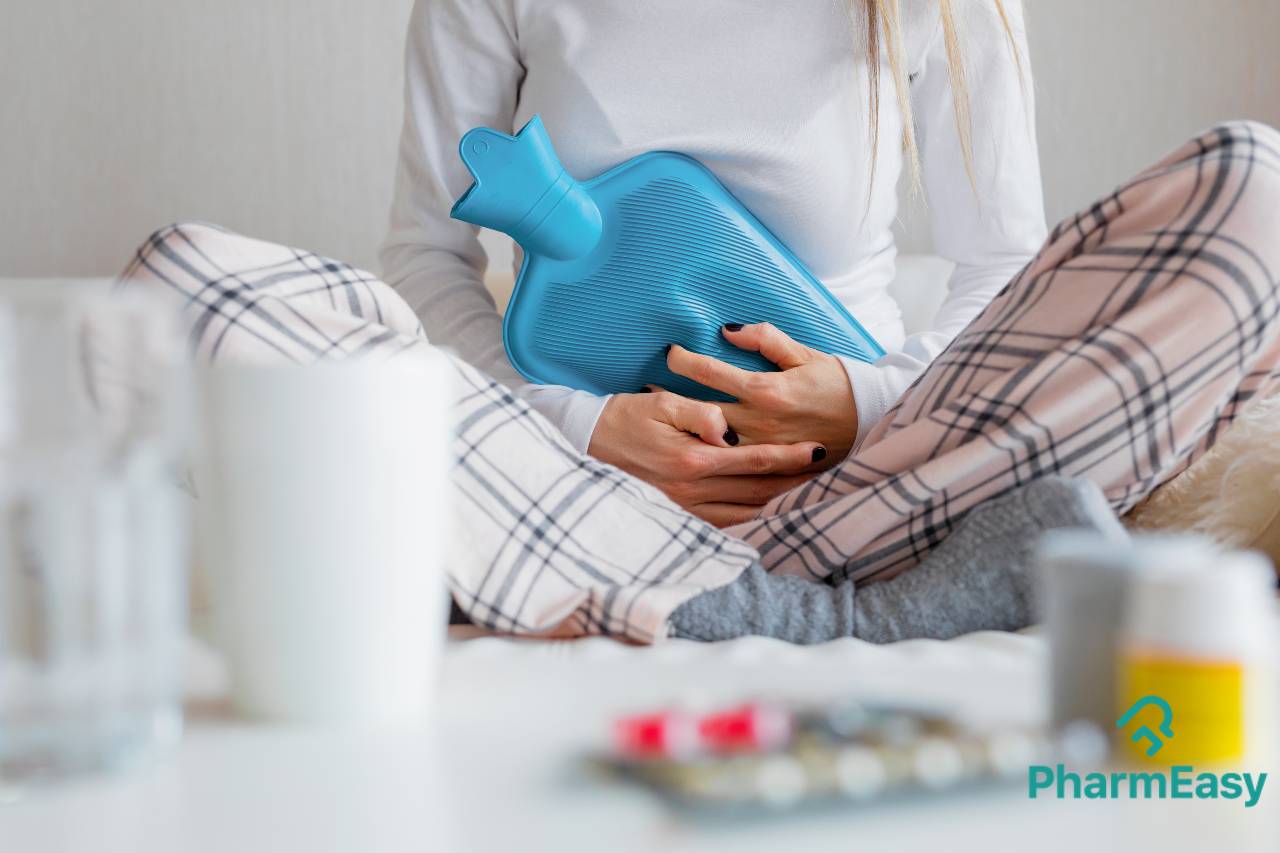
Meena, 45, a homemaker from Jaipur, noticed her cycles had become unpredictable. Sometimes they arrived early, sometimes late, and the flow varied significantly. This irregularity caused her considerable stress, impacting her daily life and her family’s routines.
She wasn't alone; millions of Indian women experience similar challenges with their monthly flows. In many cases, lifestyle factors and dietary habits play a crucial role. This guide explores 10 powerful home remedies, rooted in both traditional wisdom and modern understanding, to help manage inconsistent cycles.
An irregular monthly cycle is a common concern. It refers to variations in the length of your cycle, the duration of your flow, or the amount of blood loss. While occasional deviations are normal, persistent irregularity can sometimes indicate underlying wellness issues.
Factors such as stress, significant weight changes, **hormonal** disturbances (like PCOS – Polycystic Ovary Syndrome), certain medications, and underlying medical conditions can contribute. Globally, it's estimated that up to 30% of women experience cycle irregularities at some point in their lives. What most people miss is that even subtle changes in diet or sleep can trigger these disruptions.
The numbers don't lie.
Cinnamon is a spice renowned for its warming properties and potential to **regulate** insulin levels, which can indirectly influence cycle regularity. Research published in the journal Contraception suggested that cinnamon may aid reduce discomfort and **regulate** cycles in women with PCOS. It’s believed to reduce inflammation and improve **hormonal** equilibrium. A study by the National Institutes of Health (NIH) indicated potential benefits in reducing uterine contractions. Have you ever wondered why this spice is a staple in Indian kitchens?
How to use: Add a teaspoon of cinnamon powder to a glass of warm milk or water and consume it daily, preferably in the morning. Alternatively, sprinkle it over your oatmeal or yogurt.
Turmeric, with its active compound curcumin, is a potent anti-inflammatory and antioxidant agent. Its properties may aid **balance** **hormones** and elevate blood circulation, potentially aiding in **regulating** monthly flows.
In Ayurvedic medicine, turmeric has long been used to support reproductive **health**. Studies, including those cited by the WHO, highlight curcumin's role in managing inflammatory conditions.
How to use: Mix half a teaspoon of turmeric powder with a glass of warm milk. You can add a pinch of black pepper to enhance curcumin absorption. Drink this mixture every day before bedtime.
Ginger is well-known for its anti-inflammatory and digestive benefits. For irregular cycles, it can be particularly helpful in reducing inflammation and promoting timely ovulation.
Some studies suggest ginger may aid alleviate heavy bleeding and associated pain. Practicing yoga or floor sitting for extended durations can sometimes be challenging with severe discomfort, making remedies like ginger particularly valuable.
How to use: Steep a few slices of fresh ginger in hot water to make a tea. Consume this tea two to three times a day, especially a week before your expected flow. Adding a little honey and lemon can enhance the taste.
Fennel seeds have been traditionally used to manage various monthly cycle issues. They possess antispasmodic and anti-inflammatory properties that can benefit relax uterine muscles and **regulate** the cycle.
Research in reproductive endocrinology has explored the phytoestrogenic compounds in fennel seeds, suggesting they might influence **hormonal** **balance**.
How to use: Soak two tablespoons of fennel seeds in a glass of water overnight. Strain the water in the morning and drink it on an empty stomach. Repeat this daily.
Apple Cider Vinegar is often touted for its potential wellness benefits, including its ability to support **regulate** **hormones** and elevate insulin sensitivity. Some preliminary studies suggest it might be beneficial for women with PCOS, a widespread cause of irregular cycles.
Most people overlook this completely.
The IDF (International Diabetes Federation) has also highlighted the role of insulin resistance in various **health** conditions, which ACV might enable address.
How to use: Mix one to two tablespoons of raw, unfiltered ACV into a glass of water. Drink this mixture once or twice daily before meals. Start with a smaller dose to avoid stomach upset.
Unripe papaya is believed to stimulate uterine contractions, potentially helping to induce flows when they are delayed. It contains papain, an enzyme that may benefit **regulate** **hormonal** flow. In many Indian households, especially during festivals, unripe papaya is a frequent vegetable used in curries. Its inclusion in the diet can be beneficial.
How to use: Consume a bowl of raw papaya (ensure it's unripe) daily for a few weeks. You can also drink fresh papaya juice.
This combination is a traditional remedy in India for monthly cycle well-being. Dates are rich in iron and fiber, jaggery provides natural sugars and minerals, and sesame seeds are known for their warming properties and ability to **balance** **hormones**.
Consuming this mixture can provide essential nutrients and may enable **regulate** the cycle. Over 101 million Indians have diabetes (ICMR, 2023), so moderation with jaggery is advised for those managing blood sugar.
How to use: Mix equal parts of chopped dates, powdered jaggery, and roasted sesame seeds. Consume a tablespoon of this mixture daily with warm milk.
Aloe vera is known for its anti-inflammatory and healing properties. For monthly irregularities, it's believed to support **balance** **hormones** and reduce inflammation. Some anecdotal evidence suggests it can be proven in stimulating flows. A review in the journal Phytotherapy Research highlighted various medicinal uses of Aloe vera.
How to use: Drink a glass of fresh aloe vera juice (ensure it's prepared for internal consumption) in the morning on an empty stomach. It's crucial to use pure, food-grade aloe vera gel or juice.
Parsley is rich in vitamins and minerals, including iron, and contains apiol, a compound thought to stimulate uterine contractions. It has been used historically as a natural emmenagogue (a substance that encourages monthly flow). Its nutritional profile is quite impressive.
The numbers don't lie.
How to use: Boil a bunch of fresh parsley leaves in about two cups of water for about 20 minutes. Strain the liquid and drink it three times a day, a week before your expected flow.
Practically speaking, no remedy works in isolation. Maintaining a positive lifestyle is paramount. This includes managing stress through practices like yoga or meditation, ensuring adequate sleep (7-8 hours per night), and engaging in regular, moderate exercise.
Avoiding excessive caffeine and alcohol is also beneficial. A balanced diet rich in fruits, vegetables, whole grains, and lean protein supports overall **hormonal** well-being. Research from institutions like AIIMS emphasizes the link between stress, diet, and **hormonal** equilibrium.
While home remedies can be proven for mild irregularities, it's essential to consult a doctor if your monthly flows are consistently absent, extremely heavy, or accompanied by severe pain, unusual discharge, or other concerning symptoms. Conditions like PCOS, endometriosis, fibroids, or thyroid issues require professional medical diagnosis and treatment.
A doctor can perform necessary tests, such as **hormonal** assays or ultrasounds, to identify the underlying cause. Remember, statistics show that prompt medical intervention can prevent complications.
This is where most patients struggle.
Always consult a qualified physician before making any medical decisions.
Visit Hospital
Near You

A cesarean section (C-section) is a surgical delivery in which a baby is born through an incision in the mother's abdomen and uterus. In Kolkata, several experienced obstetricians and well-equipped hospitals offer C-section services for planned and emergency deliveries. Understanding when a C-sectio
July 31, 2026
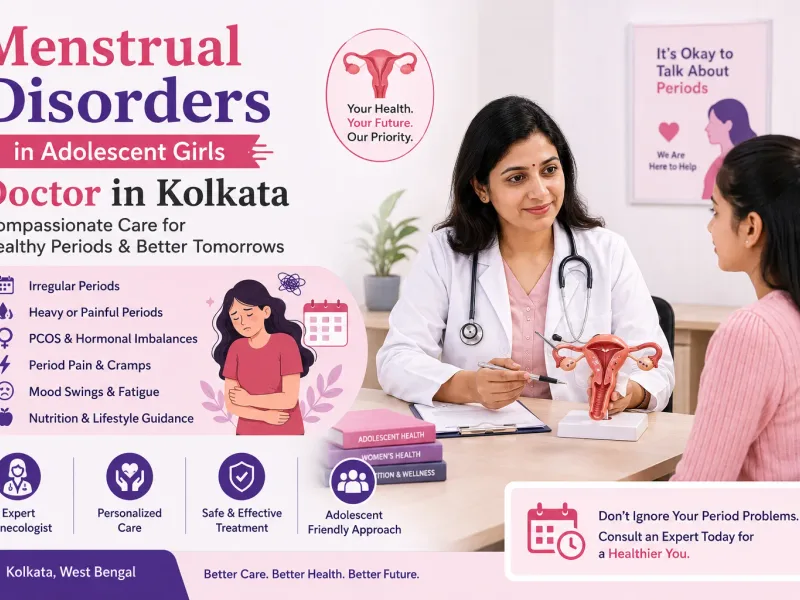
If you are searching for a Menstrual Disorders in Adolescent Girls Doctor in Kolkata, early evaluation by an experienced gynecologist can help identify the underlying cause of irregular or painful periods. While menstrual irregularities are common during the first few years after puberty, persistent
July 31, 2026

If you are searching for a Fibroid & Endometriosis doctor in Kolkata, choosing an experienced gynecologist with expertise in minimally invasive gynecological surgery is essential. Uterine fibroids and endometriosis are two common but different conditions that can cause pelvic pain, heavy menstrual b
July 31, 2026