

Emergency & Help
24/7 Emergency & General Advisory
🚨 24/7 Medical Emergency
Non-Emergency Advisory
10:00 AM – 6:00 PM, Mon–Sat
For appointments & general queries.
24/7 Emergency & General Advisory
🚨 24/7 Medical Emergency
Non-Emergency Advisory
10:00 AM – 6:00 PM, Mon–Sat
For appointments & general queries.
Going past your due date can feel like being stuck in a waiting room with no clock. This guide walks you through what actually happens during monitoring after due date pregnancy — the tests, the decisions, and the emotions nobody really prepares you for.

I remember a friend texting me at 40 weeks and 3 days: “Everyone keeps asking where the baby is like I misplaced it.” That’s the strange part about going past your due date. Nothing is technically “wrong,” but suddenly everything feels watched. Monitoring after due date pregnancy becomes the new routine, and it can feel both reassuring and a little unsettling at the same time.
You’re not alone in this. A lot of pregnancies stretch beyond 40 weeks. Doctors expect it. But they also don’t just sit back and hope for the best — and honestly, that’s a good thing.
So what actually happens when you go overdue?
Here’s what most guides won’t tell you: the monitoring isn’t dramatic. It’s repetitive. Calm. Sometimes even a bit boring.
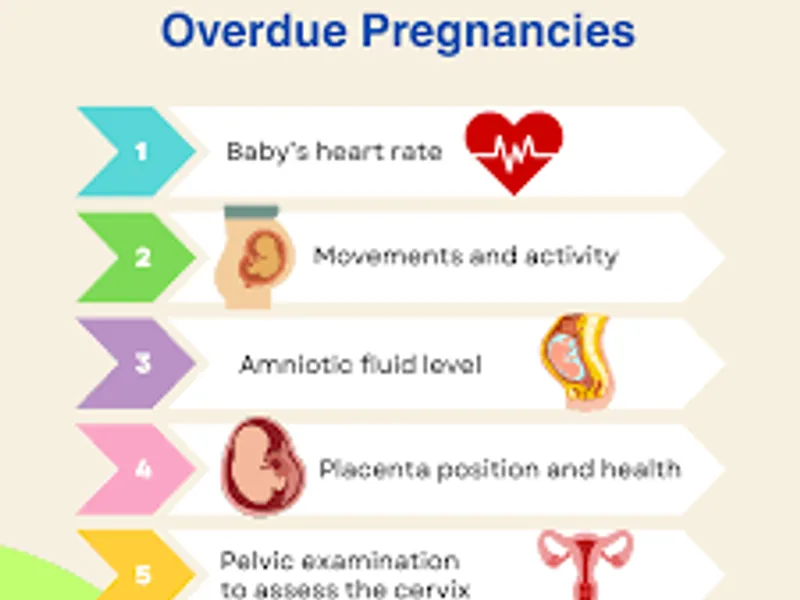
Once you cross your due date, your doctor will usually start keeping a closer eye on your baby’s well-being. This often means non-stress tests (NSTs), where you sit with a monitor strapped to your belly, listening to your baby’s heartbeat rise and fall. It’s oddly comforting. You start recognising patterns.
Then there’s the ultrasound check for amniotic fluid levels. Low fluid can be one of the first signs that your placenta isn’t working as efficiently anymore. That sounds scary, but in most cases, it’s just something they watch, not panic over.
In my experience, what surprises most people is how normal everything still feels. You go in, get checked, maybe chat with a nurse, and go home again. Life continues — just with more appointments.
How often should you expect monitoring (and why it matters)
This is where things get a bit more structured. After 40 weeks, many doctors recommend monitoring every few days. By 41 weeks, it can become almost daily.
It might seem excessive. It isn’t.
The reason is simple: the placenta has a natural “expiry window.” It doesn’t suddenly fail, but its efficiency can slowly decline. Monitoring helps catch subtle changes early — things like reduced fetal movement, lower fluid levels, or changes in heart rate patterns.
What tends to work better is not overthinking each test result in isolation. One slightly “off” reading doesn’t mean something is wrong. Doctors look at trends. Patterns over time.
If you’re wondering what you should actually do, here’s the practical part:
Pay attention to your baby’s movements. You don’t need to obsessively count kicks all day, but you should notice if something feels different. Trust that instinct. It’s more useful than most people realise.
And ask questions. Seriously. If a test is being repeated, ask why. If induction is mentioned, ask what changed. You deserve clarity, not just instructions.
The part nobody talks about: the mental waiting game
This might be the hardest bit.
Physically, you’re ready. Emotionally, you’re stretched thin. Every day past your due date feels longer than the entire pregnancy combined. And then there’s the pressure — messages, calls, people “checking in.”
Here’s the nuance: monitoring after due date pregnancy isn’t just about the baby. It’s also about helping you stay grounded while decisions slowly come into focus.
Some women feel reassured by frequent monitoring. Others feel more anxious with every appointment. Both reactions are valid.
I’ve seen people reach 41 weeks with everything looking perfect and still choose induction simply because the waiting became too much. That’s not weakness. That’s a decision based on real experience, not theory.
Conclusion
Going past your due date doesn’t mean something has gone wrong. It just means the pace changes. Monitoring after due date pregnancy becomes your safety net — quiet, steady, and sometimes a little tiring.
You’ll have more appointments, more data, and probably more opinions than you asked for. But beneath all that, there’s a simple goal: making sure both you and your baby are doing well, day by day.
If there’s one thing worth holding onto, it’s this — monitoring after due date pregnancy isn’t about rushing you. It’s about watching carefully until the right moment arrives.
Visit Hospital
Near You
Going past your due date can feel like being stuck in a waiting room with no clock. This guide walks you through what actually happens during monitoring after due date pregnancy — the tests, the decisions, and the emotions nobody really prepares you for.
May 20, 2026

If you’re close to your due date and feeling stuck in waiting mode, this breaks down induction of labor methods in a way that actually makes sense. No jargon, no fluff—just what works, what doesn’t, and what it really feels like from a human perspective.
May 20, 2026
If your due date has come and gone, you’re probably getting advice from everywhere. This piece cuts through the noise and explains what actually matters in pregnancy overdue management—what’s normal, what’s not, and how to decide your next step without panic.
May 20, 2026