

Emergency & Help
24/7 Emergency & General Advisory
🚨 24/7 Medical Emergency
Non-Emergency Advisory
10:00 AM – 6:00 PM, Mon–Sat
For appointments & general queries.
24/7 Emergency & General Advisory
🚨 24/7 Medical Emergency
Non-Emergency Advisory
10:00 AM – 6:00 PM, Mon–Sat
For appointments & general queries.
Explore the diverse world of birth control methods available in India. Understand effectiveness, pros, cons, and how to choose the best option for your lifestyle and health needs.

Deciding on a birth control method is a very personal journey, and in India, with its diverse population and varying healthcare access, it's even more important to find a method that truly fits your lifestyle, beliefs, and health needs. This guide aims to help you navigate the options, understand their effectiveness, and make an informed choice. We’ll cover everything from lifestyle changes to more permanent solutions, keeping in mind what matters most to you and your partner(s).
Birth control isn't a one-size-fits-all solution. The best method for you will depend on several factors:
Let’s explore the main categories of birth control:
These methods rely on awareness and conscious choices. They often require significant commitment and understanding of your body.
This means refraining from sexual intercourse. For some, it means avoiding penis-in-vagina (P-in-V) intercourse, while for others, it extends to any sexual activity. If you are truly committed to never having intercourse, abstinence is 100% effective in preventing pregnancy.
This involves sexual activity that doesn't include P-in-V penetration. The effectiveness can vary depending on how strictly you define and practice it. If it strictly means avoiding P-in-V sex, it can be highly effective.
These methods involve tracking your menstrual cycle and other bodily signs to identify your fertile window (the days you can get pregnant). You then avoid P-in-V sex or use a barrier method during this time.
Common FABMs include:
Effectiveness Note: While FABMs can help you learn a lot about your body, they have a higher failure rate with typical use (around 76-88% effective in the first year) compared to perfect use (95-99% effective). This is largely due to human error in tracking or timing.
Real-life scenario: Priya and Rohan want to avoid pregnancy but are not ready for hormonal methods. They decide to try the calendar and cervical mucus methods, carefully tracking Priya’s cycle. They commit to avoiding intercourse during her predicted fertile days, understanding that consistency is key to its effectiveness.
These are useful for individuals who don't need or want continuous contraception, or as a backup method.
These are worn on the penis. They are readily available, affordable, and importantly, offer protection against STIs. When used correctly every time, they are about 98% effective (perfect use) but typically around 87% effective with typical use.
These are inserted into the vagina before sex. They are latex-free, can be inserted up to 8 hours in advance, and also help protect against STIs. They offer good protection, with perfect use effectiveness around 94% and typical use around 83%.
These are chemicals that kill sperm. They come in various forms like foam, gel, or suppositories and are often used with barrier methods like diaphragms or cervical caps. Spermicides alone are not very effective.
These are barrier devices inserted into the vagina to cover the cervix. They must be used with spermicide and fitted by a healthcare provider. A diaphragm can be used for up to 24 hours and needs spermicide added every 6 hours if used for a longer period. They are reusable but require careful cleaning. Effectiveness varies, with perfect use around 91% (if you've never given birth) and typical use around 86%.
Average Cost: Up to ₹4,000 for a diaphragm, plus spermicide and doctor's visit.
These methods require regular use to be effective and are often hormonal.
These pills contain hormones that prevent ovulation. They are highly effective (99% perfect use, 91% typical use) when taken daily at the same time. They can also help manage conditions like PCOS and acne.
A patch worn on the skin that releases hormones. You change it weekly for three weeks, with one patch-free week per cycle. Effectiveness is similar to pills.
A flexible ring inserted into the vagina that releases hormones. It stays in place for three weeks, followed by a ring-free week. Effectiveness is also similar to pills.
An injection given every 3 months that prevents pregnancy. It's highly effective (99% perfect use, 94% typical use) and convenient if you struggle with daily pills.
Small devices inserted into the uterus by a doctor. They can be hormonal or non-hormonal (copper). Hormonal IUDs can last 3-8 years, while copper IUDs can last up to 10-12 years. They are highly effective (over 99%) and reversible.
A small rod inserted under the skin of the upper arm that releases hormones. It can last up to 3-5 years and is highly effective (over 99%).
For those who are certain they do not want future pregnancies.
A surgical procedure where the fallopian tubes are blocked or cut, preventing eggs from reaching the uterus. It's considered permanent.
A surgical procedure where the tubes that carry sperm are cut or blocked. It's a simpler procedure than tubal ligation and is also considered permanent.
Important Note for Transgender Men: If you are taking testosterone, it's essential to discuss birth control options with your doctor. Pregnancy may still be possible even without a confirmed menstrual cycle. Sterility should be medically confirmed before considering vasectomy as a permanent solution.
To help you decide, consider these questions:
It is always a great idea to schedule an appointment with a healthcare professional, such as a gynecologist or a general practitioner. They can:
Don't hesitate to seek professional advice. Your health and well-being are paramount.
Most methods, including pills, patches, rings, injections, implants, and IUDs, are reversible. Sterilization methods (tubal ligation and vasectomy) are considered permanent, though reversal is sometimes possible but not guaranteed.
Yes, hormonal birth control methods like pills, patches, rings, injections, implants, and hormonal IUDs can often help regulate periods, reduce heavy bleeding, and alleviate menstrual cramps and symptoms associated with conditions like PCOS.
This is a decision best made with your doctor. Hormonal methods work by altering your body's natural hormone levels. Non-hormonal methods, like copper IUDs or barrier methods, do not use hormones. Your doctor will consider your medical history, preferences, and any potential side effects.
Costs vary widely. Condoms are very affordable. Over-the-counter pills can range from ₹50-₹300 per month. Prescription methods like injections, implants, and IUDs have higher upfront costs but can be more cost-effective over time. Sterilization procedures are usually a one-time cost. Government health programs may offer subsidized options.
Visit Hospital
Near You

A cesarean section (C-section) is a surgical delivery in which a baby is born through an incision in the mother's abdomen and uterus. In Kolkata, several experienced obstetricians and well-equipped hospitals offer C-section services for planned and emergency deliveries. Understanding when a C-sectio
July 31, 2026
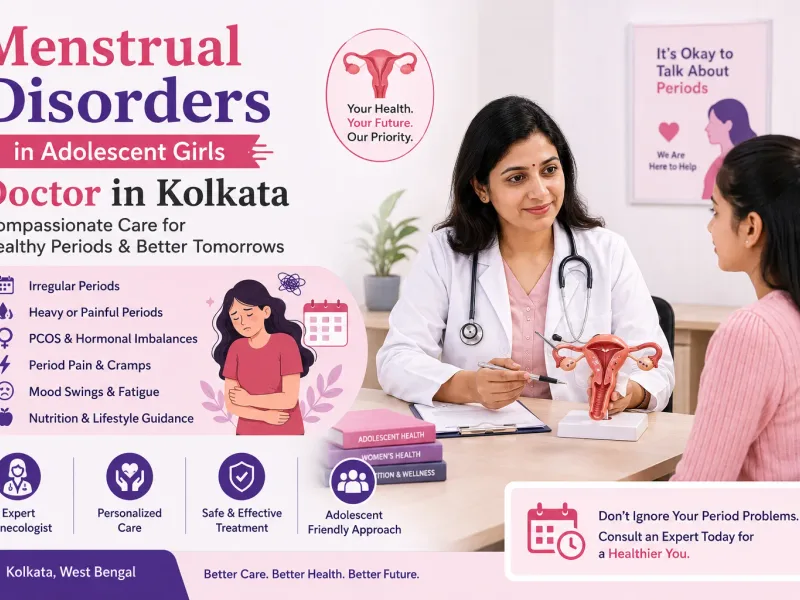
If you are searching for a Menstrual Disorders in Adolescent Girls Doctor in Kolkata, early evaluation by an experienced gynecologist can help identify the underlying cause of irregular or painful periods. While menstrual irregularities are common during the first few years after puberty, persistent
July 31, 2026

If you are searching for a Fibroid & Endometriosis doctor in Kolkata, choosing an experienced gynecologist with expertise in minimally invasive gynecological surgery is essential. Uterine fibroids and endometriosis are two common but different conditions that can cause pelvic pain, heavy menstrual b
July 31, 2026