

Emergency & Help
24/7 Emergency & General Advisory
🚨 24/7 Medical Emergency
Non-Emergency Advisory
10:00 AM – 6:00 PM, Mon–Sat
For appointments & general queries.
24/7 Emergency & General Advisory
🚨 24/7 Medical Emergency
Non-Emergency Advisory
10:00 AM – 6:00 PM, Mon–Sat
For appointments & general queries.
Empower yourself during breast cancer care by becoming an active advocate. Learn how to ask questions, understand your diagnosis, and work with your healthcare team for the best outcomes.

Receiving a breast cancer diagnosis can be an overwhelming experience, bringing with it a whirlwind of emotions and a flood of medical information. In India, where access to healthcare can vary, and cultural nuances often influence patient-doctor interactions, understanding your role as an active participant in your treatment journey is more crucial than ever. This guide is designed to empower you, the patient, to become your own best advocate during early breast cancer care. Remember, you are not just a recipient of care; you are an integral and equal member of your healthcare team. Your insights, feelings, and questions are invaluable in shaping the most effective treatment plan for you.
Self-advocacy means taking an active and informed role in your medical decisions. While your doctors and nurses possess extensive knowledge and experience, they are not privy to your unique experiences, symptoms, and how you feel on a daily basis. You are the expert on yourself. Early diagnosis of breast cancer significantly improves treatment options and prognosis, making proactive engagement with your healthcare providers paramount. By speaking up, asking questions, and sharing your concerns, you ensure that your treatment plan aligns with your personal needs and values.
Knowledge is power. The first step in effective self-advocacy is to educate yourself about your specific diagnosis. This includes understanding:
Don't hesitate to ask your healthcare team to explain any medical terms or procedures you don't understand. They can interpret scans, blood work, and physical examinations, but they rely on you to communicate your symptoms and how you are feeling. Be open about any changes you notice in your physical or emotional well-being.
Appointments can be a lot to process, especially when dealing with a serious diagnosis. To maximize the benefit of each consultation:
It's perfectly normal to have lingering questions after an appointment. You have the right to seek clarification on anything that remains unclear. If you think of something after leaving the clinic, write it down. You can bring these questions to your next appointment or, if urgent, contact your doctor's office. This includes clarifying details about medications, upcoming procedures, or follow-up schedules.
Don't hesitate to seek a second opinion. This is a common practice in medicine, and doctors are accustomed to patients exploring all available options. A second opinion can confirm your current treatment plan or offer alternative perspectives, ensuring you are confident in the path forward. It's about making the best possible decision for your health.
Clinical trials are essential for advancing medical knowledge and developing new treatments for breast cancer. Participating in a clinical trial can offer access to innovative therapies that may not yet be widely available. Discuss with your doctor whether any clinical trials are suitable for your condition. Your participation contributes to the future of cancer care.
Connecting with others who are going through similar experiences can be incredibly beneficial. Support groups provide a safe space to share feelings, exchange coping strategies, and find emotional solace. Look for local or online support groups in India that cater to breast cancer patients. Sharing your journey with others who understand can reduce feelings of isolation and provide practical advice.
While self-advocacy is about proactive engagement, it's also vital to recognize when immediate medical attention is needed. Contact your doctor or seek emergency care if you experience:
Prompt reporting of new or worsening symptoms, even if they seem minor, is a critical aspect of self-advocacy and ensures timely medical intervention.
Your journey with breast cancer is unique, and your voice is your most powerful tool. By educating yourself, preparing for appointments, asking questions, and seeking support, you become an active partner in your care. Embrace your role as an advocate, and work collaboratively with your healthcare team to achieve the best possible outcomes. Remember, taking these small steps can make a significant difference in your treatment and recovery.
This section adds practical context and preventive advice to help readers make informed healthcare decisions. It is important to verify symptoms early, consult qualified doctors, and avoid self-medication for persistent health issues.
Maintaining healthy routines, following prescribed treatment plans, and attending regular checkups can improve outcomes. If symptoms worsen or red-flag signs appear, immediate medical evaluation is recommended.
Track symptoms and duration.
Follow diagnosis and treatment from a licensed practitioner.
Review medication side effects with your doctor.
Seek urgent care for severe warning signs.
Visit Hospital
Near You

A cesarean section (C-section) is a surgical delivery in which a baby is born through an incision in the mother's abdomen and uterus. In Kolkata, several experienced obstetricians and well-equipped hospitals offer C-section services for planned and emergency deliveries. Understanding when a C-sectio
July 31, 2026
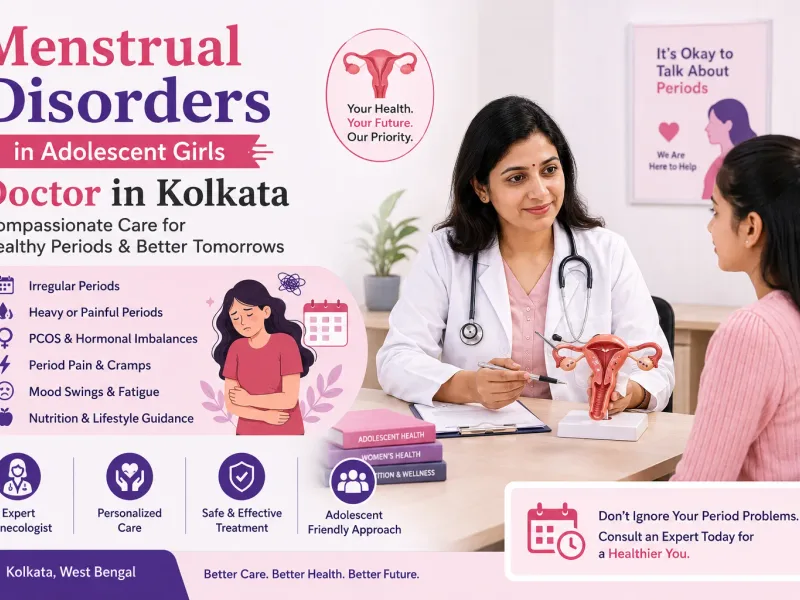
If you are searching for a Menstrual Disorders in Adolescent Girls Doctor in Kolkata, early evaluation by an experienced gynecologist can help identify the underlying cause of irregular or painful periods. While menstrual irregularities are common during the first few years after puberty, persistent
July 31, 2026

If you are searching for a Fibroid & Endometriosis doctor in Kolkata, choosing an experienced gynecologist with expertise in minimally invasive gynecological surgery is essential. Uterine fibroids and endometriosis are two common but different conditions that can cause pelvic pain, heavy menstrual b
July 31, 2026