

Emergency & Help
24/7 Emergency & General Advisory
🚨 24/7 Medical Emergency
Non-Emergency Advisory
10:00 AM – 6:00 PM, Mon–Sat
For appointments & general queries.
24/7 Emergency & General Advisory
🚨 24/7 Medical Emergency
Non-Emergency Advisory
10:00 AM – 6:00 PM, Mon–Sat
For appointments & general queries.
Compare IUDs and birth control pills: understand their effectiveness, duration, convenience, side effects, and risks to choose the best birth control method for you.

Deciding on the right birth control method is a significant personal choice, impacting your health, lifestyle, and family planning goals. Two of the most popular and effective options available today are Intrauterine Devices (IUDs) and oral contraceptive pills (birth control pills). While both serve the primary purpose of preventing pregnancy, they differ significantly in their mechanisms, duration of action, side effects, and suitability for different individuals. This comprehensive guide aims to demystify these differences, providing you with the information needed to make an informed decision in consultation with your healthcare provider.
An Intrauterine Device (IUD) is a small, T-shaped device inserted into the uterus by a healthcare professional. It's a long-acting reversible contraceptive (LARC) method, meaning it provides highly effective contraception for an extended period, typically ranging from 3 to 10 years, depending on the type of IUD. There are two main types of IUDs:
Birth control pills, also known as oral contraceptives, are taken daily by mouth. They contain synthetic hormones (estrogen and progestin, or progestin-only) that prevent pregnancy by inhibiting ovulation (the release of an egg from the ovary), thickening cervical mucus, and thinning the uterine lining. Pills are typically taken in a 21-day or 28-day cycle. There are two main types of birth control pills:
When comparing IUDs and birth control pills, several factors come into play:
Both IUDs and birth control pills are highly effective when used correctly. However, IUDs generally have a higher typical-use effectiveness rate because they eliminate the possibility of user error (e.g., forgetting to take a pill).
This is a major differentiating factor.
The daily nature of pills versus the long-term nature of IUDs significantly impacts convenience.
Side effects can vary greatly among individuals for both methods. It's crucial to discuss potential side effects with your doctor.
Both methods are reversible, and fertility typically returns quickly after discontinuation.
The best method depends on individual health, lifestyle, and preferences.
While generally safe, both methods carry some risks:
It is essential to consult a healthcare provider to discuss your medical history, lifestyle, and family planning goals before choosing any birth control method. They can help you weigh the pros and cons of IUDs and pills and recommend the best option for you.
Seek immediate medical attention if you experience any of the following after starting a new birth control method:
Choosing between an IUD and birth control pills is a personal decision with no one-size-fits-all answer. Both are highly effective methods of contraception, but they offer different benefits and come with different considerations regarding convenience, duration, side effects, and risks. By understanding these differences and working closely with your healthcare provider, you can confidently select the birth control method that best aligns with your individual needs and health profile, empowering you to take control of your reproductive health.
This section adds practical context and preventive advice to help readers make informed healthcare decisions. It is important to verify symptoms early, consult qualified doctors, and avoid self-medication for persistent health issues.
Maintaining healthy routines, following prescribed treatment plans, and attending regular checkups can improve outcomes. If symptoms worsen or red-flag signs appear, immediate medical evaluation is recommended.
Track symptoms and duration.
Follow diagnosis and treatment from a licensed practitioner.
Review medication side effects with your doctor.
Seek urgent care for severe warning signs.
Visit Hospital
Near You

A cesarean section (C-section) is a surgical delivery in which a baby is born through an incision in the mother's abdomen and uterus. In Kolkata, several experienced obstetricians and well-equipped hospitals offer C-section services for planned and emergency deliveries. Understanding when a C-sectio
July 31, 2026
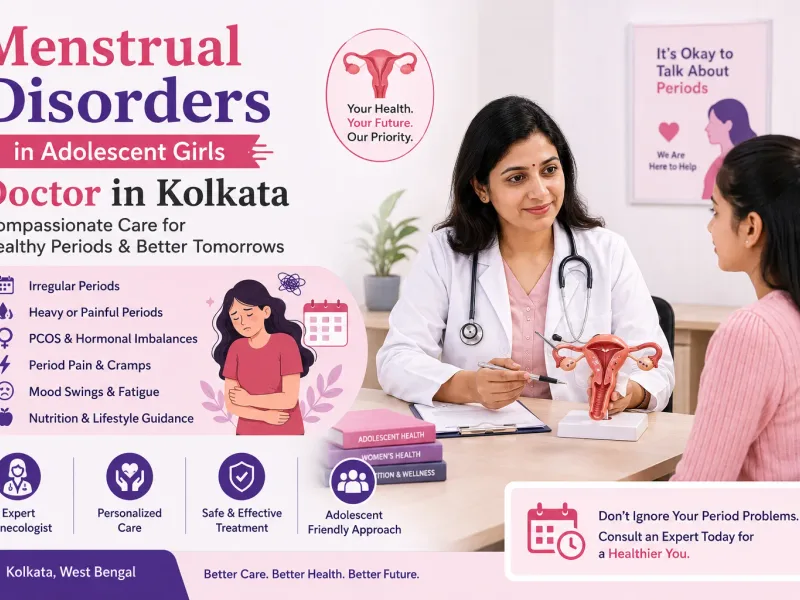
If you are searching for a Menstrual Disorders in Adolescent Girls Doctor in Kolkata, early evaluation by an experienced gynecologist can help identify the underlying cause of irregular or painful periods. While menstrual irregularities are common during the first few years after puberty, persistent
July 31, 2026

If you are searching for a Fibroid & Endometriosis doctor in Kolkata, choosing an experienced gynecologist with expertise in minimally invasive gynecological surgery is essential. Uterine fibroids and endometriosis are two common but different conditions that can cause pelvic pain, heavy menstrual b
July 31, 2026