

Emergency & Help
24/7 Emergency & General Advisory
🚨 24/7 Medical Emergency
Non-Emergency Advisory
10:00 AM – 6:00 PM, Mon–Sat
For appointments & general queries.
24/7 Emergency & General Advisory
🚨 24/7 Medical Emergency
Non-Emergency Advisory
10:00 AM – 6:00 PM, Mon–Sat
For appointments & general queries.
Understand amenorrhea, the absence of menstrual periods, and explore its various causes including natural factors, lifestyle choices, hormonal imbalances, and medical conditions. Learn about diagnosis, treatment options, and when to seek medical advice.

Ladies, let's talk about something that can be quite concerning: a missing period. We all know our menstrual cycle as a regular rhythm, a part of our body's natural clockwork. But what happens when that rhythm skips a beat, or stops altogether? This condition is known as amenorrhea, and it's more common than you might think. It's not just about a missed period; it can sometimes signal an underlying health issue that needs attention. In India, where traditional beliefs often intertwine with modern healthcare, understanding amenorrhea is key to empowering women to take charge of their reproductive health. This article aims to shed light on this topic in a clear, practical, and empathetic way, offering insights relevant to our diverse Indian readership.
So, what exactly is amenorrhea? Simply put, it's the absence of menstruation. This can manifest in two main ways: either a young woman hasn't had her first period by the age of 16 (primary amenorrhea), or a woman who has been menstruating regularly stops having her periods for three or more consecutive months (secondary amenorrhea). While pregnancy is the most common reason for a missed period in sexually active women, there are many other factors at play.
It's important to differentiate between the two types, as they often point to different underlying causes:
The reasons behind amenorrhea are diverse, ranging from natural bodily processes to more complex medical conditions. Let's break them down:
These are the most straightforward explanations for a missed period:
Our daily habits and overall well-being significantly impact our hormonal balance and, consequently, our menstrual cycles:
This section adds practical context and preventive advice to help readers make informed healthcare decisions. It is important to verify symptoms early, consult qualified doctors, and avoid self-medication for persistent health issues.
Maintaining healthy routines, following prescribed treatment plans, and attending regular checkups can improve outcomes. If symptoms worsen or red-flag signs appear, immediate medical evaluation is recommended.
Track symptoms and duration.
Follow diagnosis and treatment from a licensed practitioner.
Review medication side effects with your doctor.
Seek urgent care for severe warning signs.
Visit Hospital
Near You

A cesarean section (C-section) is a surgical delivery in which a baby is born through an incision in the mother's abdomen and uterus. In Kolkata, several experienced obstetricians and well-equipped hospitals offer C-section services for planned and emergency deliveries. Understanding when a C-sectio
July 31, 2026
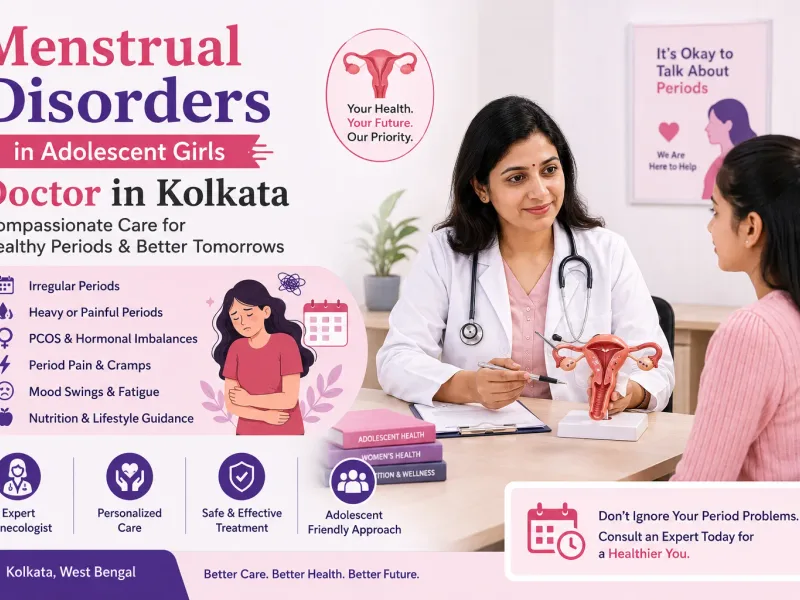
If you are searching for a Menstrual Disorders in Adolescent Girls Doctor in Kolkata, early evaluation by an experienced gynecologist can help identify the underlying cause of irregular or painful periods. While menstrual irregularities are common during the first few years after puberty, persistent
July 31, 2026

If you are searching for a Fibroid & Endometriosis doctor in Kolkata, choosing an experienced gynecologist with expertise in minimally invasive gynecological surgery is essential. Uterine fibroids and endometriosis are two common but different conditions that can cause pelvic pain, heavy menstrual b
July 31, 2026