

Emergency & Help
24/7 Emergency & General Advisory
🚨 24/7 Medical Emergency
Non-Emergency Advisory
10:00 AM – 6:00 PM, Mon–Sat
For appointments & general queries.
24/7 Emergency & General Advisory
🚨 24/7 Medical Emergency
Non-Emergency Advisory
10:00 AM – 6:00 PM, Mon–Sat
For appointments & general queries.
Learn about the possibility of ovarian cancer after a hysterectomy. Understand the risks, symptoms, diagnosis, and prevention strategies. Your health matters.

A hysterectomy is a major surgery that involves removing the uterus. For many women, especially those dealing with conditions like fibroids or endometriosis, it can offer significant relief. However, a common question that arises after this procedure is about the risk of ovarian cancer. Many assume that if the uterus is gone, the risk of ovarian cancer disappears entirely. While a hysterectomy does reduce the risk, it doesn't always eliminate it. Let's explore why and what you need to know.
A hysterectomy is the surgical removal of the uterus. The reasons for undergoing this procedure are varied and can include conditions such as:
There are different types of hysterectomies, and the extent of the surgery can vary:
It's important to note that in many hysterectomy procedures, the ovaries and fallopian tubes are left in place. This is a key factor when considering ovarian cancer risk.
Ovarian cancer is a type of cancer that begins in the ovaries. The ovaries are two small, oval-shaped organs located on either side of the uterus. They produce eggs and are the primary source of female hormones like estrogen and progesterone. Most ovarian cancers originate from the epithelial cells that cover the outer surface of the ovaries. However, cancer can also develop from the germ cells (which produce eggs) or the stromal cells (which produce hormones).
Ovarian cancer is considered relatively rare. The National Cancer Institute estimates the lifetime risk for women in India to be around 1.25 percent. However, this risk can be significantly higher for individuals with certain genetic mutations, such as BRCA1 or BRCA2. For women carrying these mutations, the risk of developing ovarian cancer by age 70 can increase substantially.
The survival rate for ovarian cancer varies greatly depending on the stage at which it's diagnosed. While the overall 5-year relative survival rate for epithelial ovarian cancer (the most common type) is around 47 percent, this figure dramatically improves to as high as 92 percent when diagnosed and treated in its early stages. Unfortunately, only about 20 percent of ovarian cancers are detected early, highlighting the importance of symptom awareness and prompt medical attention.
Having a hysterectomy does lower your risk of developing ovarian cancer. Studies suggest that it can reduce the chance by about one-third. This is because the uterus and ovaries are in close proximity, and the surgery can sometimes involve the removal of ovaries and fallopian tubes as well.
When both ovaries and fallopian tubes are removed during a hysterectomy, this procedure is known as a bilateral salpingo-oophorectomy (BSO). Removing the ovaries significantly reduces the risk of ovarian cancer. However, even after a BSO, there remains a small, residual risk.
This residual risk stems from a few factors:
In essence, even without ovaries, ovarian-like cancer can still develop from these migrated cells or peritoneal cells. It's a subtle but important distinction.
Because ovarian cancer is often diagnosed at later stages, recognizing its symptoms is paramount. These symptoms can be vague and easily mistaken for other common conditions, especially in women who have had a hysterectomy. However, persistent symptoms warrant a doctor's visit.
Common symptoms include:
Consider this scenario: Mrs. Sharma, a 62-year-old woman who had a total hysterectomy five years ago for fibroids, has been experiencing increasing bloating and a feeling of fullness for the past few weeks. She initially dismissed it as indigestion, but her daughter urged her to see a doctor due to the persistence of these symptoms.
Diagnosing ovarian cancer, especially after a hysterectomy, can be challenging. Doctors typically use a combination of methods:
For the general population, maintaining a healthy lifestyle and being aware of symptoms are key. However, for individuals with a higher genetic predisposition, more proactive measures can be considered.
It's crucial to consult your doctor if you experience any persistent symptoms of ovarian cancer, regardless of whether you've had a hysterectomy. Don't dismiss symptoms like persistent bloating, pelvic pain, or changes in bowel habits. If you have a strong family history of ovarian or breast cancer, discuss your risk with your doctor. Regular check-ups and open communication with your healthcare provider are your best allies in early detection and management.
While your risk is significantly lowered, there is a small possibility of developing a similar type of cancer from cells that may have migrated to the peritoneum before your ovaries were removed, or from peritoneal cells themselves.
Ovarian cancer starts in the ovaries. Peritoneal cancer starts in the peritoneum, the lining of the abdominal cavity. However, they share many similarities in symptoms and treatment, especially when ovaries are absent.
Currently, there are no universally recommended screening tests for ovarian cancer in the general population that have proven effective in reducing mortality. However, for high-risk individuals (like those with BRCA mutations), doctors may recommend specific monitoring strategies.
Visit Hospital
Near You

A cesarean section (C-section) is a surgical delivery in which a baby is born through an incision in the mother's abdomen and uterus. In Kolkata, several experienced obstetricians and well-equipped hospitals offer C-section services for planned and emergency deliveries. Understanding when a C-sectio
July 31, 2026
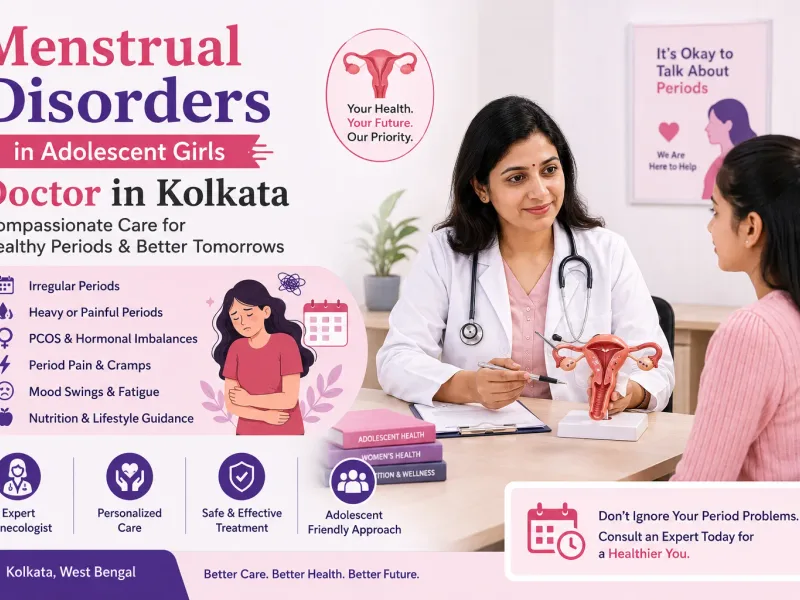
If you are searching for a Menstrual Disorders in Adolescent Girls Doctor in Kolkata, early evaluation by an experienced gynecologist can help identify the underlying cause of irregular or painful periods. While menstrual irregularities are common during the first few years after puberty, persistent
July 31, 2026

If you are searching for a Fibroid & Endometriosis doctor in Kolkata, choosing an experienced gynecologist with expertise in minimally invasive gynecological surgery is essential. Uterine fibroids and endometriosis are two common but different conditions that can cause pelvic pain, heavy menstrual b
July 31, 2026