

Emergency & Help
24/7 Emergency & General Advisory
🚨 24/7 Medical Emergency
Non-Emergency Advisory
10:00 AM – 6:00 PM, Mon–Sat
For appointments & general queries.
24/7 Emergency & General Advisory
🚨 24/7 Medical Emergency
Non-Emergency Advisory
10:00 AM – 6:00 PM, Mon–Sat
For appointments & general queries.
Learn about ovarian cancer from the inspiring stories of survivors. Discover the subtle symptoms, the importance of early detection, and how to advocate for your health.

Ovarian cancer. The very words can send a shiver down anyone's spine. For many, it's a diagnosis that strikes fear and uncertainty. But what if we told you that understanding your body, recognizing subtle signs, and speaking up could make all the difference? This isn't just about a disease; it's about empowerment, awareness, and the incredible strength of women who have faced ovarian cancer and emerged as advocates for others. We've spoken with courageous women who share their journeys, offering invaluable insights into early detection and self-advocacy. Their stories are a powerful reminder that listening to your body is not just a good idea – it can be lifesaving.
Ovarian cancer is often called a 'silent killer' because its symptoms can be vague and easily mistaken for less serious conditions. This can lead to delayed diagnosis, which unfortunately impacts survival rates. While it affects women of all ages, it's more common in older women, especially after menopause. However, as we'll see, it can strike at any age. The ovaries are two small glands that produce eggs and hormones. When abnormal cells grow uncontrollably in one or both ovaries, ovarian cancer begins.
The statistics paint a clear picture. When ovarian cancer is detected at an early stage (Stage 1), the survival rate is remarkably high, around 94% for more than 5 years. This is a testament to the effectiveness of early intervention. However, the harsh reality is that only about 20% of ovarian cancers are caught this early. Most women receive a diagnosis after the cancer has spread, significantly lowering the survival rates. This disparity underscores the urgent need for greater awareness of the symptoms and proactive health-seeking behaviour.
Let's hear directly from women who have navigated this challenging path. Their personal accounts offer a unique perspective that goes beyond medical textbooks.
Adora Rodriguez was only 16 when she started experiencing a persistent feeling of heaviness in her lower abdomen, accompanied by severe bloating. She described herself as looking 'pregnant.' This wasn't just discomfort; it was causing back pain and disrupting her sleep. Her mother, noticing these changes, took her to an urgent care clinic. Initially, tests came back negative, and she was told it might be severe constipation. However, further scans revealed a mass. A surgeon removed the mass, Adora's right ovary, and fallopian tube. Biopsies confirmed a rare form of ovarian cancer called dysgerminoma. Adora's surgeon and oncologist emphasized that waiting even a week longer could have allowed the cancer to spread. Today, Adora is 20, a survivor, and studying to become a pediatric oncology nurse, driven by her own experience.
Mariangela DiPietri, a vibrant 73-year-old mother and grandmother, recalls a moment at a client restaurant when excruciating abdominal pain became unbearable. After multiple hospital visits and an initial misdiagnosis, she learned she had masses on both ovaries, which turned out to be Stage 1 ovarian cancer. Mariangela credits attending a wellness conference where she learned about ovarian cancer symptoms from survivors as a pivotal moment. She realized that she had been experiencing subtle symptoms for some time, including fatigue, bloating, back pain, and a feeling of fullness in her bladder. Her message is clear: awareness of symptoms and early diagnosis saved her life.
Vesna, a 46-year-old mother of three and owner of a martial arts fitness studio, visited her gynecologist about persistent abdominal bloating that wouldn't subside. She requested an internal sonogram, but her doctor initially dismissed her concerns, focusing on an upcoming vacation. Fortunately, Vesna persisted. A surgeon later removed a cyst, discovering both Stage 1 ovarian cancer and endometrial cancer within it. Vesna's experience highlights the importance of a doctor taking persistent symptoms seriously and a patient's right to advocate for further investigation.
Recognizing the signs is the first step towards early detection. While symptoms can vary, here are some common indicators to be aware of:
It's vital to remember that these symptoms can also be caused by many other, less serious conditions. The key is persistence. If these symptoms are new, persistent, and worsening, it's time to seek medical advice.
If you experience any of the symptoms listed above, especially if they are persistent (occurring more than a few times a month) or if they are new and concerning, don't hesitate to consult your doctor. Here’s a practical approach:
Remember Adora's experience – her initial symptoms were dismissed. It was the persistence and the mother's intuition that led to further investigation. Similarly, Vesna's request for an ultrasound, though initially met with resistance, was crucial.
Diagnosing ovarian cancer typically involves:
Treatment depends on the type and stage of the cancer, but commonly includes:
While not all ovarian cancer is preventable, certain factors can reduce your risk:
The stories of Adora, Mariangela, and Vesna are powerful testaments to the importance of listening to your body and advocating for your health. Ovarian cancer might be a formidable opponent, but knowledge, vigilance, and a strong voice can be your greatest allies. Don't ignore persistent symptoms. Talk to your doctor, ask questions, and trust your instincts. You are your own best health advocate.
Q1: Are the symptoms of ovarian cancer always obvious?
No, unfortunately, the symptoms are often subtle and can be easily mistaken for other common conditions like indigestion or irritable bowel syndrome. This is why persistent symptoms warrant medical attention.
Q2: Can ovarian cancer affect young women?
Yes, while it is more common in older women, ovarian cancer can affect women of any age, as demonstrated by Adora's case at 16.
Q3: Is there a specific test for ovarian cancer?
There isn't one single definitive test for early detection in the general population. Diagnosis usually involves a combination of pelvic exams, imaging tests, blood tests (like CA-125), and ultimately, a biopsy. Regular gynecological check-ups are important.
Q4: What is the role of genetics in ovarian cancer?
Genetics plays a significant role for some women. Mutations in genes like BRCA1 and BRCA2 greatly increase the risk of ovarian and breast cancer. Genetic testing can help identify individuals at high risk.
Q5: If I have bloating, does it mean I have ovarian cancer?
Not necessarily. Bloating is a very common symptom with many causes, most of which are not cancer. However, if bloating is persistent, worsening, and accompanied by other concerning symptoms, it is important to get it checked by a doctor.
Visit Hospital
Near You

A cesarean section (C-section) is a surgical delivery in which a baby is born through an incision in the mother's abdomen and uterus. In Kolkata, several experienced obstetricians and well-equipped hospitals offer C-section services for planned and emergency deliveries. Understanding when a C-sectio
July 31, 2026
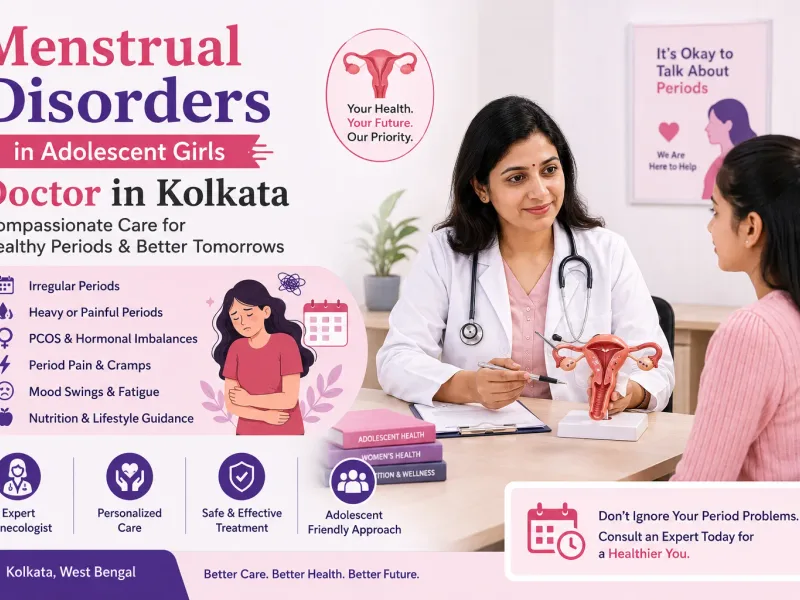
If you are searching for a Menstrual Disorders in Adolescent Girls Doctor in Kolkata, early evaluation by an experienced gynecologist can help identify the underlying cause of irregular or painful periods. While menstrual irregularities are common during the first few years after puberty, persistent
July 31, 2026

If you are searching for a Fibroid & Endometriosis doctor in Kolkata, choosing an experienced gynecologist with expertise in minimally invasive gynecological surgery is essential. Uterine fibroids and endometriosis are two common but different conditions that can cause pelvic pain, heavy menstrual b
July 31, 2026