

Emergency & Help
24/7 Emergency & General Advisory
🚨 24/7 Medical Emergency
Non-Emergency Advisory
10:00 AM – 6:00 PM, Mon–Sat
For appointments & general queries.
24/7 Emergency & General Advisory
🚨 24/7 Medical Emergency
Non-Emergency Advisory
10:00 AM – 6:00 PM, Mon–Sat
For appointments & general queries.
Learn about the often subtle early signs of ovarian cancer, understand diagnostic methods, treatment options, and preventive strategies. Early detection is key.

Ovarian cancer, a condition affecting the female reproductive glands, can be challenging to detect in its initial stages. These glands, known as ovaries, are vital for producing eggs and essential hormones like estrogen and progesterone. While approximately 19,880 women in India are expected to receive an ovarian cancer diagnosis annually, and sadly, a significant number will succumb to it, understanding the early warning signs is paramount. Often, the earliest symptoms are vague, making them easy to dismiss as everyday discomforts. However, when these symptoms persist and represent a distinct change from your usual bodily sensations, it's time to pay closer attention.
The general consensus among medical professionals is that persistent symptoms, particularly those occurring more than 12 times a month, warrant a discussion with your doctor. This vigilance is especially important for women over 60, as ovarian cancer incidence tends to increase with age. However, it can affect women of all ages. Early detection significantly improves treatment outcomes, so knowing what to look for can make a life-saving difference.
Ovarian cancer originates when abnormal cells within the ovary start to multiply uncontrollably, forming a tumour. If this tumour is left untreated, it can spread to other parts of the body, a process known as metastasis. The most common type, epithelial ovarian carcinoma, arises from the outer tissue layer of the ovary, accounting for about 85-90% of malignant ovarian tumours. Less common types include germ cell tumours and stromal tumours.
Several factors can increase a woman's risk of developing ovarian cancer. These include a family history of ovarian or breast cancer, carrying specific genetic mutations like BRCA1 or BRCA2, never having been pregnant, starting menstruation at an early age, or experiencing menopause late in life. Endometriosis and a history of certain other reproductive cancers also play a role.
The challenge with ovarian cancer is that its early symptoms often mimic those of less serious conditions. However, the key distinguishing factor is persistence and a noticeable change from your normal. Be aware of the following:
It's vital to remember that experiencing one or even a few of these symptoms doesn't automatically mean you have ovarian cancer. Many common conditions, such as irritable bowel syndrome (IBS), indigestion, or urinary tract infections (UTIs), can cause similar symptoms. The critical factor is the persistence and the change from your baseline health.
If you've noticed that these symptoms are not going away and are impacting your daily life, it's time to consult a healthcare professional. Imagine this scenario: Priya, a 55-year-old homemaker, noticed she was feeling bloated almost every day for the past two months. She also felt unusually full after just a few bites of food and found herself needing to use the restroom more frequently. Initially, she attributed it to age and perhaps eating too much spicy food, but the symptoms persisted and started causing her discomfort. She decided to see her gynaecologist, who, after listening to her concerns and conducting an initial examination, decided to investigate further.
Your doctor will likely start with a thorough medical history and a physical examination, including a pelvic exam. Based on these initial findings, they might recommend further tests:
Treatment for ovarian cancer depends heavily on the type, stage, and grade of the cancer, as well as the patient's overall health and preferences. The primary treatment modalities include:
The stage of the cancer is critical. For example, Stage 1 ovarian cancer is limited to one or both ovaries. Stage 1A means the cancer is confined to a single ovary, Stage 1B involves both ovaries, and Stage 1C indicates cancer cells have spread to the outer surface of the ovary. Advanced stages can involve spread to the abdomen (ascites), lungs (pleural effusion), or intestinal blockage.
While there's no guaranteed way to prevent ovarian cancer, certain strategies can help reduce your risk:
Don't hesitate to contact your doctor if you experience any of the persistent symptoms mentioned above, especially if they are new, worsening, or significantly different from what you normally experience. Early consultation can lead to earlier diagnosis and more effective treatment. If you notice symptoms like significant abdominal swelling, severe pain, difficulty breathing, or unexplained weight loss alongside other symptoms, seek medical help promptly.
Q1: Can ovarian cancer be cured?
A1: Ovarian cancer can be cured, especially when detected and treated in its early stages. However, even in advanced stages, treatments can help manage the disease and improve quality of life.
Q2: Are there any screening tests for ovarian cancer?
A2: Currently, there is no single, reliable routine screening test for ovarian cancer that is recommended for the general population. This is why awareness of symptoms is so important.
Q3: Can young women get ovarian cancer?
A3: Yes, while more common in older women, ovarian cancer can occur in younger women, including those of reproductive age.
Q4: What is the difference between a cyst and ovarian cancer?
A4: Most ovarian cysts are benign (non-cancerous) and often disappear on their own. Cancerous ovarian tumours are malignant, meaning they can invade surrounding tissues and spread to other parts of the body.
Visit Hospital
Near You

A cesarean section (C-section) is a surgical delivery in which a baby is born through an incision in the mother's abdomen and uterus. In Kolkata, several experienced obstetricians and well-equipped hospitals offer C-section services for planned and emergency deliveries. Understanding when a C-sectio
July 31, 2026
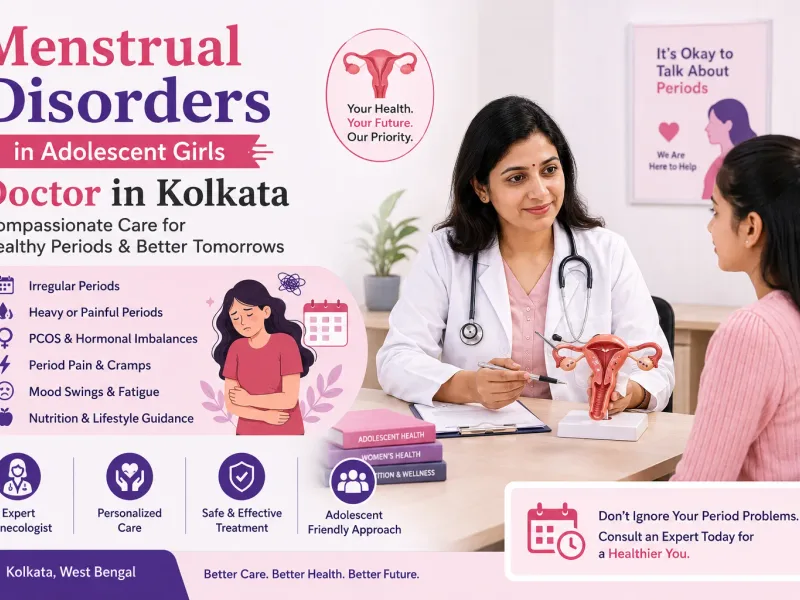
If you are searching for a Menstrual Disorders in Adolescent Girls Doctor in Kolkata, early evaluation by an experienced gynecologist can help identify the underlying cause of irregular or painful periods. While menstrual irregularities are common during the first few years after puberty, persistent
July 31, 2026

If you are searching for a Fibroid & Endometriosis doctor in Kolkata, choosing an experienced gynecologist with expertise in minimally invasive gynecological surgery is essential. Uterine fibroids and endometriosis are two common but different conditions that can cause pelvic pain, heavy menstrual b
July 31, 2026