

Emergency & Help
24/7 Emergency & General Advisory
🚨 24/7 Medical Emergency
Non-Emergency Advisory
10:00 AM – 6:00 PM, Mon–Sat
For appointments & general queries.
24/7 Emergency & General Advisory
🚨 24/7 Medical Emergency
Non-Emergency Advisory
10:00 AM – 6:00 PM, Mon–Sat
For appointments & general queries.
Understand the subtle early signs, risk factors, diagnosis, and treatment options for ovarian cancer. Learn what steps you can take for early detection and prevention.

Ovarian cancer, a condition affecting the female reproductive glands that produce eggs and hormones like estrogen and progesterone, can be a daunting diagnosis. In India, like in many parts of the world, understanding its nuances is key to early detection and effective management. While approximately 19,880 women in the US are diagnosed annually, and tragically, about 12,810 die from it, awareness and proactive health management can make a significant difference. This form of cancer occurs when abnormal cells in the ovary start multiplying uncontrollably, forming a tumor. If left unchecked, this tumor can spread to other parts of the body, a process known as metastasis. Unfortunately, there isn't a routine screening test for ovarian cancer, and its earliest symptoms often mimic less serious conditions, making them easy to dismiss. This is why recognizing persistent changes in your body is so vital.
The challenge with ovarian cancer lies in its often vague and easily overlooked early symptoms. Many women might experience symptoms like abdominal bloating, pressure, or pain, along with increased frequency of urination or difficulty eating. These can easily be mistaken for digestive issues, stress, or normal bodily fluctuations. However, the critical difference when these symptoms relate to ovarian cancer is their persistence and their noticeable departure from your usual bodily sensations. If you find yourself experiencing these discomforts more than 12 times a month, it’s a signal to pay closer attention.
Consider this scenario: Mrs. Sharma, a 55-year-old homemaker, noticed increasing bloating over a few weeks. She also felt unusually full after small meals and had to use the restroom more often. Initially, she attributed it to eating out more frequently and perhaps a mild urinary tract infection. However, the bloating didn't subside, and she started experiencing a dull ache in her lower abdomen. She decided to mention it to her doctor during her routine check-up.
Beyond the most common early indicators, ovarian cancer can manifest in other ways, particularly as the tumor grows or if the cancer is not detected early. These can include:
In advanced stages, if left untreated, ovarian cancer can lead to more severe complications such as fluid buildup around the lungs (pleural effusion), fluid accumulation in the abdomen (ascites), or a blockage in the digestive tract (bowel obstruction). These are critical signs that require immediate medical attention.
While the exact cause of ovarian cancer isn't fully understood, several factors increase a woman's risk. These include:
The most common type of ovarian cancer is epithelial ovarian carcinoma, which arises from the outer layer of the ovary. These account for about 85-90% of malignant ovarian cancers.
Diagnosing ovarian cancer can be challenging due to the non-specific nature of early symptoms. Doctors typically use a combination of methods:
Staging is a critical part of the diagnostic process, determining how far the cancer has spread. Stage 1 ovarian cancer, for instance, is limited to the ovaries, with substages indicating if it's in one ovary (1A), both ovaries (1B), or if cancer cells are found on the outer surface of the ovary (1C).
Treatment for ovarian cancer depends heavily on the type, stage, and grade of the cancer, as well as the patient's overall health and age. The primary treatment is often surgery, which may involve removing the tumor, one or both ovaries, and potentially the uterus (hysterectomy). Chemotherapy is a common treatment used to kill cancer cells, often administered after surgery. Targeted therapy and hormone therapy are also used in specific cases, aiming to block the growth and spread of cancer cells by interfering with specific molecules or hormones involved in cancer growth.
While not all cases of ovarian cancer can be prevented, certain steps can help reduce the risk:
It is essential to consult your doctor if you experience any of the persistent symptoms mentioned earlier, especially if they occur more than 12 times a month. Don't hesitate to seek medical advice if you notice a significant and unexplained change in your body's usual functioning. Early detection significantly improves treatment outcomes and prognosis. If you have a family history of ovarian cancer or related cancers, regular check-ups and open communication with your healthcare provider are paramount.
Yes, while it is more common in women over 60, ovarian cancer can affect women of any age, including younger women. Early symptoms should always be investigated by a healthcare professional, regardless of age.
Ovarian cancer is treatable, and early detection significantly improves the chances of a cure. Many women with early-stage ovarian cancer can be successfully treated and achieve long-term remission. Treatment outcomes depend on the stage at diagnosis and the individual's response to therapy.
Most ovarian cysts are benign (non-cancerous) and often resolve on their own. They are fluid-filled sacs. Ovarian cancer, on the other hand, involves the uncontrolled growth of abnormal cells forming a malignant tumor. While some symptoms can overlap, persistent and worsening symptoms warrant medical evaluation to distinguish between the two.
Visit Hospital
Near You

A cesarean section (C-section) is a surgical delivery in which a baby is born through an incision in the mother's abdomen and uterus. In Kolkata, several experienced obstetricians and well-equipped hospitals offer C-section services for planned and emergency deliveries. Understanding when a C-sectio
July 31, 2026
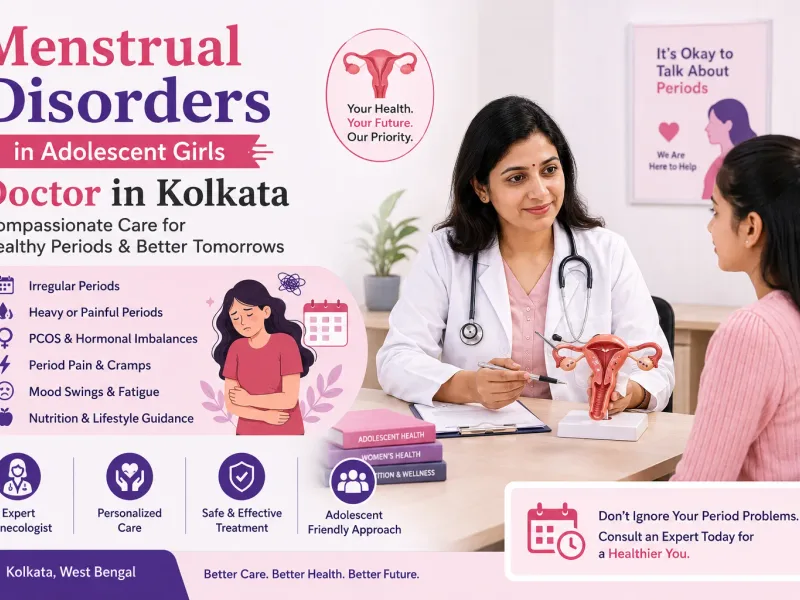
If you are searching for a Menstrual Disorders in Adolescent Girls Doctor in Kolkata, early evaluation by an experienced gynecologist can help identify the underlying cause of irregular or painful periods. While menstrual irregularities are common during the first few years after puberty, persistent
July 31, 2026

If you are searching for a Fibroid & Endometriosis doctor in Kolkata, choosing an experienced gynecologist with expertise in minimally invasive gynecological surgery is essential. Uterine fibroids and endometriosis are two common but different conditions that can cause pelvic pain, heavy menstrual b
July 31, 2026