

Emergency & Help
24/7 Emergency & General Advisory
🚨 24/7 Medical Emergency
Non-Emergency Advisory
10:00 AM – 6:00 PM, Mon–Sat
For appointments & general queries.
24/7 Emergency & General Advisory
🚨 24/7 Medical Emergency
Non-Emergency Advisory
10:00 AM – 6:00 PM, Mon–Sat
For appointments & general queries.
Understand therapeutic abortion, a medically necessary procedure to end a pregnancy due to health risks, non-viability, or severe fetal complications. Learn about its indications, procedures, and considerations.

What is a Therapeutic Abortion? A therapeutic abortion, often referred to as a medically necessary abortion, is a procedure performed to end a pregnancy due to significant health risks to the pregnant person, non-viability of the pregnancy, or a high likelihood of the fetus experiencing severe, long-term complications after birth. The key differentiator between a therapeutic abortion and an elective or voluntary abortion lies in the medical necessity driving the decision. While terms like 'elective' and 'therapeutic' are often used in legal and insurance contexts to define coverage and accessibility, the underlying medical reasons are paramount in understanding this procedure. In India, like in many other countries, the decision to undergo an abortion is governed by specific laws and medical guidelines. The Medical Termination of Pregnancy (MTP) Act in India allows for abortion under certain conditions, prioritizing the health and well-being of the woman. A therapeutic abortion falls under these provisions when continuing the pregnancy poses a substantial threat to the woman's physical or mental health. When is Therapeutic Abortion Recommended? A healthcare provider may recommend a therapeutic abortion in several critical situations: Risk to the Pregnant Person's Health: If continuing the pregnancy poses a significant risk to the life or physical or mental health of the pregnant individual. This can be due to pre-existing medical conditions or conditions that develop during pregnancy. Non-Viable Pregnancy: If the pregnancy is not viable, meaning it cannot continue to term or result in a live birth. Fetal Anomalies: If prenatal screening or diagnostic tests reveal severe fetal abnormalities that are likely to result in the fetus being unable to survive without significant long-term complications, or if the condition is incompatible with life. Medical Conditions Warranting Therapeutic Abortion Several medical conditions, either pre-existing or developing during pregnancy, can necessitate a therapeutic abortion. These include: Pre-existing Medical Conditions: Severe heart conditions (e.g., advanced heart failure, pulmonary hypertension) Severe kidney disease Uncontrolled diabetes with significant complications Certain autoimmune disorders (e.g., severe lupus) Severe respiratory diseases (e.g., advanced cystic fibrosis) Certain types of cancer requiring immediate treatment that is contraindicated during pregnancy Conditions Developing During Pregnancy: Preeclampsia/Eclampsia: A serious condition characterized by high blood pressure and potential organ damage, which can be life-threatening. Placental Abruption: The premature separation of the placenta from the uterine wall, leading to severe bleeding and risk to both mother and fetus. Premature Rupture of Membranes (PROM): If prolonged, it can lead to infection and other complications. Acute infections: Severe infections that pose a significant risk to the mother's life. Cervical incompetence: In some severe cases, it may lead to an unsupportable pregnancy. Fetal Anomalies Requiring Consideration When prenatal testing reveals severe fetal anomalies, a therapeutic abortion may be considered. These anomalies can significantly impact the quality of life or survival prospects of the child. Examples include: Anencephaly: A severe birth defect where a baby is born without parts of the brain and skull. Severe Hydrocephalus: Excessive fluid buildup in the brain, leading to significant brain damage. Certain chromosomal abnormalities: Such as severe forms of Trisomy 13 (Patau syndrome) or Trisomy 18 (Edwards syndrome). Thanatophoric Dysplasia: A severe form of dwarfism incompatible with life. Potter Syndrome: A condition associated with severe kidney problems and lack of amniotic fluid. It is crucial to understand that the decision to terminate a pregnancy for fetal anomalies is deeply personal and often involves extensive genetic counseling and consultation with multiple specialists. Diagnosis and Procedure The diagnosis leading to a therapeutic abortion typically involves a thorough medical evaluation, including: Medical History and Physical Examination: Assessing the pregnant person's overall health and any existing conditions. Diagnostic Tests: Blood tests, urine tests, and imaging studies (ultrasound, MRI) to evaluate maternal and fetal health. Prenatal Screening and Diagnostic Tests: Such as amniocentesis or chorionic villus sampling (CVS) to detect fetal abnormalities. The procedure for a therapeutic abortion is often similar to other types of abortion and depends on the gestational age: Medical Abortion: For early pregnancies (typically up to 10 weeks of gestation), medications like mifepristone and misoprostol can be used. These drugs induce contractions to expel the pregnancy. Surgical Abortion: For later stages of pregnancy, surgical procedures like suction aspiration (vacuum aspiration) or dilation and evacuation (D&E) may be performed. Suction aspiration is a common procedure for first-trimester abortions. Post-Procedure Care and Monitoring Following a therapeutic abortion, careful monitoring of symptoms is essential. While some discomfort and bleeding are expected, patients should be aware of potential signs of complications. Symptoms may initially increase and then gradually subside over a couple of weeks. It is vital to follow the healthcare provider's instructions for recovery, which may include: Rest and avoiding strenuous activity Pain management Monitoring for signs of infection (fever, chills, foul-smelling discharge) Monitoring for excessive bleeding Follow-up appointments to ensure complete recovery Mental and Emotional Health Considerations The decision to have a therapeutic abortion can have significant emotional and psychological impacts. A 2021 review of research highlights the importance of considering a person's physical, mental, and emotional health before and after the procedure. While negative mental health impacts are less common, some individuals may experience severe or persistent depression or anxiety. Access to mental health support and counseling is crucial for those who need it. Studies, including a 30-year longitudinal study published in 2008, have examined the relationship between pregnancy outcomes and mental health, emphasizing the need for comprehensive care. Legal and Ethical Aspects in India In India, the MTP
In summary, timely diagnosis, evidence-based treatment, and prevention-focused care improve long-term health outcomes.
Visit Hospital
Near You
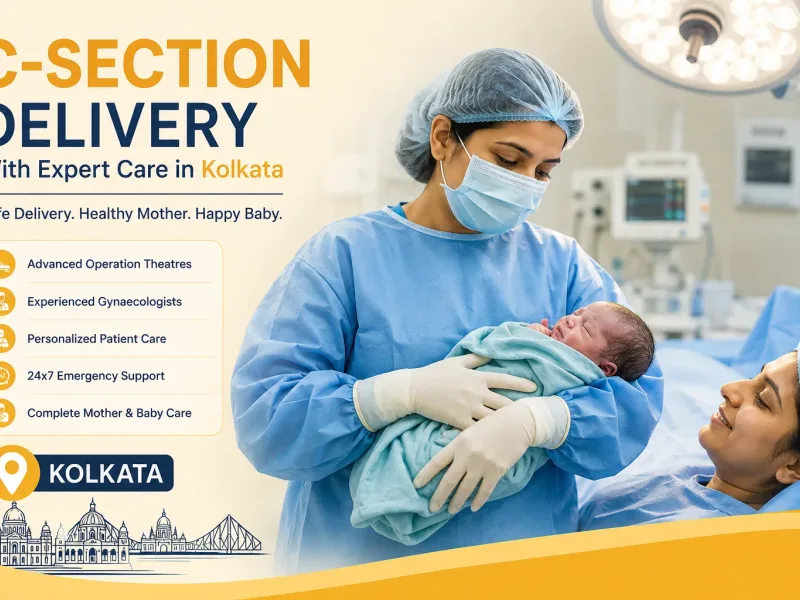
A cesarean section (C-section) is a surgical delivery in which a baby is born through an incision in the mother's abdomen and uterus. In Kolkata, several experienced obstetricians and well-equipped hospitals offer C-section services for planned and emergency deliveries. Understanding when a C-sectio
July 31, 2026

If you are searching for a Menstrual Disorders in Adolescent Girls Doctor in Kolkata, early evaluation by an experienced gynecologist can help identify the underlying cause of irregular or painful periods. While menstrual irregularities are common during the first few years after puberty, persistent
July 31, 2026

If you are searching for a Fibroid & Endometriosis doctor in Kolkata, choosing an experienced gynecologist with expertise in minimally invasive gynecological surgery is essential. Uterine fibroids and endometriosis are two common but different conditions that can cause pelvic pain, heavy menstrual b
July 31, 2026