

Emergency & Help
24/7 Emergency & General Advisory
🚨 24/7 Medical Emergency
Non-Emergency Advisory
10:00 AM – 6:00 PM, Mon–Sat
For appointments & general queries.
24/7 Emergency & General Advisory
🚨 24/7 Medical Emergency
Non-Emergency Advisory
10:00 AM – 6:00 PM, Mon–Sat
For appointments & general queries.
Explore the meaning behind 'childbearing hips,' its connection to pelvic structure, and how various factors influence childbirth. Learn what it means for expecting mothers in India.

The term "childbearing hips" is something many Indian women might have heard, perhaps from elders or even friends. It's often used to describe women who seem naturally suited for pregnancy and childbirth due to their hip shape. But what does this phrase really mean? Is it just an old wives' tale, or is there some truth to it? Let's explore the science and common understanding behind this term.
To be clear, having 'childbearing hips' doesn't mean some women have a magical ability to have children while others don't. Every woman's body is built to potentially carry and birth a child. The expression primarily refers to a woman's pelvic structure. In simpler terms, it's often used to describe women who have wider hips, which might suggest a larger or more accommodating pelvic opening.
For example, imagine a family gathering where a new mother is praised for having a 'good pelvis' after a smooth delivery. This is the kind of context where the phrase 'childbearing hips' often comes up, linking a physical trait to the experience of childbirth.
Back in the 1930s, medical researchers tried to classify the female pelvis into four main shapes:
However, it's important to understand that modern research suggests these four categories are too simplistic. Most women have pelvic shapes that are a combination or variation of these, rather than fitting neatly into just one box. The idea of distinct, easily classifiable shapes is largely outdated.
While the classic four pelvic shapes might not be the whole story, the general concept that pelvic structure can play a role in childbirth is still relevant. A wider pelvis, particularly the gynecoid shape, is often associated with a smoother vaginal delivery because there's more space for the baby to navigate.
Think of it like this: If the birth canal (the pelvis) is wider, it can make the journey for the baby less constricted. This doesn't guarantee an easy birth, but it can be a contributing factor.
Conversely, a narrower or differently shaped pelvis might mean labor takes longer, or that certain positions are more challenging for the baby to pass through.
It's crucial to remember that pelvic shape is just one piece of the puzzle. Many other factors significantly influence how childbirth progresses:
So, even if someone is described as having 'childbearing hips,' it doesn't automatically mean they will have a simple birth, nor does a narrower pelvis mean a vaginal birth is impossible.
In most cases, a woman's body is wonderfully adapted for childbirth. However, in certain situations, the pelvic structure might be a consideration for your doctor:
Your obstetrician (OB-GYN) is the best person to assess these possibilities. They might conduct a physical examination during your prenatal visits to get an idea of your pelvic dimensions, but this is not a standard procedure for everyone.
Instead of worrying about specific hip shapes, focus on what you can control:
You should always consult your doctor or midwife if you have any concerns about your pregnancy or upcoming birth. Specifically, discuss:
Remember, the phrase "childbearing hips" is more of a colloquial description than a strict medical classification. While pelvic structure can play a role, it's just one of many elements that contribute to a successful pregnancy and birth. Trust your healthcare team to guide you through this incredible journey.
Most people do not notice early warning signs right away. That is common. A simple symptom diary, basic routine checks, and timely follow-up visits can prevent small problems from becoming serious.
If you are already on treatment, stay consistent with medicines and lifestyle advice. If your symptoms change, do not guess. Check with a qualified doctor and update your plan early.
Write down symptoms, triggers, and timing for a few days.
Carry old prescriptions and test reports to your consultation.
Ask clearly about side effects, red-flag signs, and follow-up dates.
Seek urgent care for severe pain, breathing trouble, bleeding, fainting, or sudden worsening.
Visit Hospital
Near You

A cesarean section (C-section) is a surgical delivery in which a baby is born through an incision in the mother's abdomen and uterus. In Kolkata, several experienced obstetricians and well-equipped hospitals offer C-section services for planned and emergency deliveries. Understanding when a C-sectio
July 31, 2026
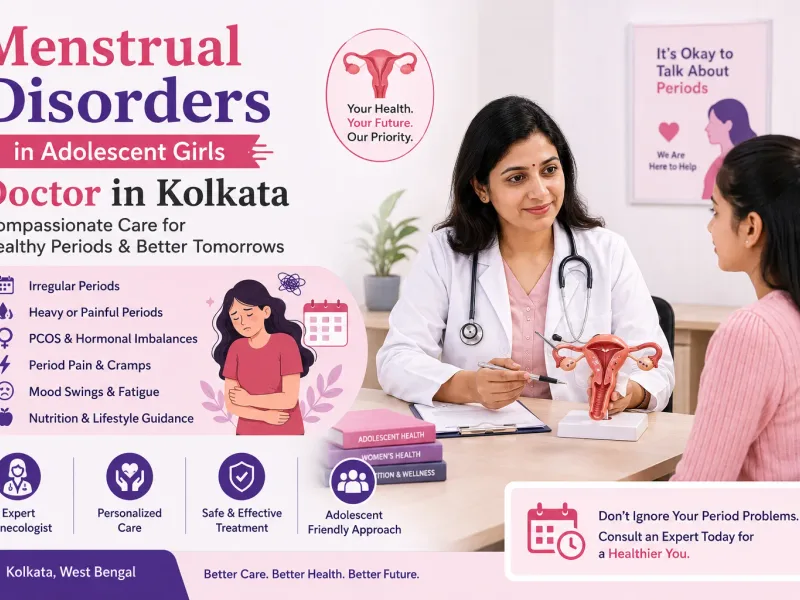
If you are searching for a Menstrual Disorders in Adolescent Girls Doctor in Kolkata, early evaluation by an experienced gynecologist can help identify the underlying cause of irregular or painful periods. While menstrual irregularities are common during the first few years after puberty, persistent
July 31, 2026
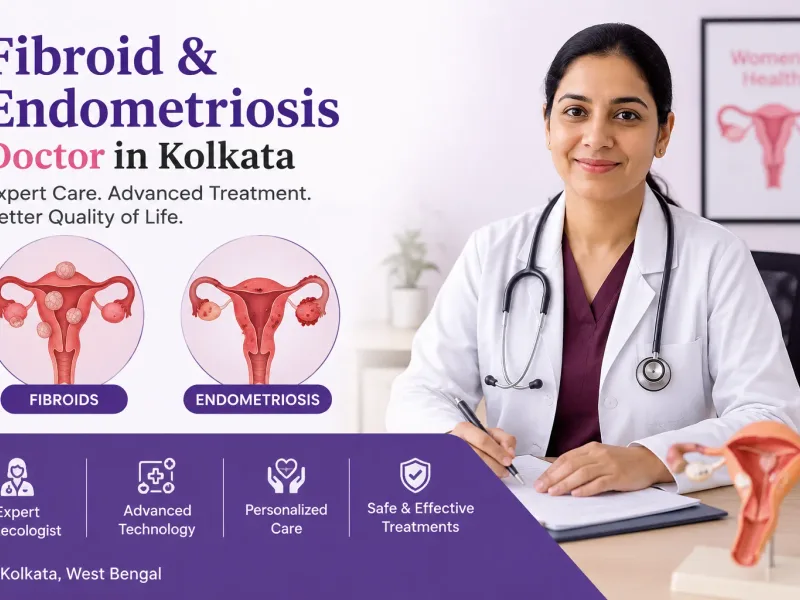
If you are searching for a Fibroid & Endometriosis doctor in Kolkata, choosing an experienced gynecologist with expertise in minimally invasive gynecological surgery is essential. Uterine fibroids and endometriosis are two common but different conditions that can cause pelvic pain, heavy menstrual b
July 31, 2026