

Emergency & Help
24/7 Emergency & General Advisory
🚨 24/7 Medical Emergency
Non-Emergency Advisory
10:00 AM – 6:00 PM, Mon–Sat
For appointments & general queries.
24/7 Emergency & General Advisory
🚨 24/7 Medical Emergency
Non-Emergency Advisory
10:00 AM – 6:00 PM, Mon–Sat
For appointments & general queries.
Understand natural miscarriage: what it is, signs, causes, and how to cope physically and emotionally. Learn about the process and when to seek medical help.

Losing a pregnancy can be an incredibly difficult and emotional experience. If you’re facing a miscarriage, you are not alone. It’s estimated that 10 to 20 percent of known pregnancies end in miscarriage, and this number could be even higher when considering very early losses that happen before a person even knows they are pregnant. A miscarriage is defined as the loss of a pregnancy before 20 weeks of gestation. Most of these losses occur before the 12th week.
This article focuses on natural miscarriage, where the body expels the pregnancy tissue without medical intervention like surgery or medication. While this is an option for many, it’s important to understand that it’s not always possible, and that is perfectly okay. The path you choose for managing a miscarriage is a personal one.
A natural miscarriage, also known as expectant management, means you allow your body to end the pregnancy on its own. This involves waiting for the uterus to expel the pregnancy tissue, placenta, and blood. Unlike medical or surgical management, it doesn’t involve taking medications to induce the process or undergoing a procedure to remove the tissue.
The decision to opt for natural miscarriage is a personal one. Some individuals may prefer to wait and let their body handle it, while others might feel more comfortable with a medical or surgical approach for quicker resolution or due to emotional reasons.
The signs and symptoms of a miscarriage can vary greatly from person to person. Some may experience no outward signs and only learn about the pregnancy loss during an ultrasound, a situation often referred to as a missed miscarriage. Others might experience:
It’s important to remember that experiencing some of these symptoms, like light spotting, doesn’t always mean you are having a miscarriage. Many women experience light bleeding or cramping during pregnancy without it leading to loss. However, if you have concerns, it’s always best to contact your doctor.
It can be incredibly distressing to experience a miscarriage, and the question of “why?” often arises. Rest assured, in the vast majority of cases, a miscarriage is not caused by anything you did or didn’t do. The most common reason for early miscarriage is a chromosomal abnormality in the developing baby. These genetic errors happen randomly and are not typically inherited.
Other less common causes can include:
Understanding that it's usually not your fault can be a small comfort during a difficult time.
If you choose natural miscarriage, your doctor will likely explain that it can be a waiting game. The timeline for a natural miscarriage is highly individual. It could begin within a few days, or it might take several weeks. This period of waiting can be unnerving for some, and if that describes you, medical intervention might be a better choice.
When your body starts the process, you can expect symptoms similar to labor, including contractions and bleeding. The uterus contracts to expel the contents of the pregnancy. This can involve passing clots and tissue. The amount of bleeding and cramping can vary significantly.
Pain and cramping are common during a natural miscarriage. Over-the-counter pain relievers like ibuprofen (Motrin) can help ease discomfort. Your doctor can provide specific guidance on dosage, usually recommending up to 800 milligrams every 8 hours. Always follow your doctor’s advice regarding pain management.
It is vital to monitor your temperature during and after a miscarriage. If you develop a fever over 100°F (37.8°C), it could indicate an infection. In such cases, you must contact your doctor immediately.
The physical recovery from a natural miscarriage varies. Bleeding can continue for some time after the main event, often resembling a heavy period. It’s important to use sanitary pads rather than tampons to reduce the risk of infection. You should also avoid sexual intercourse until you have been cleared by your doctor.
While natural miscarriage is a valid option, certain situations require immediate medical attention. Contact your doctor or go to the nearest emergency room if you experience:
The emotional impact of miscarriage can be profound. It’s common to experience a range of feelings, including sadness, grief, anger, guilt, and anxiety. Allow yourself to feel these emotions without judgment.
Losing a pregnancy is a genuine loss, and grieving is a natural and necessary part of healing. There is no right or wrong way to grieve, and the process takes time. Be patient with yourself.
You don’t have to go through this alone. Talk to your partner, trusted friends, or family members about how you’re feeling. Consider joining a support group for individuals who have experienced miscarriage. Many organizations offer online forums and local meetings.
Professional counseling or therapy can also be immensely helpful. A mental health professional can provide coping strategies and a safe space to process your emotions.
Maya called her doctor after experiencing spotting and cramping. Her doctor confirmed via an ultrasound that the pregnancy was no longer viable and discussed the option of natural miscarriage. Maya felt overwhelmed by the thought of waiting, but after talking with her husband and a close friend, she decided to try expectant management, focusing on self-care and seeking support from her loved ones during the waiting period.
It’s a common question: “Can I get pregnant again after a miscarriage?” The answer is yes. In fact, you can become pregnant as soon as 2 weeks after a miscarriage. If you feel you need more time to heal physically and emotionally before considering another pregnancy, it’s wise to discuss birth control options with your doctor.
Having one miscarriage does not automatically increase your risk of future miscarriages. Only about 1 percent of women experience recurrent miscarriages, defined as two or more consecutive pregnancy losses. If you have experienced multiple miscarriages, your doctor can investigate potential underlying causes.
It’s generally recommended to wait until you have stopped bleeding and have been cleared by your doctor, typically for a few weeks, to reduce the risk of infection.
Bleeding can vary. It might last for a few days to a couple of weeks, often resembling a heavy period initially and then tapering off.
For most women, a natural miscarriage does not impact future fertility. You can conceive again relatively quickly.
If your body doesn’t expel all the pregnancy tissue naturally, your doctor may recommend medical management (medication) or surgical management (like a D&C) to ensure your health and prevent complications.
Visit Hospital
Near You

A cesarean section (C-section) is a surgical delivery in which a baby is born through an incision in the mother's abdomen and uterus. In Kolkata, several experienced obstetricians and well-equipped hospitals offer C-section services for planned and emergency deliveries. Understanding when a C-sectio
July 31, 2026
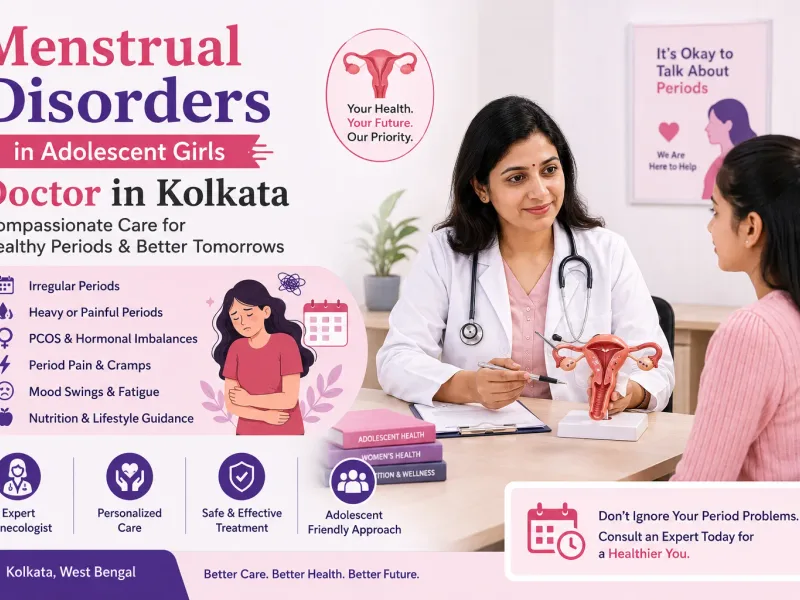
If you are searching for a Menstrual Disorders in Adolescent Girls Doctor in Kolkata, early evaluation by an experienced gynecologist can help identify the underlying cause of irregular or painful periods. While menstrual irregularities are common during the first few years after puberty, persistent
July 31, 2026

If you are searching for a Fibroid & Endometriosis doctor in Kolkata, choosing an experienced gynecologist with expertise in minimally invasive gynecological surgery is essential. Uterine fibroids and endometriosis are two common but different conditions that can cause pelvic pain, heavy menstrual b
July 31, 2026