

Emergency & Help
24/7 Emergency & General Advisory
🚨 24/7 Medical Emergency
Non-Emergency Advisory
10:00 AM – 6:00 PM, Mon–Sat
For appointments & general queries.
24/7 Emergency & General Advisory
🚨 24/7 Medical Emergency
Non-Emergency Advisory
10:00 AM – 6:00 PM, Mon–Sat
For appointments & general queries.
Explore the biological clock and its impact on female fertility. Understand peak fertility, age-related changes, and factors influencing conception. Get practical tips for Indian women.

The term “biological clock” often brings to mind a ticking sound, a pressure to have children before it’s “too late.” While this concept can feel overwhelming, it’s rooted in a real biological reality: fertility changes significantly throughout a woman’s life. This isn't about societal pressure; it's about understanding your body's natural rhythms and making informed choices. Let's explore what your biological clock means for your fertility journey, offering practical insights for women in India and beyond.
Think of your body as a complex system with many internal timers, or biological clocks. These clocks help regulate everything from your sleep-wake cycles to your hormone levels. When we talk about the “biological clock” in the context of reproduction, we’re specifically referring to the natural changes in fertility that occur over a woman's lifetime. It’s a way to describe the decrease in a woman's ability to conceive as she gets older.
The idea gained public attention decades ago, but the science behind it is much older. While medical advancements have changed many aspects of family planning, the fundamental biology remains. Understanding this biological timeline can help you feel more in control and less anxious about your reproductive choices.
There’s no single magic age, as fertility varies from person to person. However, scientific consensus points to a general peak. Generally, women are considered most fertile in their early to mid-20s. This is when egg quality and quantity are typically at their best.
From your early 20s, fertility remains strong. However, after about age 32, a gradual decline begins. This doesn't mean you can't conceive easily after 32, but the chances start to decrease. This decline becomes more noticeable after age 37, and by your early 40s, conceiving naturally can become significantly more challenging.
It's important to remember that these are averages. Factors like overall health, lifestyle, and genetics play a role. Some women may experience fertility challenges earlier, while others may conceive successfully later in life.
The primary reason for declining fertility is the natural decrease in both the number and quality of eggs (oocytes) a woman has. From birth, a woman is born with all the eggs she will ever have.
As a woman ages, the remaining eggs also age. This means they are more likely to have genetic abnormalities, which can lead to difficulties in conception, higher risk of miscarriage, or chromosomal issues in a potential child.
Hormonal changes also contribute. The levels of reproductive hormones, like estrogen and progesterone, fluctuate and generally decrease with age, impacting ovulation and the uterine lining's readiness for pregnancy.
The concept of the biological clock isn't just about biology; it’s also about the psychological and social pressures women often face. For decades, media and societal conversations have highlighted a perceived “deadline” for motherhood, especially for women pursuing careers.
This can create significant anxiety. Many women today choose to focus on education and career first, or they may delay starting a family due to not finding a suitable partner or other life circumstances. When societal expectations clash with personal timelines, it can lead to stress and worry about fertility.
Imagine a woman in her early 30s, successfully building her career in a bustling Indian city. She’s financially stable and has a loving partner, but she’s starting to feel the pressure from family and friends asking, “When are you going to have children?” This external pressure, combined with her own awareness of her biological clock, can be emotionally taxing.
While age is a major factor, several other elements influence a woman's fertility:
Knowing your menstrual cycle is key to understanding your fertile window. Ovulation is the release of an egg from the ovary, and it typically happens about 14 days before your next period starts. This is your most fertile time.
How to track ovulation:
If your periods are highly irregular, tracking ovulation can be more challenging, and consulting a doctor is advisable.
It's a good idea to seek medical advice if you:
A doctor can perform tests to assess your ovarian reserve, check for blockages, and evaluate your partner's fertility. Early consultation can lead to timely interventions and better outcomes.
Understanding your biological clock is empowering. It’s about being aware of your body's natural timeline and making proactive choices regarding your health and family planning.
Focus on a healthy lifestyle, be aware of your menstrual cycle, and don't hesitate to seek professional guidance when needed. Your fertility journey is unique, and with knowledge and support, you can navigate it with confidence.
A: Yes, it is possible, but it becomes statistically more difficult due to the decline in egg quantity and quality. Many women conceive in their late 30s and 40s, sometimes with the help of fertility treatments. It’s advisable to consult a fertility specialist to discuss your options and understand your specific situation.
A: While moderate stress is a normal part of life, chronic and high levels of stress can potentially impact your hormonal balance and menstrual cycle, which may affect fertility. Managing stress through techniques like yoga, meditation, or seeking support can be beneficial for overall reproductive health.
A: Yes, fertility preservation options like egg freezing are available. This process involves retrieving eggs, freezing them, and storing them for future use. Discussing this with a fertility specialist can help you understand if it's a suitable option for you.
Visit Hospital
Near You

A cesarean section (C-section) is a surgical delivery in which a baby is born through an incision in the mother's abdomen and uterus. In Kolkata, several experienced obstetricians and well-equipped hospitals offer C-section services for planned and emergency deliveries. Understanding when a C-sectio
July 31, 2026
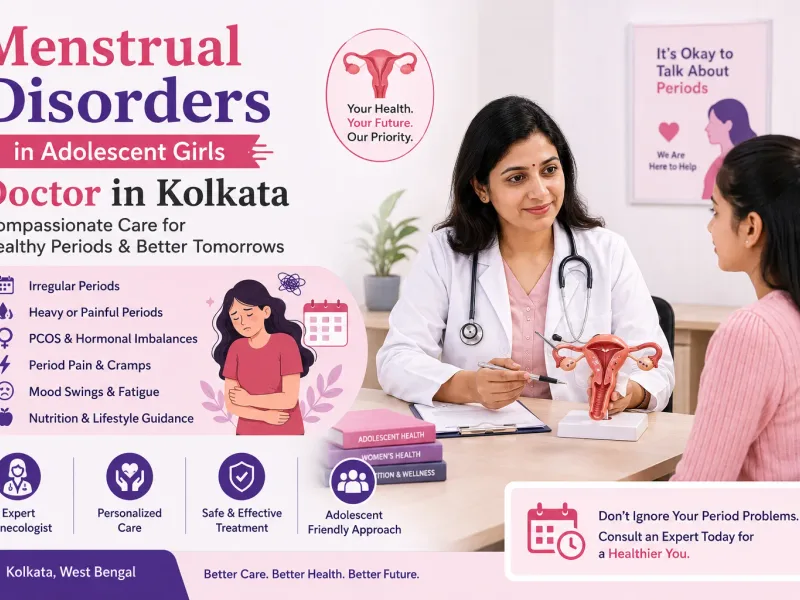
If you are searching for a Menstrual Disorders in Adolescent Girls Doctor in Kolkata, early evaluation by an experienced gynecologist can help identify the underlying cause of irregular or painful periods. While menstrual irregularities are common during the first few years after puberty, persistent
July 31, 2026

If you are searching for a Fibroid & Endometriosis doctor in Kolkata, choosing an experienced gynecologist with expertise in minimally invasive gynecological surgery is essential. Uterine fibroids and endometriosis are two common but different conditions that can cause pelvic pain, heavy menstrual b
July 31, 2026