

Emergency & Help
24/7 Emergency & General Advisory
🚨 24/7 Medical Emergency
Non-Emergency Advisory
10:00 AM – 6:00 PM, Mon–Sat
For appointments & general queries.
24/7 Emergency & General Advisory
🚨 24/7 Medical Emergency
Non-Emergency Advisory
10:00 AM – 6:00 PM, Mon–Sat
For appointments & general queries.
Understand the four phases of your menstrual cycle and how to harness the energy and focus of each phase. Learn to work with your body's natural rhythms for better well-being and productivity.

Most of us learn about our menstrual cycle in our teenage years, often focusing on the bleeding days and the occasional cramps. But did you know that your cycle is a complex symphony of hormonal changes that influence your energy, mood, and even your productivity throughout the entire month? Instead of fighting against these natural shifts, imagine working with them to feel your best and achieve your goals. This guide will help you understand the four distinct phases of your menstrual cycle and how to leverage the unique strengths of each phase.
Your menstrual cycle is driven by fluctuating levels of key hormones: estrogen, progesterone, and testosterone. While we often associate symptoms with PMS, these hormones are active throughout your cycle, impacting your body and mind in different ways. Understanding these phases can empower you to plan your activities, manage your energy, and support your overall well-being.
When it happens: This phase begins on the first day of your period and lasts until your bleeding stops, typically lasting 2 to 7 days.
What's happening hormonally: During menstruation, the levels of estrogen, progesterone, and testosterone are at their lowest. There's a slight uptick in estrogen and a small dip in progesterone.
How you might feel: Your energy, focus, and productivity levels are generally at their lowest during this time. You might feel tired, less motivated, and more introspective. This is your body's natural signal to rest and recharge.
How to work with it:
Real-life scenario: Priya, a graphic designer, often feels drained at the start of her period. Instead of pushing herself to meet tight deadlines, she now schedules less demanding tasks like organizing files or responding to emails during her first few days of bleeding. She finds this allows her to maintain progress without feeling overwhelmed.
When it happens: This phase begins as your bleeding stops and continues until ovulation. It can last anywhere from 11 to 27 days, with an average of about 13 to 14 days.
What's happening hormonally: Estrogen levels begin to rise sharply, preparing the uterus for a potential pregnancy. Progesterone remains low. Testosterone levels may start to increase towards the end of this phase.
How you might feel: As estrogen climbs, so does your energy, mood, and cognitive function. You'll likely feel more motivated, focused, and ready to tackle challenges. Your drive to succeed can be high, making this an excellent time for learning and creative work.
How to work with it:
When it happens: This is the midpoint of your cycle, when an egg is released from the ovary. It typically occurs around day 14 in a 28-day cycle but can vary.
What's happening hormonally: Both estrogen and testosterone levels peak during this phase. Progesterone starts to rise slowly after the egg is released.
How you might feel: The peak in testosterone can give you an outward-focused energy and boost your confidence. The high estrogen levels contribute to feeling energetic and proactive. You might feel more extroverted and ready to connect with others.
How to work with it:
When it happens: This phase begins after ovulation and lasts until the start of your next period, usually about 12 to 14 days.
What's happening hormonally: Progesterone levels rise significantly, especially in the first half of this phase, promoting a calming effect. Estrogen also remains relatively high before both hormones begin to drop dramatically towards the end of the phase, leading to PMS symptoms.
How you might feel: In the earlier part of the luteal phase, you might feel calmer and more focused. As hormone levels drop towards the end, you might experience fatigue, irritability, mood swings, and cravings – the classic signs of PMS. Productivity and energy levels tend to decrease.
How to work with it:
It's easy to think of your cycle only in terms of menstruation and ovulation, but recognizing the subtle shifts throughout all four phases can profoundly impact how you feel and function. By understanding these hormonal fluctuations, you can move from feeling controlled by your cycle to being in sync with it.
This approach isn't about rigidly scheduling your life around your period. It's about gentle awareness and making conscious choices that honour your body's natural rhythms. For instance, if you know you tend to have lower energy during menstruation, you might consciously schedule a quiet evening at home instead of a strenuous social event. Conversely, if you feel a surge of energy and confidence around ovulation, you might seize that opportunity to present a new idea at work.
Key takeaways:
While understanding your cycle is empowering, it's essential to know when to consult a healthcare professional. If you experience any of the following, please speak with your doctor:
Your doctor can help rule out underlying conditions and provide personalized advice for managing your cycle and any associated symptoms.
A1: Yes, by understanding your hormonal fluctuations, you can align demanding tasks with periods of higher energy and focus (follicular and ovulation phases) and reserve lighter, more restorative activities for times of lower energy (menstruation and late luteal phase). It's about working smarter, not harder.
A2: Irregular cycles can be influenced by many factors, including stress, weight changes, and underlying medical conditions like PCOS or thyroid issues. It's important to consult a doctor to identify the cause and discuss management options.
A3: Natural management often involves lifestyle adjustments. This includes regular, moderate exercise, a balanced diet rich in fruits, vegetables, and whole grains, adequate sleep, stress-reduction techniques like yoga or meditation, and staying hydrated. Some women also find relief with specific supplements, but it's best to discuss these with your doctor.
A4: Moderate exercise can often help regulate your cycle and alleviate symptoms like cramps and mood swings. However, excessively strenuous or prolonged exercise can sometimes disrupt your cycle, leading to missed periods. Finding a balance that works for your body is key.
Most people do not notice early warning signs right away. That is common. A simple symptom diary, basic routine checks, and timely follow-up visits can prevent small problems from becoming serious.
If you are already on treatment, stay consistent with medicines and lifestyle advice. If your symptoms change, do not guess. Check with a qualified doctor and update your plan early.
Write down symptoms, triggers, and timing for a few days.
Carry old prescriptions and test reports to your consultation.
Ask clearly about side effects, red-flag signs, and follow-up dates.
Seek urgent care for severe pain, breathing trouble, bleeding, fainting, or sudden worsening.
Visit Hospital
Near You

A cesarean section (C-section) is a surgical delivery in which a baby is born through an incision in the mother's abdomen and uterus. In Kolkata, several experienced obstetricians and well-equipped hospitals offer C-section services for planned and emergency deliveries. Understanding when a C-sectio
July 31, 2026
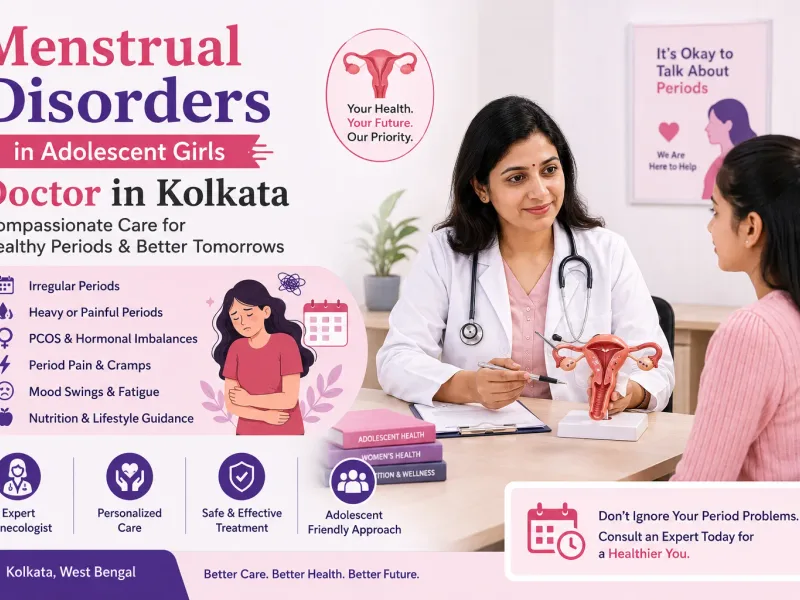
If you are searching for a Menstrual Disorders in Adolescent Girls Doctor in Kolkata, early evaluation by an experienced gynecologist can help identify the underlying cause of irregular or painful periods. While menstrual irregularities are common during the first few years after puberty, persistent
July 31, 2026

If you are searching for a Fibroid & Endometriosis doctor in Kolkata, choosing an experienced gynecologist with expertise in minimally invasive gynecological surgery is essential. Uterine fibroids and endometriosis are two common but different conditions that can cause pelvic pain, heavy menstrual b
July 31, 2026