I remember a friend calling me at 2 AM, half-panicked, half-excited—“I think it’s happening.” Two hours later, she was back home, slightly embarrassed, holding a cup of tea. Turns out, it wasn’t labor. That confusion is incredibly common. The difference between false labor and true labor isn’t always obvious in the moment, especially if it’s your first pregnancy. Your body sends mixed signals. Some are rehearsals. Some are the real deal. Knowing how to tell them apart can save you stress—and a few unnecessary hospital trips.
Here’s what most guides won’t tell you: it’s less about the pain itself and more about the pattern. False labor, often called Braxton Hicks contractions, feels real enough. Tightening in the belly. Mild discomfort. Sometimes even back pain. But they don’t follow through.
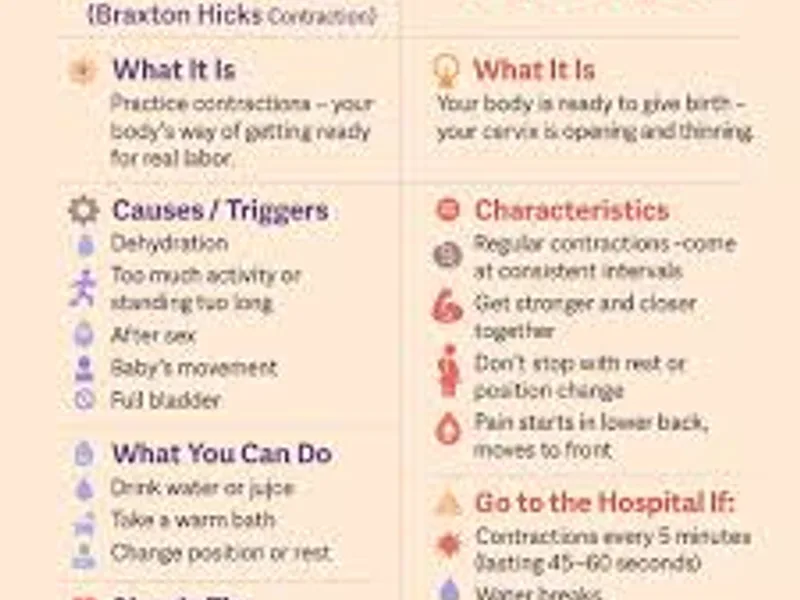
In most cases I’ve seen, false contractions are irregular. They show up, disappear, then come back randomly. Walk around a bit, drink water, or lie down—and they often ease off. That’s your biggest clue.
True labor behaves differently. It builds. Contractions become steady, closer together, and stronger over time. There’s a rhythm to it. You can almost set a clock by them. And no matter what you do—sit, stand, breathe—it doesn’t fade. That persistence is what sets true labor apart.
This is where people either panic or overthink. Neither helps.
Start simple. Time your contractions. Use your phone if needed, nothing fancy. If they’re coming every 10–15 minutes and not getting stronger, it’s probably false labor. Give it time. Drink water. Rest. Sometimes dehydration alone can trigger those practice contractions.
But if you notice the gaps shrinking—say, every 5 minutes—and each one feels more intense than the last, don’t ignore it. That’s usually the shift toward true labor. Another sign? The pain starts wrapping around your lower back and moves to the front. It’s not just tightening anymore—it demands your attention.
Also, trust your body more than any checklist. If something feels different this time, it probably is.
Here’s the tricky bit: false labor can feel surprisingly convincing. Some women experience strong Braxton Hicks contractions that mimic early labor almost perfectly. That’s frustrating. And honestly, a little unfair.
But the reality is, true labor has a kind of momentum. It doesn’t stall. It doesn’t pause because you took a nap. That forward motion—slow but steady—is the real difference.
I’ve seen people second-guess themselves for hours because they didn’t want to “overreact.” That hesitation can add unnecessary stress. It’s okay to be unsure. It’s okay to check.
Conclusion
At the end of the day, understanding the difference between false labor and true labor isn’t about memorizing symptoms—it’s about noticing patterns and trusting your instincts. Your body usually gives clear signals, just not always in the way you expect. Stay calm, pay attention, and don’t hesitate to reach out for medical advice if something feels off. Better safe than stuck wondering. The real takeaway? When it’s true labor, your body won’t leave you guessing for long.