

Emergency & Help
24/7 Emergency & General Advisory
🚨 24/7 Medical Emergency
Non-Emergency Advisory
10:00 AM – 6:00 PM, Mon–Sat
For appointments & general queries.
24/7 Emergency & General Advisory
🚨 24/7 Medical Emergency
Non-Emergency Advisory
10:00 AM – 6:00 PM, Mon–Sat
For appointments & general queries.
Learn about early gender blood tests, including NIPTs and at-home kits, their accuracy, and when you can discover your baby's sex during pregnancy.

Waiting to discover your baby's sex can feel like an eternity, especially in today's fast-paced world. While we can't get instant delivery for everything, the good news is that medical advancements now allow you to learn your baby's sex much earlier than the traditional 20-week ultrasound. Noninvasive prenatal tests (NIPTs), primarily designed for genetic screening, can also reveal this exciting detail as early as 10 weeks into your pregnancy. This blog post will explore how these tests work, their accuracy, and what you need to know if you're considering finding out your baby's sex before birth.
Before we dive into the tests, it's important to understand the difference between sex and gender. Sex refers to biological characteristics, typically assigned at birth based on chromosomes, hormones, and anatomy. Gender, on the other hand, is a social and personal identity that may or may not align with the sex assigned at birth. Recent data shows that an increasing number of young people identify as transgender, highlighting the importance of respecting individual gender identity.
The concept of finding out your baby's sex early is relatively new. For a long time, expectant parents had to wait for the 20-week ultrasound, a significant milestone but one that still involved a lengthy wait. However, about a decade ago, researchers developed cell-free DNA (cfDNA) screening, a less invasive method that utilizes your baby's DNA found circulating in your blood. This breakthrough has paved the way for early sex determination.
These tests are a type of Noninvasive Prenatal Testing (NIPT). Here's the science behind it:
While the primary purpose of NIPTs is to screen for chromosomal abnormalities like Down syndrome, Edwards syndrome, and Patau syndrome, they can also accurately determine the baby's sex. Some advanced NIPTs can even differentiate between the baby's DNA and the mother's DNA, enhancing accuracy.
You can typically undergo these blood tests as early as 9 or 10 weeks into your pregnancy, depending on the specific test used by the laboratory or company. This is significantly earlier than the 20-week anatomy scan, offering a much quicker way to satisfy your curiosity.
The accuracy of these tests is generally quite high, especially when performed after a certain gestational age. For instance:
It's important to remember that while these tests are highly accurate, no medical test is 100% foolproof. Factors like contamination or very early testing could potentially affect results.
There are two main ways to access early gender blood testing:
These are the most common and medically recommended route. They are performed in a clinical setting:
In the past, invasive procedures like Chorionic Villus Sampling (CVS) and amniocentesis were the standard for genetic screening. While highly accurate, they carry a risk of miscarriage. NIPTs offer a safer, noninvasive alternative.
These kits allow you to collect your sample at home and mail it to a lab:
Real-life scenario: Priya is 11 weeks pregnant and incredibly excited to find out if she's having a boy or a girl. Her doctor mentioned NIPT screening for genetic conditions, but Priya is more eager to know the sex. She discusses the options with her doctor and decides to proceed with the NIPT, understanding that it will provide both medical information and the answer to her burning question about her baby's sex.
Once your blood sample is analyzed, you'll receive your results. If you had the test done through your doctor, they will discuss the findings with you. For at-home kits, you'll typically access results online or receive them via email.
If the test detects Y-chromosome DNA: The result will indicate a boy. This is generally a very accurate prediction.
If the test does not detect Y-chromosome DNA: The result will indicate a girl. While highly accurate, there's a slightly higher chance of a false negative (meaning it's a boy but the test said girl) compared to a false positive (meaning it's a girl but the test said boy).
Important Note: If you receive a result indicating a boy, it is almost always correct. If the result indicates a girl, there's a small possibility of error. Some labs may offer a confirmatory test or recommend an ultrasound if there's any doubt.
While early gender blood tests are generally safe and informative, it's always best to discuss them with your healthcare provider. Consult your doctor if:
A1: No, NIPTs primarily screen for common chromosomal abnormalities like Down syndrome, Edwards syndrome, and Patau syndrome. They do not screen for all possible genetic conditions or birth defects.
A2: Yes, NIPTs are noninvasive and only require a blood draw from the pregnant person. They pose no risk to the baby.
A3: A blood test determines the baby's biological sex based on chromosomes. A gender reveal party is a celebration where the expectant parents and guests often share the baby's sex, but it's not a medical procedure.
A4: Some NIPTs can be performed in cases of twin pregnancies, but the accuracy and interpretation of results might differ. Discuss this with your healthcare provider.
Early gender blood tests offer an exciting opportunity for expectant parents to learn about their baby's sex much sooner than previously possible. Whether you choose a medically supervised NIPT or an at-home kit, understanding how these tests work, their accuracy, and when to consult your doctor is key. This knowledge empowers you to make informed decisions about your pregnancy journey.
Visit Hospital
Near You
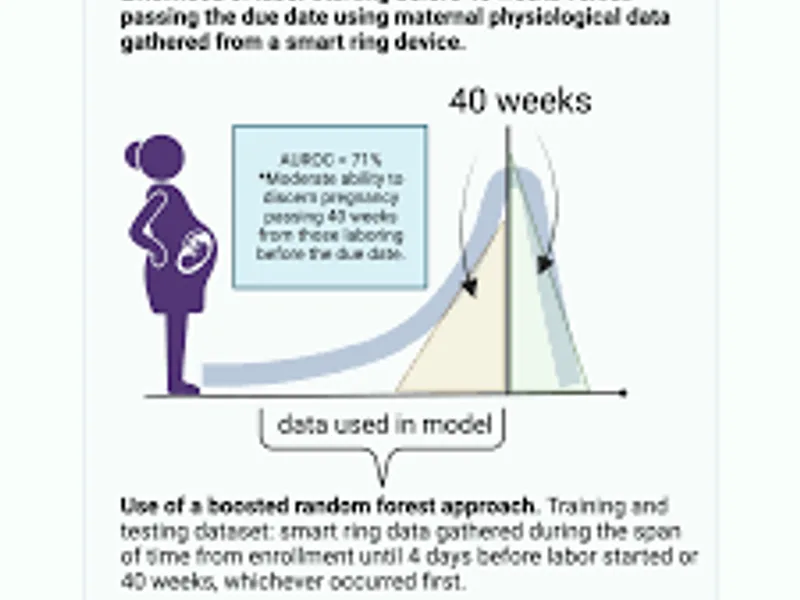
Going past your due date can feel like being stuck in a waiting room with no clock. This guide walks you through what actually happens during monitoring after due date pregnancy — the tests, the decisions, and the emotions nobody really prepares you for.
May 20, 2026
Going past your due date can feel like being stuck in a waiting room with no clock. This guide walks you through what actually happens during monitoring after due date pregnancy — the tests, the decisions, and the emotions nobody really prepares you for.
May 20, 2026
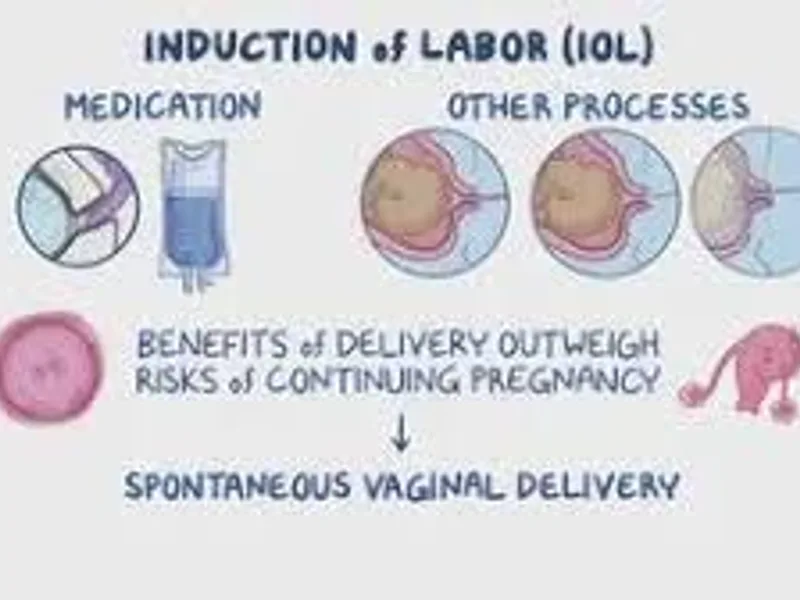
If you’re close to your due date and feeling stuck in waiting mode, this breaks down induction of labor methods in a way that actually makes sense. No jargon, no fluff—just what works, what doesn’t, and what it really feels like from a human perspective.
May 20, 2026