

Emergency & Help
24/7 Emergency & General Advisory
🚨 24/7 Medical Emergency
Non-Emergency Advisory
10:00 AM – 6:00 PM, Mon–Sat
For appointments & general queries.
24/7 Emergency & General Advisory
🚨 24/7 Medical Emergency
Non-Emergency Advisory
10:00 AM – 6:00 PM, Mon–Sat
For appointments & general queries.
If your due date has come and gone, you’re probably getting advice from everywhere. This piece cuts through the noise and explains what actually matters in pregnancy overdue management—what’s normal, what’s not, and how to decide your next step without panic.
I remember sitting with a friend at 40 weeks and 5 days, watching her phone buzz every ten minutes — “Any baby yet?” messages piling up. She laughed it off at first. Then she didn’t. That strange waiting period is where pregnancy overdue management becomes real, not just something you skimmed in a booklet. And honestly, it can feel longer than the entire pregnancy itself.
Most people assume the due date is a deadline. It isn’t. It’s more like a guess with decent odds.
Here’s where things get slightly confusing. A pregnancy is considered “term” between 37 and 42 weeks. So technically, you’re not even labeled “overdue” until after 42 weeks. But in real life, most doctors start talking about pregnancy overdue management somewhere around 40+5 or 41 weeks.
Why? Because the risks, while still small, do start creeping up. The placenta doesn’t work as efficiently forever. Amniotic fluid can drop. The baby keeps growing, which sounds nice in theory, but bigger babies can make delivery harder.
That said, here’s what most guides won’t tell you: many healthy pregnancies go a few days past the due date without any problem at all. I’ve seen women go into labor naturally at 41 weeks and have completely smooth deliveries.
The key is monitoring. Not panic.
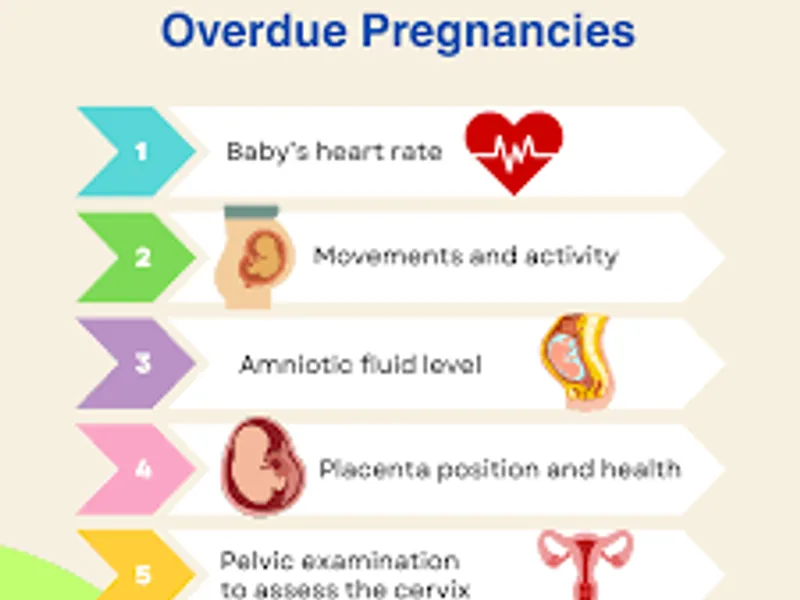
Doctors usually recommend more frequent check-ups — things like non-stress tests or ultrasounds to check fluid levels. These aren’t dramatic procedures. They’re just ways to keep an eye on things while your body decides if it’s ready.
Let’s talk honestly. You’ll hear everything — from walking stairs to eating spicy food to drinking some questionable herbal concoctions.
Some of it helps a little. Some of it… not really.
Walking, for example, does make sense. It helps the baby move lower into the pelvis, which can encourage labor. Gentle movement, not exhausting yourself. I’ve seen better results when women stay active but relaxed, not when they’re power-walking out of frustration.
Sex is another commonly suggested option. It’s not just old wives’ talk — semen contains prostaglandins, which can help soften the cervix. But it doesn’t work like a switch. More like a nudge.
Now here’s the part people don’t love hearing: if your body isn’t ready, nothing truly “natural” will force labor safely. That’s where medical induction comes in.
Induction methods vary — medication to soften the cervix, breaking the water, or using hormones to start contractions. It sounds intense, but in many cases, it’s straightforward and controlled. The important thing is timing. Inducing too early can lead to longer labor. Waiting too long carries its own risks.
Good pregnancy overdue management is really about choosing the right moment, not rushing or delaying blindly.
What surprised me most, watching people go through this, wasn’t the medical side. It was the emotional pressure.
Everyone has an opinion. Relatives, neighbors, even strangers. “Why not induce?” “Why wait?” “Isn’t it dangerous?” It gets loud.
But the reality is, there isn’t one perfect answer. Some women feel more comfortable inducing at 41 weeks. Others prefer waiting with close monitoring. Both can be valid.
What matters is informed choice. Not fear-based decisions.
And here’s a small but important truth — your body isn’t failing if labor hasn’t started yet. Sometimes it just needs a little more time.
Conclusion
If you’re in that in-between phase, days past your due date, it can feel like everything is on hold. But pregnancy overdue management isn’t about rushing the finish line. It’s about balancing patience with awareness.
Stay in touch with your doctor. Pay attention to your body. Ask questions, even the small ones.
Because in the end, it’s not about hitting a date on a calendar — it’s about making the safest, most grounded choice for you and your baby.
Visit Hospital
Near You

Going past your due date can feel like being stuck in a waiting room with no clock. This guide walks you through what actually happens during monitoring after due date pregnancy — the tests, the decisions, and the emotions nobody really prepares you for.
May 20, 2026
Going past your due date can feel like being stuck in a waiting room with no clock. This guide walks you through what actually happens during monitoring after due date pregnancy — the tests, the decisions, and the emotions nobody really prepares you for.
May 20, 2026

If you’re close to your due date and feeling stuck in waiting mode, this breaks down induction of labor methods in a way that actually makes sense. No jargon, no fluff—just what works, what doesn’t, and what it really feels like from a human perspective.
May 20, 2026