

Emergency & Help
24/7 Emergency & General Advisory
🚨 24/7 Medical Emergency
Non-Emergency Advisory
10:00 AM – 6:00 PM, Mon–Sat
For appointments & general queries.
24/7 Emergency & General Advisory
🚨 24/7 Medical Emergency
Non-Emergency Advisory
10:00 AM – 6:00 PM, Mon–Sat
For appointments & general queries.
Learn about fetal position, why it's vital for birth, common baby positions like cephalic and breech, and tips to encourage optimal positioning for a smoother delivery.

As your pregnancy progresses and your due date approaches, you might hear your doctor or midwife talk about your baby's fetal position. But what exactly is fetal position, and why is it so important for your baby's birth? It's a fascinating aspect of pregnancy that plays a significant role in how your little one makes their grand entrance into the world. Let's explore what fetal position means, the different types, and what you can do to encourage the best position for a smoother delivery.
Fetal position simply refers to the way your baby is positioned inside your uterus (womb). Think of it as your baby finding their most comfortable spot to hang out for months. In the early stages of pregnancy, there's ample space for your baby to float around freely, changing positions frequently. As your baby grows, however, movement becomes a bit more challenging, and they tend to settle into a preferred posture. This posture is often described as a curled-up shape, resembling a 'C'. The baby's spine is curved, their head is tucked down, and their arms and legs are drawn in close to their body. This is the typical resting pose, even after birth, as it's generally the most comfortable for them and aids in self-soothing.
As you get closer to your delivery date, usually around 36 weeks of pregnancy, your baby will ideally try to get into a position that facilitates the easiest and safest birth. The most favorable position for delivery is when the baby is head-down, facing your back, with their chin tucked towards their chest and their back resting against your abdomen. This is known as the occiput anterior (OA) position, or sometimes referred to as the vertex or cephalic position, where the baby's head is the first part to enter the birth canal. This orientation allows the back of the baby's head to align with the widest part of your pelvis, making the journey through the birth canal as smooth as possible.
Imagine this scenario: You're in your final month of pregnancy, and your doctor explains that your baby is in the ideal head-down position. This news brings a sense of relief, knowing that your body is preparing for a potentially smoother vaginal delivery. The doctor might even point out how the baby's head is nestled low, ready for the big day.
While the occiput anterior (OA) position is the most desirable, babies can present in various ways. Understanding these positions can help you and your healthcare provider prepare for different delivery scenarios:
As discussed, this is the head-down position with the baby facing your back. It's the most common and generally the easiest for vaginal birth.
In this position, the baby is also head-down, but they are facing upwards, towards your abdomen, rather than downwards towards your back. This is often called the "sunny-side up" position. While a vaginal birth is still possible, it can sometimes lead to longer labor, more back pain for the mother, and may occasionally require interventions like forceps or vacuum extraction. Your doctor might try to encourage the baby to rotate during labor.
When a baby is in a breech position, they are not head-down. Instead, their bottom or feet are positioned to come out first. This is less ideal for vaginal delivery and significantly increases the likelihood of needing a Cesarean section (C-section). There are a few types of breech presentations:
About 3-4% of full-term babies are in a breech position. If your baby remains breech after 36 weeks, your doctor will discuss the safest delivery options with you, which often involves a planned C-section.
In this position, the baby is lying horizontally across your uterus, sideways. This is not a viable position for vaginal birth, and a C-section is almost always necessary. A transverse lie is more common in early pregnancy or in cases of certain uterine abnormalities or multiple pregnancies.
The position of your baby becomes particularly important in the last few weeks of pregnancy, typically from around 32 weeks onwards. Most babies will settle into the head-down (cephalic) position by 36 weeks. If your baby hasn't moved into this optimal position by then, your doctor or midwife will monitor it closely.
While you can't force your baby into a specific position, there are some activities and postures that are believed to encourage optimal fetal positioning. Remember to always discuss these with your healthcare provider before trying them.
If your baby is in a breech position after 37 weeks, your doctor might suggest an External Cephalic Version (ECV). This is a medical procedure where the doctor uses external pressure on your abdomen to try and turn the baby from a breech to a head-down position. ECV is performed in a hospital setting with continuous fetal monitoring and is usually successful, but it does carry some risks and is not suitable for everyone.
If your baby remains in a non-optimal position (like breech or transverse) as your due date nears, your healthcare team will create a birth plan tailored to your situation. For breech babies, a Cesarean section is often the safest option. For a transverse lie, a C-section is almost always required. Your doctor will weigh the risks and benefits of different delivery methods based on your individual circumstances, including your baby's position, size, and your overall health.
Interestingly, the fetal position isn't just relevant during pregnancy and birth. Newborns often naturally curl up into that same 'C' shape after they are born. This position provides them with a sense of security and comfort, mimicking the environment they were used to in the womb. You might notice your baby sleeping in this curled position for many months.
You don't need to be overly concerned about your baby's position early in pregnancy, as they have plenty of time to move. However, you should always consult your doctor or midwife if:
Your healthcare provider is your best resource for personalized advice and guidance throughout your pregnancy. They can monitor your baby's position and discuss the most appropriate birth plan for you and your little one.
You generally don't need to worry about your baby's position until the third trimester, especially after 32-36 weeks. Before then, there's plenty of room for them to move and change positions.
Yes, it's still possible for a baby to turn on their own even after 36 weeks, though it becomes less common as delivery approaches. Many babies naturally settle into the head-down position without intervention.
While a Cesarean section is often recommended for breech babies due to increased risks associated with vaginal breech birth, it's not always the case. In certain circumstances and with experienced practitioners, vaginal breech birth might be considered, but a C-section is the more common and often safer choice.
A transverse lie means the baby is positioned sideways. This position makes vaginal birth impossible, so a Cesarean section is typically planned.
Gentle exercises like pelvic tilts, spending time on your hands and knees, and staying active can encourage optimal positioning. However, always consult your doctor before trying any new exercises.
Visit Hospital
Near You

Going past your due date can feel like being stuck in a waiting room with no clock. This guide walks you through what actually happens during monitoring after due date pregnancy — the tests, the decisions, and the emotions nobody really prepares you for.
May 20, 2026
Going past your due date can feel like being stuck in a waiting room with no clock. This guide walks you through what actually happens during monitoring after due date pregnancy — the tests, the decisions, and the emotions nobody really prepares you for.
May 20, 2026
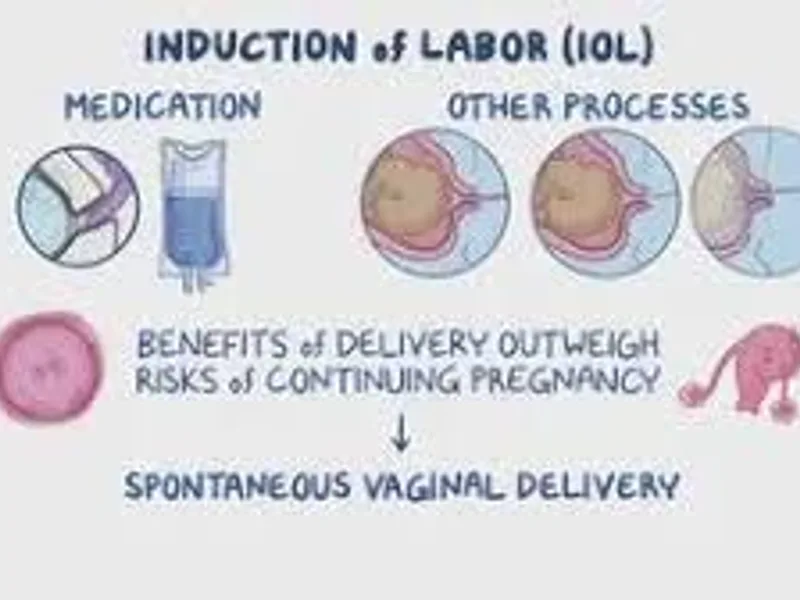
If you’re close to your due date and feeling stuck in waiting mode, this breaks down induction of labor methods in a way that actually makes sense. No jargon, no fluff—just what works, what doesn’t, and what it really feels like from a human perspective.
May 20, 2026