Autism Spectrum Disorder: Signs, Causes, Diagnosis & Support
Introduction
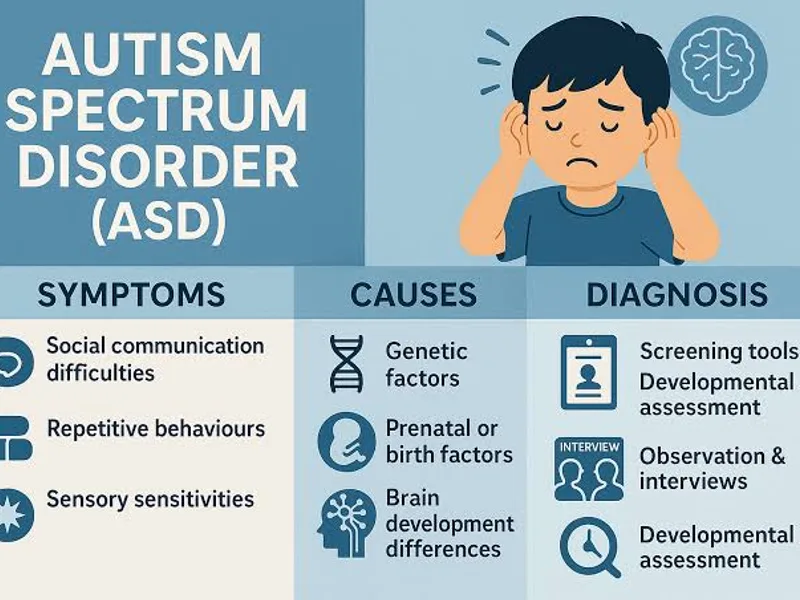
Autism Spectrum Disorder (ASD) is a complex neurodevelopmental condition that affects how a person communicates, interacts with others, and experiences the world around them. The word "spectrum" reflects the wide range of challenges and strengths that each autistic person uniquely possesses. According to the CDC, approximately 1 in 36 children in the United States is diagnosed with ASD, making it one of the most prevalent developmental conditions globally. In India, estimates suggest that around 1 in 100 children may be on the autism spectrum. Early identification and targeted intervention can transform the lives of autistic children, helping them thrive in school, relationships, and everyday life.
What is Autism Spectrum Disorder?
Autism Spectrum Disorder is a lifelong neurological condition characterised by differences in social communication and interaction, along with restricted or repetitive behaviours and interests. It is called a "spectrum" because it encompasses a broad range of presentations — from individuals who are highly verbal and independent to those who are non-speaking and require significant daily support. ASD is not a disease in the traditional sense; it is a different way of experiencing and interacting with the world. With the right support, autistic individuals can lead meaningful, fulfilling lives.
How the Nervous System is Affected
ASD is rooted in differences in brain development and connectivity. Research shows that autistic brains often have atypical patterns of neural connectivity — some areas are over-connected, while others show under-connectivity. Key brain regions affected include the prefrontal cortex (social decision-making), the amygdala (emotion processing), and the cerebellum (motor control and sensory integration). Neurotransmitter systems, particularly those involving serotonin and GABA, may also function differently in autistic individuals. These neurological differences explain why social communication, sensory processing, and flexible thinking can be challenging.
Causes and Risk Factors
ASD does not have a single cause. It is believed to result from a combination of genetic and environmental factors.
Genetic Factors:
Having a sibling with ASD significantly increases risk
Certain genetic mutations (such as those in the SHANK3, NRXN1, or CNTNAP2 genes) are linked to ASD
Conditions like Fragile X syndrome and tuberous sclerosis are associated with autism
Environmental Factors:
Advanced parental age at conception
Prenatal exposure to certain medications (e.g., valproate)
Complications during pregnancy or birth (premature birth, low birth weight)
Prenatal exposure to air pollution or certain chemicals
Important Note: Vaccines do NOT cause autism. This has been thoroughly debunked by numerous large-scale studies. The original 1998 study making this claim was retracted due to fraud.
Early Warning Signs
The earlier autism is identified, the more effective early intervention can be. Parents and caregivers should watch for these signs in toddlers and young children:
Not making eye contact by 6 months
Not babbling or pointing by 12 months
Not speaking single words by 16 months
Not using two-word phrases by 24 months
Losing previously acquired language or social skills at any age
Not responding to their name when called
Appearing to be in their own world
Unusual reactions to sounds, textures, tastes, or lights
Lining up toys or objects repetitively
Common Symptoms
ASD symptoms span two core areas, with additional associated features:
Social Communication Differences
Difficulty understanding social cues, facial expressions, or body language
Preference for solitary play, especially in young children
Challenges with back-and-forth conversation
Taking language very literally (difficulty with sarcasm or idioms)
Unusual tone of voice or speech patterns
Restricted and Repetitive Behaviours
Intense, narrow interests in specific topics (trains, maps, numbers)
Insistence on routines and distress when routines change
Repetitive movements (hand-flapping, rocking, spinning)
Unusual sensory interests or sensitivities (seeking or avoiding certain textures, sounds, lights)
Associated Features
Intellectual disability (in some, not all, autistic individuals)
Attention difficulties (ADHD)
Anxiety and depression
Sleep problems
Epilepsy (in approximately 20–30% of autistic individuals)
Stages of the Disease
ASD is not a degenerative condition — it does not get worse over time in the way diseases do. However, the DSM-5 classifies ASD into three levels based on support needs:
Level 1 – Requiring Support
The person has noticeable difficulties in social communication without support but can function relatively independently. They may struggle with flexibility and organisation.
Level 2 – Requiring Substantial Support
Significant challenges in verbal and non-verbal communication. Restricted or repetitive behaviours are obvious and interfere with daily functioning.
Level 3 – Requiring Very Substantial Support
Severe difficulties in social communication. Very limited speech and great distress when routines are disrupted. Requires intensive daily support.
How Doctors Diagnose the Condition
ASD diagnosis involves a comprehensive, multidisciplinary evaluation. There is no single medical test:
Developmental screening — standardised tools like the M-CHAT-R/F (Modified Checklist for Autism in Toddlers) at 18–24 months
Comprehensive diagnostic evaluation — detailed assessment by a team including a developmental paediatrician, child psychologist, and speech-language pathologist
Structured observation tools — the Autism Diagnostic Observation Schedule (ADOS-2) and Autism Diagnostic Interview-Revised (ADI-R) are gold-standard instruments
Cognitive and language testing — to assess IQ, adaptive skills, and communication abilities
Medical tests — genetic testing, hearing assessments, and EEG if seizures are suspected
For families seeking an accurate diagnosis, consulting a Neurologist experienced in developmental disorders is an important step. A neurologist can also assess for co-occurring conditions like epilepsy and ADHD.
Available Treatment Options
There is no "cure" for autism — and many autistic self-advocates argue that a cure is not the goal. The aim of intervention is to support each individual in developing skills, managing challenges, and living a fulfilling life.
Therapies
Applied Behaviour Analysis (ABA): A structured, evidence-based approach to teaching communication, social, and daily living skills. Modern ABA is child-led and focuses on positive reinforcement.
Speech and Language Therapy: Addresses communication difficulties, including non-verbal communication, conversation skills, and use of augmentative/alternative communication (AAC) devices.
Occupational Therapy (OT): Helps with sensory processing, fine motor skills, and daily life activities like dressing, eating, and writing.
Social Skills Training: Group-based programmes that teach reading social cues, making friends, and navigating school or work environments.
Developmental Play Therapy (DIR/Floortime): A child-led approach that follows the child's interests to build emotional connections and communication.
Medications
There are no medications that treat the core features of autism. However, certain medications can help manage co-occurring conditions:
Risperidone or aripiprazole — approved for managing irritability and aggression
Stimulants (e.g., methylphenidate) — for co-occurring ADHD
SSRIs — for anxiety or repetitive behaviours (used cautiously)
Melatonin — for sleep difficulties
Lifestyle Management
Predictable routines and visual schedules reduce anxiety
Sensory-friendly environments (dimmer lights, noise-cancelling headphones)
Physical activity and movement breaks
Dietary support if sensory food issues cause nutritional concerns
Daily Living Tips for Families
Living with and supporting an autistic child requires adaptation, patience, and creativity:
Prepare for transitions — give advance warnings before changes in routine
Use visual supports — picture schedules, social stories, and visual timers are highly effective
Communicate clearly — use direct, simple language and avoid idioms
Celebrate strengths — many autistic individuals have exceptional abilities in areas like maths, art, music, or memory
Connect with the community — autism parent groups provide vital emotional support and practical tips
Advocate at school — ensure your child has an Individualised Education Plan (IEP) or equivalent support plan
Families in West Bengal can explore Multispecialty Hospitals in Kolkata that offer paediatric neurology, child psychology, and occupational therapy services under one roof.
Complications if Left Untreated
Without appropriate support and intervention, autistic individuals may face:
Significant communication barriers that increase frustration and challenging behaviours
Social isolation and severe anxiety or depression
Educational difficulties without appropriate accommodations
Self-injurious behaviours in individuals who are unable to communicate distress
Difficulty living independently as adults
Unemployment or underemployment due to lack of social skills training
Prevention and Risk Reduction
ASD cannot currently be prevented, but some steps can reduce risk factors:
Prenatal care — regular antenatal check-ups and avoiding harmful medications during pregnancy
Folic acid supplementation before and during early pregnancy
Avoid alcohol, tobacco, and illicit substances during pregnancy
Early developmental screenings at well-child visits (18 months and 24 months)
Address any concerns early rather than taking a "wait and see" approach
Frequently Asked Questions (FAQs)
1. Can autism be cured? No. Autism is a lifelong condition. However, with the right support, autistic individuals can develop skills and lead very fulfilling lives.
2. Do vaccines cause autism? No. This claim has been thoroughly and repeatedly disproven. Vaccines are safe and do not cause autism.
3. What age is autism usually diagnosed? Autism can be reliably diagnosed by age 2, though many children are diagnosed later. Adults can also receive a diagnosis for the first time.
4. Can girls have autism? Yes, though autism has historically been underdiagnosed in girls. Girls often "mask" their difficulties more effectively, leading to missed or delayed diagnoses.
5. Is autism a mental illness? No. Autism is a neurodevelopmental condition — a difference in brain development — not a mental illness.
6. Can autistic children attend mainstream schools? Many autistic children attend mainstream schools with appropriate support. Others thrive in specialist settings. The right environment depends on the individual child's needs.
7. Does autism affect intelligence? Autism does not equal intellectual disability. Many autistic individuals have average or above-average intelligence. Some have exceptional abilities (often called "savant skills").
8. What is the difference between Asperger's syndrome and autism? Asperger's syndrome is no longer a separate diagnosis in the DSM-5. It is now included within the autism spectrum, typically referring to autistic individuals without significant intellectual or language delays.
9. What support is available for autistic adults? Autistic adults may benefit from vocational training, supported employment, social skills groups, mental health support, and independent living skills programmes.
10. When should I see a neurologist for my child? If you notice any developmental regression or the early warning signs described above, consult a Neurologist or developmental paediatrician without delay.
Conclusion
Autism Spectrum Disorder is a diverse and complex condition that affects each individual differently. Understanding ASD — its signs, its neurological basis, and its available supports — empowers families to seek help early, advocate effectively, and create environments where autistic individuals can truly flourish. The journey may be challenging, but with the right knowledge, therapies, and community support, autistic children and adults can achieve extraordinary things. If you have concerns about your child's development, take action today — early support changes lives.