RFK Jr. Autism Vaccine Executive Order: What's Known
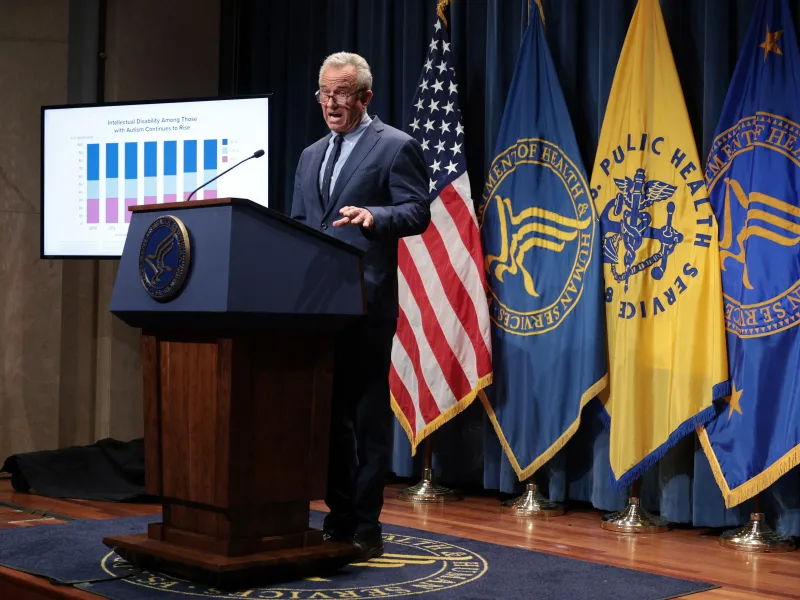
As of early August 2026, the Trump administration is reportedly drafting an executive order addressing the childhood vaccine schedule and autism research, according to multiple news outlets including the Washington Post and Reuters. No order has been signed yet, and officials say the timing and exact contents remain unclear. The reported push comes after months of President Trump pressing Health Secretary Robert F. Kennedy Jr. for evidence connecting vaccines to autism — despite decades of scientific research that has found no such link.
Multiple outlets, citing unnamed administration sources, report that White House officials are drafting an executive order touching on three areas: the childhood vaccine schedule, autism research funding, and parental choice around vaccination. Reuters reported the order could come as soon as the following week, though that timeline is described as fluid.
White House spokesman Kush Desai confirmed the administration's general posture, saying the goal is "the best childhood vaccine schedule in the world" and framing the effort as addressing parents whose concerns "have been ignored or mocked." Beyond that statement, the specific policy mechanics of the order haven't been made public.
The Political Backstory
This story didn't emerge suddenly. Kennedy has been a long-time vaccine critic, and since becoming HHS Secretary he has pushed significant changes to U.S. vaccine policy, including an overhaul of the CDC's Advisory Committee on Immunization Practices (ACIP). In March 2026, a federal judge blocked key parts of Kennedy's effort to rewrite the committee's structure and change the childhood vaccine schedule.
According to Reuters interviews with current and former officials, Kennedy also proposed directing roughly $5 billion in NIH funding specifically toward studying a vaccine-autism link — more than a tenth of the agency's annual budget — before dropping the idea after NIH Director Jay Bhattacharya argued sufficient resources were already committed to autism research. That existing effort includes a $50 million Autism Data Science Initiative launched in 2025.
Notably, some of Trump's own political advisers have reportedly urged Kennedy to avoid elevating vaccine issues before November's midterm elections, out of concern it could hurt Republican candidates. Trump has continued pressing the issue anyway.
In a development separate from the executive order reporting, Kennedy told reporters he personally directed the CDC to revise language on its website regarding vaccines and autism. The updated language states that the claim "vaccines do not cause autism" is "not an evidence-based claim," arguing that studies haven't fully ruled out the possibility.
This marks a departure from the CDC's longstanding public position and from the broader scientific consensus. It's worth noting that the Senate recently confirmed Dr. Erica Schwartz as the new CDC director; during her confirmation hearing, she stated there is "overwhelming evidence" that vaccines don't cause autism — a position that puts her at odds with the department she now leads on this specific question.
What the Scientific Research Actually Shows
Extensive research conducted over more than two decades — including large population studies involving millions of children across multiple countries — has consistently found no causal link between vaccines and autism. This includes research specifically examining the MMR vaccine, thimerosal (a preservative once used in some childhood vaccines), and the cumulative number of vaccines children receive.
Major health authorities, including the CDC's own historical position, the American Academy of Pediatrics, and the World Health Organization, have maintained that the current body of evidence does not support a vaccine-autism connection. The original 1998 study that first suggested such a link was later retracted after investigations found data manipulation, and its lead author lost his medical license.
Separately, autism research has increasingly pointed to genetic and prenatal developmental factors as significant contributors, rather than factors tied to routine childhood vaccination.
Why This Story Matters Beyond Politics
Regardless of what the executive order ultimately contains, the underlying debate has real public health stakes. Childhood vaccination schedules exist to protect against diseases like measles and whooping cough that can cause serious illness or death, particularly in infants too young to be fully vaccinated. Public confidence in that schedule affects vaccination rates directly, and vaccination rates affect community-level protection against outbreaks.
This is also a fast-moving story. If an executive order is signed, its actual legal and practical effects — on the vaccine schedule, funding priorities, or parental exemption policies — will depend heavily on the specific text, which hasn't yet been made public.
Frequently Asked Questions
Has the executive order on vaccines and autism been signed? No. As of early August 2026, multiple outlets report the order is still being drafted, with no confirmed signing date. The exact contents haven't been made public.
What would the executive order reportedly cover? Reports describe three general areas: the childhood vaccine schedule, autism research funding, and parental choice in vaccination decisions. Specific policy language hasn't been released.
Do vaccines cause autism? No credible scientific evidence supports a causal link. Decades of large-scale research, including studies of millions of children, have found no connection between vaccines and autism, and the original study suggesting one was retracted after being found fraudulent.
Why did the CDC change its website language on vaccines and autism? HHS Secretary Robert F. Kennedy Jr. said he personally directed the change, arguing existing research hasn't fully ruled out a link. This shift departs from the CDC's earlier position and from mainstream scientific consensus.
Is there disagreement within the administration on this issue? Yes. Reports indicate some White House political advisers have urged caution on vaccine issues ahead of the midterm elections, and the newly confirmed CDC director has publicly stated there is "overwhelming evidence" against a vaccine-autism link.
5. Sources
Reuters, reporting on draft executive order on vaccines and autism (August 2026)
The Washington Post, reporting on draft executive order (August 2026)
CNN, "White House considering order targeting vaccines and autism despite advisers' warnings" (August 2026)
CNN, "Inside RFK Jr.'s push to dismantle decades of U.S. vaccine policy" (July 2026)
Centers for Disease Control and Prevention (CDC), vaccine safety information
World Health Organization (WHO), vaccine safety guidance