CDC's Drug-Resistant Fungus Warning: What It Means
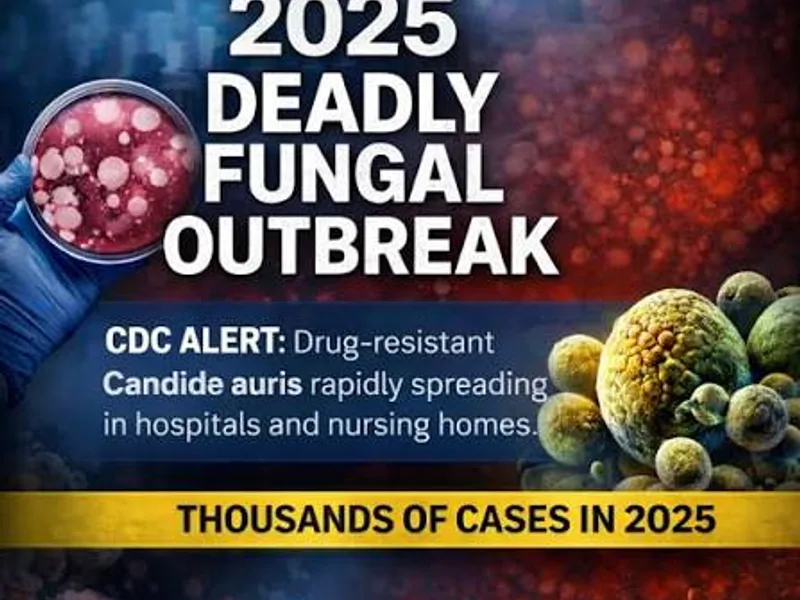
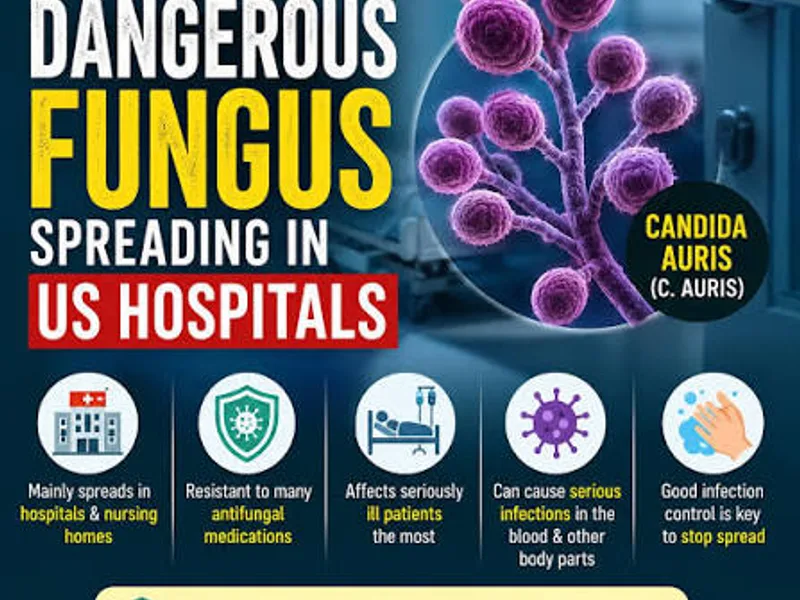
The CDC has classified Candida auris as an "urgent antimicrobial resistance threat" — the highest threat category the agency assigns, and the first time a fungal pathogen has ever received that designation. The warning reflects a combination of factors: the fungus resists most available antifungal drugs, spreads easily in healthcare facilities, and can cause severe, sometimes fatal infections in vulnerable patients.
The CDC's antimicrobial resistance threat framework ranks pathogens by how much danger they pose combined with how limited treatment options are. Urgent threats sit at the top of that list — a small group of organisms the agency considers to require immediate and aggressive public health action. C. auris shares that top category with only a handful of other pathogens, including carbapenem-resistant Enterobacteriaceae and drug-resistant gonorrhea.
Getting placed in this category isn't symbolic. It triggers expanded federal surveillance funding, laboratory network support for rapid detection, and coordinated guidance for healthcare facilities on containment. CDC epidemiologists have specifically pointed to the need for faster diagnostic tests and stronger infection control adherence as central to managing the threat.
[REVIEWER: add clinical insight here — for example, how an urgent-threat designation changes day-to-day practice at the hospital level, such as screening protocols or lab turnaround expectations]
C. Auris Isn't the Only Fungus on the Watch List
While C. auris draws most of the headlines, the CDC's broader antimicrobial resistance reporting has also flagged other drug-resistant fungi as serious concerns. This includes other multidrug-resistant Candida species beyond C. auris, and azole-resistant Aspergillus fumigatus, a mold that can cause severe lung infections in immunocompromised patients.
These other resistant Candida infections are actually more common numerically than C. auris, though they're less likely to spread between people or cause facility-wide outbreaks. Taken together, invasive infections from these fungi carry death rates in a similar range to C. auris — underscoring that this is a broader fungal resistance problem, not a single-pathogen story.
Only three classes of antifungal drugs are available to treat serious fungal infections: azoles, polyenes, and echinocandins. That's a much narrower toolkit than what's available against resistant bacteria, largely because fungal cells are structurally closer to human cells, which limits how many drug targets exist without also harming the patient.
Echinocandins are typically the go-to treatment for C. auris when other drugs fail, but even that option is eroding. CDC data has shown resistance to echinocandins roughly tripling in a single year during an earlier surveillance period, a trend the agency called particularly concerning since it removes one of the last reliable treatment options for some patients.
[REVIEWER: add clinical insight here — for example, how clinicians decide on combination therapy or alternative agents when echinocandin resistance is confirmed or suspected]
Is There Any New Treatment on the Way?
Yes, though options remain limited. The FDA approved rezafungin in 2023, a new echinocandin-class antifungal that offers a promising option for treating C. auris infections. It doesn't solve the resistance problem on its own, but it does add to a treatment arsenal that had gone largely unchanged for years. Fast, accurate detection remains just as important as new drugs, since delayed diagnosis allows more time for the fungus to spread within a facility before containment measures start.
Who Should Actually Be Concerned?
The CDC has been consistent on this point: C. auris is not a general public health threat. People without healthcare exposure — no recent hospitalization, no invasive devices, no long-term care residency — are very unlikely to become infected or colonized.
The warning is aimed squarely at healthcare systems: hospitals, nursing homes, and long-term acute care facilities, where the conditions that allow C. auris to spread are concentrated. If you or a family member fall into one of those higher-risk categories, the CDC's warning is a reason to ask facilities about their screening and infection control practices — not a reason for the general public to change daily behavior.
What Facilities Are Being Asked to Do
In response to the urgent threat designation, CDC guidance to healthcare facilities centers on a few core practices:
Screening high-risk patients for colonization, not just symptomatic infection
Strict hand hygiene and contact precautions around colonized or infected patients
Enhanced environmental cleaning, since C. auris can persist on surfaces for extended periods
Rapid communication between facilities when a colonized or infected patient transfers
Facilities that adopt these measures early, before an outbreak takes hold, have had markedly better success containing spread than those that respond after the fact.
Frequently Asked Questions
Why did the CDC label Candida auris an "urgent threat"? The designation reflects three factors: the fungus resists most available antifungal drugs, it spreads easily between patients in healthcare settings, and it can cause severe or fatal infections. It's the first fungal pathogen to receive the CDC's top resistance-threat category.
Are other fungi considered drug-resistant threats besides C. auris? Yes. The CDC has also flagged other multidrug-resistant Candida species and azole-resistant Aspergillus fumigatus as serious threats, though these are less likely than C. auris to spread person-to-person in healthcare facilities.
Is there a new treatment for drug-resistant fungal infections? The FDA approved rezafungin in 2023, adding a new option to the limited antifungal drug classes available. It doesn't eliminate resistance concerns, but it expands treatment choices, especially when other drugs have failed.
Does the CDC's warning mean healthy people are at risk? No. The CDC has stated that people without healthcare-related risk factors, such as recent hospitalization or invasive medical devices, generally do not become infected or colonized with C. auris.
What should families of hospitalized patients do with this information? Ask the facility directly about its screening and infection control protocols for drug-resistant fungi. This is a reasonable question that hospitals and long-term care facilities are equipped to answer
5. Sources
Centers for Disease Control and Prevention (CDC), "Candida auris" overview and antimicrobial resistance threat classification.
Centers for Disease Control and Prevention (CDC), Media Statement: "Increasing Threat of Spread of Antimicrobial-resistant Fungus in Healthcare Facilities" (March 2023)
Centers for Disease Control and Prevention (CDC), Antimicrobial Resistance Threats Report
U.S. Food and Drug Administration, rezafungin approval (2023)