How Fungal Infections Are Spreading in U.S. Hospitals
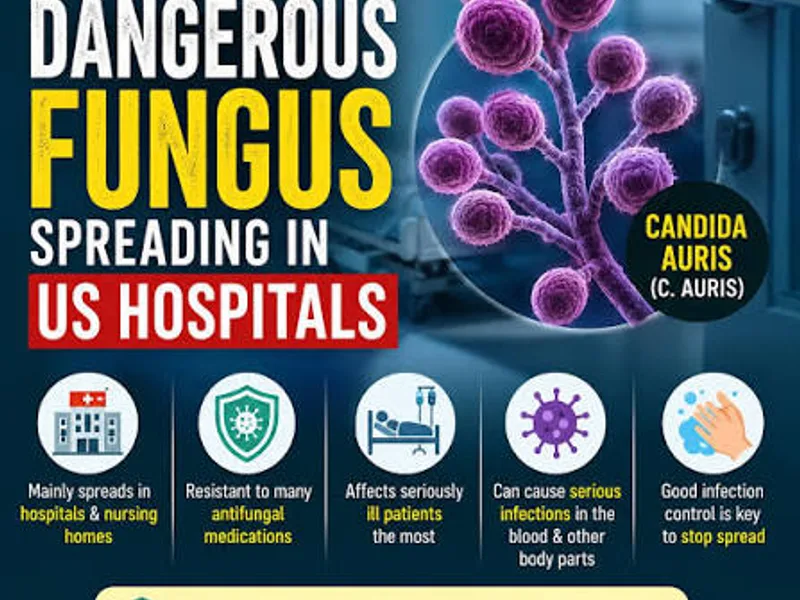
Fungal infections are spreading inside U.S. hospitals at a pace that has caught the attention of federal health officials. The main driver is Candida auris, a drug-resistant yeast whose clinical cases more than doubled between 2022 and 2024, according to CDC surveillance data. These infections spread person-to-person and via contaminated surfaces, and they concentrate almost entirely among patients who are already critically ill.
Hospitals create ideal conditions for fungal spread for a few specific reasons. Patients often have weakened immune systems, invasive devices like catheters and ventilators, and prolonged stays in shared clinical spaces such as ICUs.
Candida auris in particular can survive on surfaces — bed rails, IV poles, medical equipment — for extended periods. It also colonizes skin without causing symptoms, so a patient can carry and transmit it before anyone knows it's there. That combination makes it very different from a typical yeast infection.
[REVIEWER: add clinical insight here — for example, how colonization is usually first identified in a hospital setting, or what specific equipment/practices carry the highest transmission risk]
CDC surveillance data shows clinical C. auris cases rose from 2,882 in 2022 to roughly 6,300 in 2024 — more than double in three years. Some of that increase reflects wider testing, since screening cases became nationally notifiable in 2023, which naturally raises reported totals independent of actual transmission. Even accounting for expanded surveillance, health officials say the underlying upward trend in true infections has not reversed.
Case data also shows who's most affected: roughly 88% of clinical cases occur in people age 45 and older, and the large majority happen in acute care facilities rather than the community. This isn't a general population trend — it's concentrated in hospital and long-term care environments.
Why Treatment Is So Difficult
Fungi are eukaryotic organisms, meaning their cells are structurally more similar to human cells than bacteria are. That similarity makes it harder to design drugs that kill a fungus without also harming the patient, which is part of why there are only three major classes of antifungal medication available: azoles, polyenes, and echinocandins.
Resistance data from the CDC's Antimicrobial Resistance Laboratory Network, based on testing more than 8,000 clinical isolates collected in 2022–2023, found that about 95% of C. auris isolates were resistant to fluconazole, the typical first-choice antifungal. Roughly 15% were resistant to amphotericin B, a stronger backup drug used when first-line treatment fails. Echinocandins remain the most reliable treatment option for most strains, though resistance to that class has also been documented in a smaller share of cases.
[REVIEWER: add clinical insight here — for example, how treatment decisions shift when a patient's isolate shows resistance to more than one drug class]
How Transmission Happens Inside a Hospital
Fungal spread inside hospitals generally follows a few common pathways:
Direct contact with a colonized or infected patient
Contact with contaminated equipment, such as thermometers or blood pressure cuffs, that moves between patients
Transfer via the hands of healthcare workers between patient contacts
Prolonged environmental contamination of shared rooms or wards
Because colonized patients often show no symptoms, screening — not just symptom-based testing — is central to catching transmission early.
What's Proven to Slow the Spread
Facilities that get infection control right at the point of first detection have had more success containing outbreaks than those that respond only after transmission is already underway, according to CDC guidance. Core measures include:
Screening high-risk patients for colonization on admission or transfer
Strict hand hygiene with alcohol-based sanitizer between every patient contact
Enhanced cleaning and disinfection protocols for shared equipment and rooms
Isolating colonized or infected patients, ideally with dedicated equipment
None of these measures are exotic — the challenge is consistency, especially in high-turnover units where staff are managing many patients at once.
The Bigger Picture on Fungal Infections
C. auris is the most visible example right now, but it isn't the only fungal threat hospitals track. Invasive fungal infections broadly contribute to billions of dollars in direct U.S. medical costs and thousands of deaths annually, according to CDC estimates, with Candida species as a group responsible for the majority of fungal bloodstream infections. The rise in antifungal resistance across multiple species — not just C. auris — is a growing concern among infectious disease specialists.
Frequently Asked Questions
Why do fungal infections spread more easily in hospitals than elsewhere? Hospitalized patients often have weakened immune systems, invasive devices, and close contact with shared equipment and staff. These factors, combined with a fungus's ability to survive on surfaces, create conditions for spread that don't exist in most community settings.
Is Candida auris resistant to all antifungal drugs? Not all strains, but resistance is common. CDC data shows about 95% of tested isolates resist fluconazole, and a smaller share resist stronger backup drugs. Echinocandins remain effective for most cases, though resistance to that class has also emerged.
Can a patient carry a fungal infection without symptoms? Yes. This is called colonization — the organism lives on the skin without causing active infection. Colonized patients can still spread the fungus to others, which is why hospitals screen high-risk patients even without symptoms.
What can families do if a loved one is hospitalized? Ask the facility about its screening and infection control practices, and don't hesitate to ask visiting staff whether they've followed hand hygiene protocols. These are reasonable, welcomed questions in most facilities.
Are fungal infection rates actually rising, or is this better detection? Likely both. Expanded screening and mandatory reporting since 2023 account for part of the increase, but health officials say the underlying rate of true infection has continued climbing even after adjusting for more testing.
5. Sources
Centers for Disease Control and Prevention (CDC), "Tracking C. auris" — cdc.gov/candida-auris/tracking-c-auris
Centers for Disease Control and Prevention (CDC), Antimicrobial Resistance Laboratory Network isolate testing data (2022–2023)
Centers for Disease Control and Prevention (CDC), "About Candida auris" and Infection Control guidance pages
CDC national fungal infection cost/mortality estimates (2021)