Huntington's Disease: A Complete Guide for Patients and Families
Huntington's Disease (HD) is a rare, inherited brain disorder that slowly affects how a person moves, thinks, and feels. Because it is passed down through families and develops gradually, it can be confusing and frightening for both patients and the people who care for them. This guide explains everything in simple language — what HD is, why it happens, how it progresses, and what can be done to manage it.
Understanding Huntington's Disease early is important because timely diagnosis and care planning can greatly improve a person's quality of life, even though there is currently no cure.
What is Huntington's Disease?
Huntington's Disease is a genetic condition that causes nerve cells (neurons) in certain parts of the brain to break down over time. This breakdown affects movement, thinking ability (cognition), and emotional control. It is named after Dr. George Huntington, who first described the condition in detail in 1872.
HD is caused by a faulty gene inherited from a parent. If one parent carries the gene, each child has a 50% chance of inheriting it. Symptoms usually appear between the ages of 30 and 50, although a rare juvenile form can begin much earlier in childhood or teenage years.
How the Nervous System is Affected
The human nervous system relies on healthy communication between brain cells. In Huntington's Disease, a mutated gene produces an abnormal form of a protein called huntingtin. This abnormal protein builds up inside neurons, particularly in an area of the brain called the basal ganglia, which controls movement and coordination.
Over time, this protein buildup damages and kills brain cells. As more cells are lost, the brain's ability to control muscle movements, regulate mood, and process thoughts becomes weaker. This is why HD affects three major areas: movement, thinking, and emotional health, often all at the same time.
Causes and Risk Factors
The main cause of Huntington's Disease is a mutation in the HTT gene, which is inherited in an autosomal dominant pattern. This means:
A person needs only one copy of the faulty gene from either parent to develop the disease.
Each child of an affected parent has a 50% chance of inheriting the gene.
The disease does not skip generations — if you don't inherit the gene, you cannot pass it on.
Risk factors include:
Having a parent or close relative diagnosed with HD
A family history of unexplained movement disorders or early dementia
In rare cases, a new mutation occurring without family history (very uncommon)
There is no environmental or lifestyle cause — HD is purely genetic.
Early Warning Signs
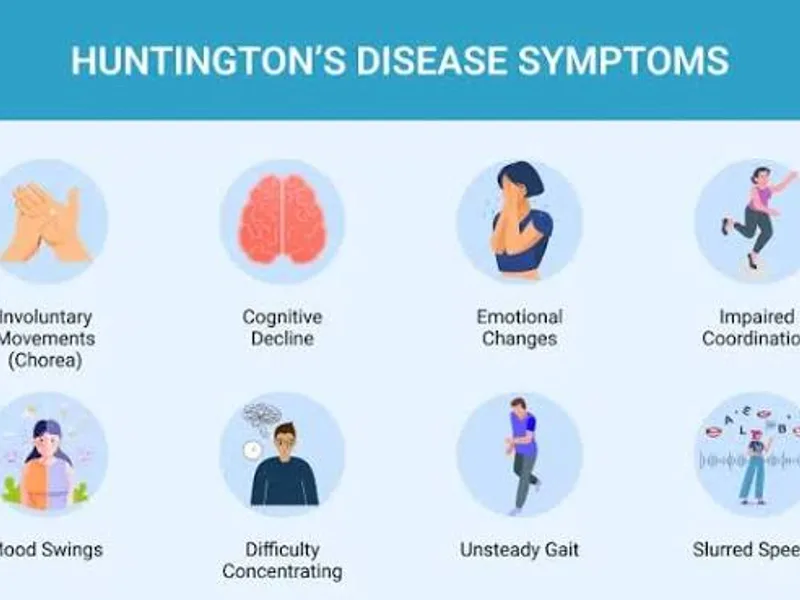
The early signs of Huntington's Disease are often subtle and may be mistaken for stress, mood disorders, or normal aging. Common early warning signs include:
Slight clumsiness or balance problems
Mood swings, irritability, or depression
Difficulty concentrating or making decisions
Small involuntary movements, such as fidgeting
Changes in handwriting or coordination
Because these signs develop slowly, families often notice changes in personality or behavior before movement problems become obvious.
Common Symptoms
As Huntington's Disease progresses, symptoms become more noticeable and are generally grouped into three categories:
Movement Symptoms
Involuntary jerking or writhing movements (chorea)
Muscle rigidity or stiffness
Slow or abnormal eye movements
Trouble with speech and swallowing
Impaired balance and frequent falls
Cognitive Symptoms
Difficulty organizing, prioritizing, or focusing on tasks
Trouble learning new information
Lack of awareness of one's own behaviors
Slowness in processing thoughts
Psychiatric Symptoms
Stages of the Disease
Huntington's Disease is generally divided into three stages:
Early Stage: Mild changes in coordination, mood, and concentration. The person can usually continue daily activities with minor adjustments.
Middle Stage: Movement problems become more pronounced. Speech and swallowing difficulties increase, and the person may need help with daily tasks such as dressing or eating.
Late Stage: The person becomes fully dependent on caregivers for all activities. Communication becomes very difficult, and complications such as choking, infections, and weight loss become major concerns.
The disease usually progresses over 10 to 25 years, though the pace varies from person to person.
How Doctors Diagnose the Condition
Diagnosing Huntington's Disease involves a combination of clinical evaluation and genetic testing. A consultation with a Neurologist is essential, as they specialize in conditions affecting the brain and nervous system.
The diagnostic process typically includes:
Family history review – Since HD is hereditary, understanding family medical history is crucial.
Neurological examination – Checking reflexes, muscle strength, coordination, balance, and eye movements.
Genetic testing – A blood test can confirm the presence of the mutated HTT gene, even before symptoms appear (predictive testing).
Brain imaging (MRI or CT scans) – These scans can show shrinkage in certain brain areas typical of HD.
Psychiatric assessment – To evaluate mood, behavior, and cognitive function.
Genetic counseling is strongly recommended for individuals with a family history, especially before undergoing predictive testing, as the results carry significant emotional and family-planning implications.
Available Treatment Options
There is currently no cure for Huntington's Disease, but treatments focus on managing symptoms, slowing functional decline, and improving quality of life.
Medications
Tetrabenazine and deutetrabenazine – Used to reduce involuntary movements (chorea).
Antipsychotic medications – Help control chorea and manage severe behavioral symptoms.
Antidepressants – Used to manage depression and anxiety, which are common in HD.
Mood stabilizers – Help control irritability and aggressive outbursts.
All medications should be prescribed and monitored by a qualified doctor, as dosage adjustments are often needed over time.
Therapies
Physical therapy – Helps maintain strength, flexibility, and balance, reducing fall risk.
Occupational therapy – Assists patients in adapting daily routines and using assistive devices.
Speech and swallowing therapy – Crucial for managing communication difficulties and reducing choking risk.
Psychotherapy and counseling – Supports emotional health for both patients and family members.
In select advanced cases where movement symptoms are severe and not well controlled by medication, doctors may discuss surgical options such as Deep Brain Stimulation Surgery, which involves implanting a device to help regulate abnormal brain signals.
Lifestyle Management
Maintaining a structured daily routine
Eating a balanced, calorie-rich diet (HD often causes unintentional weight loss)
Regular gentle exercise to support muscle function
Staying socially engaged to support mental health
Joining HD support groups for emotional support
Daily Living Tips for Patients
Use adaptive utensils and weighted cups to make eating easier
Modify the home environment to reduce fall hazards (remove loose rugs, add grab bars)
Break tasks into small, simple steps to reduce frustration
Keep a consistent daily schedule to reduce confusion
Encourage gentle physical activity like walking or stretching
Maintain open communication with caregivers about needs and feelings
Complications if Left Untreated
Without proper management, Huntington's Disease can lead to serious complications, including:
Severe weight loss due to swallowing difficulties
Choking and aspiration pneumonia
Frequent falls leading to fractures or injuries
Worsening depression, which may increase the risk of self-harm
Complete loss of independence in daily activities
Increased risk of infections due to immobility
Early intervention and ongoing care, including support from a Multispecialty Hospitals in Kolkata, can help reduce these risks and improve overall comfort and safety for patients.
Prevention and Risk Reduction
Since Huntington's Disease is caused by an inherited gene mutation, it cannot be prevented in the traditional sense. However, families can take proactive steps:
Genetic counseling for individuals with a family history before planning pregnancies
Predictive genetic testing for at-risk individuals who wish to know their status
Early medical care to manage symptoms as soon as they appear, slowing functional decline
Family planning options such as preimplantation genetic diagnosis (PGD) for couples at risk
While the disease itself cannot be avoided if the gene is inherited, early planning and care can significantly improve quality of life.
Frequently Asked Questions (FAQs)
1. Is Huntington's Disease contagious? No, HD is a genetic condition and cannot be spread from person to person.
2. At what age do symptoms usually begin? Most people develop symptoms between ages 30 and 50, though a juvenile form can appear earlier.
3. Can Huntington's Disease be cured? There is currently no cure, but treatments can help manage symptoms and improve quality of life.
4. Is genetic testing necessary for everyone with a family history? Genetic testing is optional and a personal decision. Genetic counseling is recommended before testing.
5. How long can a person live with Huntington's Disease? Life expectancy after diagnosis is typically 10 to 25 years, depending on overall health and care.
6. Can children inherit Huntington's Disease? Yes, each child of an affected parent has a 50% chance of inheriting the faulty gene.
7. What type of doctor treats Huntington's Disease? A Neurologist typically leads diagnosis and treatment, often alongside psychiatrists and therapists.
8. Are there support groups for HD families? Yes, many organizations offer counseling, education, and peer support for patients and caregivers.
9. Can lifestyle changes slow disease progression? While lifestyle changes cannot stop HD, exercise, good nutrition, and therapy can help maintain function longer.
10. Is Deep Brain Stimulation a cure for HD? No, it is not a cure, but it may help reduce certain severe movement symptoms in select patients.
Conclusion
Huntington's Disease is a challenging condition that affects movement, thinking, and emotions due to a genetic mutation. While there is no cure yet, early diagnosis, proper medical care, and strong support systems can make a significant difference in a patient's quality of life. If you or a family member notice early warning signs or have a family history of HD, consulting a qualified neurologist and seeking genetic counseling are important first steps. With the right care team and support, patients and families can navigate this journey with greater confidence and comfort.
For diagnosis and ongoing care, consult a Neurologist near you.