Hypertension Disease
Introduction
Hypertension, commonly known as high blood pressure, is often referred to as the "silent killer." It is a deceptive condition that affects nearly one in three adults worldwide, yet many are unaware they have it because it rarely produces noticeable symptoms. While a blood pressure reading might look like just two numbers on a screen, those numbers tell a critical story about the force exerted against your artery walls with every heartbeat. Uncontrolled, this force can silently damage your heart, kidneys, brain, and eyes for years before a major health crisis occurs. Understanding Hypertension Disease is the first step in reclaiming your health and preventing life-threatening complications.
What is Hypertension Disease?
Hypertension is a chronic medical condition where the blood pressure in the arteries is persistently elevated. Blood pressure is determined by two things: the amount of blood your heart pumps and the amount of resistance to blood flow in your arteries.
The Numbers: A normal blood pressure reading is typically around 120/80 mm Hg. Hypertension is generally diagnosed when readings consistently exceed 130/80 mm Hg.
Systolic Pressure (Top Number): Measures the pressure in your arteries when your heart beats.
Diastolic Pressure (Bottom Number): Measures the pressure in your arteries when your heart rests between beats.
Types: Most cases (90-95%) are Primary Hypertension, which develops gradually over years with no identifiable cause. The remaining cases are Secondary Hypertension, caused by an underlying condition such as kidney disease or hormonal disorders.
How the Heart and Blood Vessels Work
To understand why hypertension is dangerous, visualize your cardiovascular system as a garden hose system. The heart is the pump, and the blood vessels are the hoses.
Healthy System: In a healthy body, arteries are flexible and elastic. They expand slightly when blood is pumped and contract when the heart rests, maintaining steady, smooth blood flow.
Under Pressure: When you have hypertension, the pressure inside the hoses is too high. Over time, this constant force damages the smooth inner lining of the arteries (endothelium).
The Damage: Once the lining is damaged, fats and cholesterol (LDL) can lodge in the artery walls, forming plaque (atherosclerosis). This makes the arteries stiff and narrow, forcing the heart to pump even harder to push blood through. It is a vicious cycle that eventually leads to heart failure or blocked vessels.
Major Causes
In Primary Hypertension, the cause is a combination of genetics and lifestyle factors. However, for Secondary Hypertension, the root cause is often a specific medical condition.
Kidney Disease: The kidneys regulate fluid and salt balance. If they are damaged, fluid builds up, raising blood pressure.
Obstructive Sleep Apnea: A common sleep disorder where breathing repeatedly stops and starts. This causes sudden drops in blood oxygen levels, increasing blood pressure and straining the cardiovascular system.
Hormonal Imbalances: Conditions like hyperthyroidism, Cushing's syndrome, or aldosteronism can cause the body to retain salt and water or spike the heart rate.
Adrenal Gland Tumors: Rare tumors on the adrenal glands can release hormones (adrenaline, cortisol, aldosterone) that spike blood pressure.
Risk Factors
While high blood pressure affects almost everyone eventually, specific factors accelerate the process.
Age: Risk increases significantly after age 65, as arteries naturally stiffen.
Family History: Hypertension tends to run in families.
Obesity: The more you weigh, the more blood you need to supply oxygen and nutrients to your tissues. As blood volume increases, so does blood pressure.
Lack of Physical Activity: Sedentary people tend to have higher heart rates, forcing the heart to work harder with every beat.
Tobacco Use: Smoking and chewing tobacco temporarily raise blood pressure and damage the lining of artery walls.
Excessive Salt (Sodium): Too much sodium causes the body to retain fluid, which raises blood pressure.
Symptoms to Watch For
The most dangerous aspect of Hypertension Disease is that it is often asymptomatic. Most people feel fine even when their blood pressure is dangerously high. However, some people may experience:
Headaches: Particularly throbbing ones at the back of the head.
Nosebleeds: Though not always a sign, frequent nosebleeds can indicate high pressure.
Dizziness: Spinning sensations or lightheadedness.
Blurred Vision: High pressure can damage the tiny blood vessels in the retina.
Flushing: Redness in the face or neck.
Emergency Warning Signs
A Hypertensive Crisis is a medical emergency. If your blood pressure suddenly spikes to 180/120 mm Hg or higher and you experience the following, call emergency services immediately:
Diagnostic Tests
Diagnosing hypertension is straightforward, but identifying the underlying cause requires a comprehensive approach. Your doctor may refer you to a Cardiologist for specialized management of your condition.
Blood Tests
Blood tests help rule out secondary causes and check for organ damage.
Electrolytes: To check sodium, potassium, and chloride levels (important for kidney function).
Creatinine and BUN: To assess how well the kidneys are filtering blood.
Thyroid Function Tests: To rule out thyroid issues causing the spike.
ECG
An Electrocardiogram (ECG) records the electrical activity of the heart. In hypertension, the ECG can show "left ventricular hypertrophy"—a thickening of the heart muscle caused by the extra work of pumping against high pressure. It can also detect arrhythmias (irregular heartbeats) common in hypertensive patients.
Imaging Tests
Echocardiogram: Uses ultrasound waves to show the heart's structure and pumping function.
Ultrasound of the Kidneys: To check for structural abnormalities or narrowing of the arteries supplying the kidneys (renal artery stenosis).
Ambulatory Blood Pressure Monitoring: A device you wear for 24 hours that takes your blood pressure at regular intervals to get a true picture of your readings throughout the day and night.
Treatment Options
The goal of treatment is to lower blood pressure to protect vital organs from damage. For sleep apnea-related hypertension, you might be referred to a Pulmonologist for respiratory therapy.
Medications
Doctors often prescribe a combination of drugs to lower blood pressure effectively.
Diuretics (Water Pills): Help the kidneys eliminate excess sodium and water from the body, lowering blood volume.
ACE Inhibitors: Block the formation of a hormone that narrows blood vessels, relaxing them instead.
Calcium Channel Blockers: Prevent calcium from entering the muscle cells of the heart and arteries, allowing vessels to relax.
Beta-Blockers: Block the effects of epinephrine (adrenaline), causing the heart to beat more slowly and with less force.
Managing Secondary Causes
If hypertension is caused by a hormonal imbalance, such as thyroid issues, you may need to see an Endocrinologist. Treating the underlying hormonal issue often resolves the blood pressure problem. In rare cases involving tumors on the adrenal glands or thyroid, specialized medical or surgical interventions are required.
Lifestyle Changes for Better Heart Health
Medication is often necessary, but lifestyle changes are the foundation of treatment.
Weight Loss: Losing even a small amount of weight (5-10 lbs) can significantly lower blood pressure.
Reduce Sodium: Aim for less than 2,300 mg a day; ideally 1,500 mg.
Limit Alcohol: Drinking in moderation (one drink a day for women, two for men) is key.
Quit Smoking: Smoking damages blood vessels instantly; quitting helps them recover.
Diet Plan Recommendations
The DASH (Dietary Approaches to Stop Hypertension) diet is the gold standard for managing hypertension.
Eat More Fruits and Vegetables: Aim for 4-5 servings of each daily. They are rich in potassium, which helps balance sodium.
Choose Whole Grains: Brown rice, whole wheat pasta, and oatmeal over refined white products.
Low-Fat Dairy: Skim milk, low-fat yogurt, and cheese provide calcium without the saturated fat.
Increase Potassium: Bananas, potatoes, avocados, and sweet potatoes are excellent sources that help the body excrete sodium.
Reduce Processed Foods: Canned soups, frozen dinners, and processed meats are hidden sodium bombs.
Exercise Guidelines
Regular physical activity strengthens the heart, allowing it to pump blood with less effort, which decreases pressure on the arteries.
Aerobic Activity: Aim for at least 150 minutes of moderate-intensity exercise per week (brisk walking, swimming, cycling).
Consistency is Key: Regularity matters more than intensity. A daily 30-minute walk is better than a single intense gym session once a week.
Isometric Exercises: Heavy weight lifting can temporarily spike blood pressure. If you have uncontrolled hypertension, consult your doctor before starting a heavy lifting program.
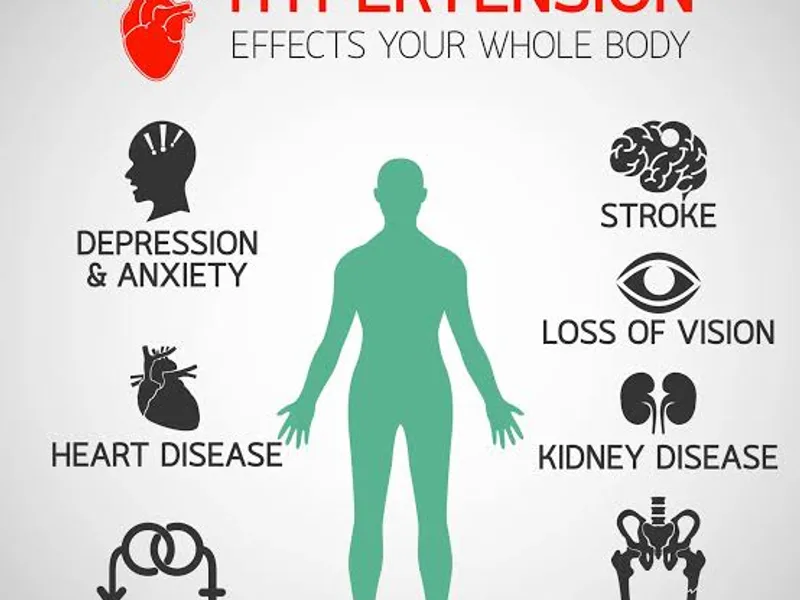
Long-Term Complications
If ignored, hypertension acts like a slow-motion wrecking ball on your body.
Heart Attack or Stroke: High blood pressure causes hardening and thickening of the arteries (atherosclerosis), leading to blockages.
Heart Failure: The heart muscle thickens (hypertrophy) to handle the pressure, eventually becoming stiff and weak.
Kidney Failure: The delicate blood vessels in the kidneys become damaged, leading to dialysis or transplant needs.
Vision Loss: High pressure can damage the tiny vessels in the eyes (retinopathy), leading to blindness.
Sexual Dysfunction: High blood pressure can limit blood flow to the genitals, causing erectile dysfunction in men.
Prevention Tips
Preventing hypertension is easier than treating it.
Check Your Numbers: Have your blood pressure checked at least once a year, starting at age 18.
Manage Stress: Chronic stress can increase blood pressure. Try meditation, deep breathing exercises, or yoga.
Limit Caffeine: Though the long-term effects of caffeine are debated, it can cause a temporary spike.
Monitor Your Sleep: Snoring loudly or gasping for air at night could be sleep apnea—a major risk factor for high blood pressure.
FAQs
Can I stop taking my medication if I feel fine?
No. Hypertension is a chronic condition. You may feel fine because you are taking the medication. Stopping can cause a rebound effect, sending your pressure to dangerous levels.
Does caffeine cause high blood pressure?
Caffeine can cause a temporary spike, but it does not usually cause long-term hypertension. However, if you already have high blood pressure, it is wise to limit your intake.
What if medication doesn't work?
If your blood pressure remains high despite medication, you may have "resistant hypertension." This is often due to an underlying condition or the wrong combination of drugs. It is best to visit Advanced Treatment Hospitals in Kolkata where specialized cardiologists can investigate secondary causes and adjust your complex treatment plan.
Final Thoughts
Hypertension Disease is a lifelong condition, but it is also one of the most manageable diseases known to modern medicine. By taking ownership of your health—monitoring your numbers, adhering to your medication, and embracing a heart-healthy lifestyle—you can live a long, vibrant life free from the devastating complications of uncontrolled high blood pressure. Don't wait for a wake-up call; take control today.