Imperforate Anus (Low Anomaly) Cutback Operation in Dhanbad: A Complete Guide for Parents
Introduction
Few moments are more frightening for new parents than learning, often within hours of birth, that something needs immediate attention with their newborn. An imperforate anus — where the baby is born without a normally formed anal opening — is one of those conditions that demands quick evaluation and, in many cases, prompt surgical correction. For low-type anomalies specifically, a procedure called a cutback (or anoplasty) operation is often the definitive treatment, and the outlook for these babies is generally very good.
This guide is written for parents and families trying to understand this condition and the surgery involved — what it is, why it happens, how it's diagnosed, what the cutback operation entails, what recovery and long-term care look like, and what costs to expect in Dhanbad. The aim is to take what feels like an overwhelming situation and break it down into clear, manageable information.
Imperforate anus is a type of anorectal malformation — a congenital condition where the anus doesn't form correctly during fetal development, resulting in the rectum ending in an abnormal location or the anal opening being absent, narrowed, or misplaced. These malformations exist on a spectrum, broadly categorized as "low," "intermediate," or "high" anomalies, depending on how far the rectum has descended toward the perineum (the area between the genitals and the anus) and where it ends relative to the muscles that normally control bowel movements.
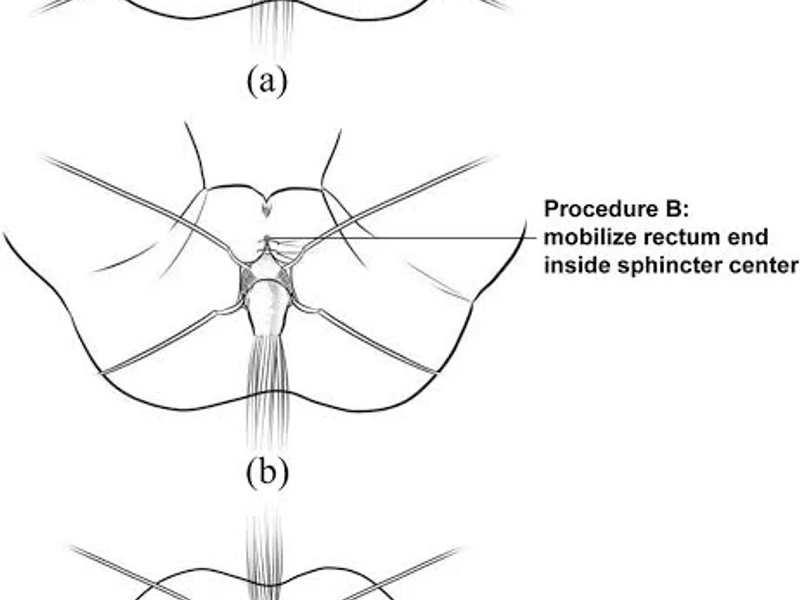
In low-type anomalies — which this guide focuses on — the rectum has descended close to the normal position, often ending just beneath the skin of the perineum, sometimes with a visible thin membrane or a very small opening (a fistula) nearby. Because the rectum is close to its normal position and the surrounding muscle structures (the sphincter complex) are typically present and reasonably well-formed, low anomalies are generally more straightforward to correct surgically and tend to have better long-term outcomes for bowel control compared to higher anomalies.
The cause of imperforate anus and other anorectal malformations isn't fully understood, and importantly, it is not caused by anything a parent did or didn't do during pregnancy. It's believed to result from an interruption in the normal development of the lower digestive tract during early pregnancy, occurring in roughly 1 in 5,000 live births. In some cases, it occurs alongside other congenital conditions, which is why babies diagnosed with an anorectal malformation are typically also screened for related issues affecting the spine, kidneys, heart, and other systems — a group of associations sometimes referred to collectively, though this screening is simply routine good practice rather than something to be alarmed about.
Symptoms are usually identified immediately at birth during the newborn's first physical examination, which is why imperforate anus is almost always diagnosed within the first day of life. Signs include the absence of a visible anal opening in the normal position, failure to pass meconium (the baby's first stool) within the first 24-48 hours, abdominal distension, and in some cases, meconium passing through an abnormal opening — such as into the urinary tract or, in girls, into the vaginal area — which indicates the presence of a fistula.
Because this is a condition identified at birth and addressed surgically very early in life, the traditional idea of "risk factors" doesn't really apply in the way it might for adult conditions — there's no lifestyle or dietary factor involved, and parents shouldn't search for something they could have done differently.
If a low anomaly is identified and not corrected, complications can include severe constipation, straining, and in some cases, the formation of a fistula causing recurrent urinary tract infections (if connected to the urinary tract) or other complications depending on the type of fistula present. Left entirely untreated, the baby would be unable to pass stool normally, which is a serious and urgent medical situation requiring prompt attention.
The encouraging news for low-type anomalies is that the cutback operation — sometimes called an anoplasty — is often a relatively contained procedure compared to the more complex reconstructive surgeries needed for intermediate or high anomalies, and many babies with low anomalies go on to achieve good bowel control and lead completely normal lives. Early diagnosis (which, for this condition, essentially means immediately at birth) and prompt surgical correction give babies the best possible start.
For families navigating this in Dhanbad, it helps to understand consultation processes, OPD timings for follow-up visits, and overall treatment costs. Pediatric surgeons across Dhanbad's hospitals are typically available for urgent newborn consultations, with follow-up OPD consultation fees generally ranging from around ₹200 to ₹550. It's also worth taking time, once the immediate situation is stabilized, to look into female surgeons in Dhanbad with pediatric surgical experience and to read verified patient reviews — many families find this helps them feel more informed and supported through what can be an emotionally difficult time.
For appointments call 8877772277.
Average Cutback Operation Cost in Dhanbad
The cost of a cutback operation (anoplasty) for a low-type imperforate anus depends on whether it's performed as an emergency newborn procedure, whether a fistula is present and needs to be addressed simultaneously, the length of NICU or hospital stay required, and any additional investigations needed to rule out associated conditions. Below is a general cost guide based on typical pricing at hospitals in Dhanbad.
Procedure | Cost Range | Hospital Stay |
|---|
Newborn cutback anoplasty (low anomaly, no fistula) | ₹40,000 – ₹80,000 | 5–8 days |
Cutback anoplasty with perineal fistula repair | ₹50,000 – ₹95,000 | 6–10 days |
Anoplasty with associated dilatation program (initial) | ₹45,000 – ₹85,000 | 5–9 days |
Pre-operative screening investigations (spine, kidney, heart) | ₹8,000 – ₹20,000 | Outpatient/inpatient |
NICU stay (per day, where required) | ₹3,000 – ₹8,000 | Per day |
Post-operative anal dilatation follow-up visits | ₹500 – ₹1,500 per visit | Outpatient |
Anoplasty with minor revision surgery (if needed later) | ₹40,000 – ₹75,000 | 4–6 days |
Long-term follow-up consultations | ₹200 – ₹550 per visit | Outpatient |
A note on PMJAY (Ayushman Bharat): Surgical correction of congenital anorectal malformations, including the cutback/anoplasty procedure for low-type imperforate anus, is generally covered under PMJAY (Ayushman Bharat) for eligible families at empanelled hospitals, as it is classified as a medically necessary pediatric surgical procedure. Coverage typically extends to the surgery itself, NICU/hospital stay, and standard consumables. Given that newborn care often involves multiple components, it's worth asking the hospital's billing or insurance desk for a complete breakdown of what is and isn't covered under your specific scheme.
Why the Cutback Operation Is Performed
The cutback (anoplasty) procedure is recommended for low-type imperforate anus for several important reasons:
To create a functional anal opening in or very close to its normal anatomical position, allowing the baby to pass stool normally.
To preserve the existing sphincter muscle complex, which in low anomalies is typically present and well-positioned, giving the best chance of good long-term bowel control.
To address any associated fistula, redirecting the bowel's connection from an abnormal location (such as near the urinary tract or vaginal area in girls) to the newly created anal opening.
To prevent ongoing severe constipation that would otherwise result from a narrow, misplaced, or absent anal opening.
To reduce the risk of urinary tract infections in cases where a fistula previously allowed stool to come into contact with the urinary system.
To allow normal toilet training as the child grows, supporting normal developmental milestones.
To minimize the need for more extensive reconstructive surgery, since low anomalies generally don't require the complex pull-through procedures used for higher anomalies.
To support healthy weight gain and growth in infancy by establishing normal bowel function early.
To reduce long-term complications associated with chronic straining, such as rectal prolapse.
To give the best possible foundation for continence later in childhood, since low anomalies with intact sphincter muscles generally have favorable outcomes when corrected early and appropriately.
Benefits of the Cutback Operation
Generally a single-stage procedure for low anomalies — unlike higher anomalies, which often require a staged approach involving an initial colostomy, the cutback operation can frequently be performed as a more contained, single procedure.
Preserves natural anatomy — because low anomalies involve a rectum that has descended close to its normal position, the cutback approach works with the baby's existing anatomy rather than requiring extensive reconstruction.
Good long-term continence outcomes — children with low anomalies and intact sphincter muscles generally have a strong likelihood of achieving normal or near-normal bowel control with appropriate follow-up care.
Relatively short hospital stay compared to more complex anorectal reconstructions.
Allows early initiation of normal feeding and bowel function, supporting healthy growth in infancy.
Reduces the need for a temporary colostomy in many low-anomaly cases, which some families find to be a significant relief, though this depends entirely on the specific anatomy.
Establishes a foundation for normal toilet training during toddlerhood, in line with typical developmental timelines.
Resolves any associated fistula, eliminating related issues like recurrent urinary infections.
Allows for close monitoring during a structured dilatation program, which helps ensure the new anal opening remains an adequate size as the baby grows.
Provides clarity and a treatment pathway for families during what can otherwise feel like an extremely uncertain and frightening time immediately after birth.
Choosing the Right Pediatric Surgical Team in Dhanbad: What to Look For
Rather than recommending specific individuals, here is a practical framework for evaluating pediatric surgical care in Dhanbad for a newborn with a low-type imperforate anus.
Qualifications to verify:
MBBS with M.Ch in Pediatric Surgery, or equivalent recognized postgraduate training specifically in pediatric surgery
Experience with newborn anorectal malformation repairs specifically, as this is a specialized area within pediatric surgery
Active registration with the State Medical Council, verifiable on request
Questions worth asking the surgical team:
Based on examination and any imaging done, has this been confirmed as a low-type anomaly, and what does that mean for the surgical plan?
Is a colostomy needed before the cutback procedure, or can this be addressed in a single stage?
Is there a fistula present, and how will it be managed during surgery?
What associated investigations (spine, kidney, heart) are recommended, and when will these be done?
What does the post-operative dilatation program involve, and how long does it typically continue?
What is the realistic timeline for the baby to be discharged home, and what follow-up schedule should we expect?
Is the hospital empanelled under PMJAY/Ayushman Bharat for newborn surgical care?
Hospital factors that affect outcomes:
Availability of a Neonatal Intensive Care Unit (NICU) for newborn monitoring
Pediatric anesthesia expertise specific to newborns
Access to pediatric radiology for any imaging needed to assess the anomaly and screen for associated conditions
Clear, accessible follow-up scheduling for the dilatation program and longer-term continence monitoring
For families in this situation, reading recent patient reviews focused specifically on neonatal and pediatric surgical care — not just general hospital reviews — can provide useful insight into how a hospital's pediatric team communicates with anxious new parents and manages follow-up care over the months ahead.
Recovery After the Cutback Operation
Recovery for a newborn after a cutback operation involves both immediate post-surgical care and an ongoing program over the following weeks to months.
Immediate post-operative period (Days 1–7): The baby is typically monitored closely in the hospital, often in a NICU setting initially, with attention to wound healing, pain management appropriate for a newborn, and feeding. The surgical site is kept clean, and parents are often involved in care and feeding as soon as the baby is stable, which helps with bonding and prepares parents for care at home.
Early home recovery (Weeks 1–4): Once discharged, the focus shifts to wound care, feeding, and beginning the post-operative dilatation program if recommended by the surgical team. This program typically involves gentle dilatation of the new anal opening using specially sized dilators, performed by parents at home after being trained by the surgical team, to prevent the opening from narrowing as it heals.
Feeding during recovery: Newborns generally continue breastfeeding or formula feeding as normal, with the surgical team monitoring weight gain and bowel movements closely in the early weeks. As the baby grows and begins solid foods later in infancy, no special dietary restrictions are typically needed specifically related to the surgery itself, though the surgical team may offer guidance on managing constipation, which can be more common in children who've had anorectal surgery.
The dilatation program: This is one of the most important parts of recovery for many low-anomaly repairs. Starting a couple of weeks after surgery (timing varies based on the surgeon's assessment of healing), parents are taught to perform gentle dilatations using a sequence of gradually larger dilators, typically once or twice daily, for a period that can range from a few months to around a year, with the size and frequency adjusted at follow-up visits. While this can feel daunting initially, most parents become comfortable with the routine quickly, and the surgical team provides hands-on training before discharge.
Follow-up schedule: Follow-up visits are typically frequent in the early months — often every few weeks initially — to monitor healing, assess the dilatation progress, and adjust dilator sizes as needed. As the child grows, follow-up shifts to monitoring bowel habits, toilet training progress (usually assessed around the toddler years), and longer-term continence development, sometimes continuing in some form into early childhood.
Warning signs that need urgent medical attention:
Fever, particularly in a newborn, which always warrants prompt medical evaluation
Increasing redness, swelling, or discharge at the surgical site
Difficulty passing stool, or signs of straining and discomfort that seem to worsen rather than improve
Poor feeding, lethargy, or reduced wet diapers, which can indicate dehydration
Any bleeding from the surgical site beyond minimal spotting
Parents should not hesitate to contact the surgical team or seek emergency care for any of these signs — newborns can change quickly, and early evaluation is always the safer choice.
Risks and Complications
The cutback operation for low-type imperforate anus is generally well-tolerated, but as with any newborn surgery, there are risks and potential complications to be aware of:
Anal stenosis (narrowing) — The new anal opening can narrow as it heals, which is why the dilatation program is so important in the months following surgery.
Wound infection — As with any surgical incision, there's a risk of infection, monitored closely and managed with appropriate care if it occurs.
Wound breakdown — Occasionally, the surgical site may not heal as quickly as expected, sometimes requiring additional care or, rarely, a minor revision procedure.
Mislocation of the anal opening — In rare cases, the position of the new opening may need adjustment with a follow-up procedure if it isn't functioning optimally.
Constipation — Children who've had anorectal surgery, including for low anomalies, can be more prone to constipation and may need ongoing dietary or medical management as they grow.
Incomplete resolution of fistula — If a fistula was present, there's a small risk it may not be completely resolved by the initial surgery, occasionally requiring further intervention.
Anesthesia-related risks — Newborn anesthesia carries specific considerations, which is why experienced pediatric anesthesia teams are important for this type of surgery.
Long-term continence concerns — While low anomalies generally have favorable outcomes, the degree of bowel control achieved varies between children and is typically assessed over time as the child reaches toilet-training age and beyond.
Need for revision surgery — In a minority of cases, a second, smaller procedure may be needed later if the initial result isn't fully satisfactory, particularly regarding the size or position of the opening.
Associated condition management — While not a complication of the surgery itself, ongoing management of any associated conditions identified during initial screening (such as kidney or spinal issues) is typically coordinated alongside the surgical recovery.
It's worth emphasizing that low-type anomalies generally have the most favorable outlook among anorectal malformations, and most of these risks, when they occur, are manageable with appropriate follow-up care.
Frequently Asked Questions – Imperforate Anus Cutback Operation in Dhanbad
1. What does "low anomaly" mean, and how is it different from other types? Anorectal malformations are classified based on how far the rectum has descended toward its normal position and its relationship to the sphincter muscles that control bowel movements. In "low" anomalies, the rectum has descended close to its normal location, often ending just beneath the perineal skin, with the sphincter muscles typically present and reasonably well-formed. This generally allows for a more contained surgical correction (the cutback/anoplasty) and is associated with better long-term outcomes for bowel control compared to "intermediate" or "high" anomalies, where the rectum ends further from its normal position and surgery is more complex, often requiring a staged approach with an initial colostomy.
2. Will my baby need a colostomy before this surgery? For many low-type anomalies, a colostomy isn't necessary, and the cutback operation can be performed as the primary corrective procedure relatively soon after birth. However, this depends entirely on the specific anatomy, which the surgical team assesses through examination and sometimes imaging in the first day or two of life. In some cases, even with a low anomaly, a temporary colostomy may still be recommended if there's any uncertainty about the anatomy or if other factors make immediate definitive repair less safe — your surgical team will explain the reasoning for your baby's specific situation.
3. Did I do something during pregnancy that caused this? No. Anorectal malformations, including imperforate anus, result from an interruption in normal development during early pregnancy that isn't linked to anything a parent did, ate, or was exposed to. This is one of the most common questions parents have, and it's important to know that this isn't something that could have been prevented or caused by parental actions.
4. What other tests will my baby need? Because anorectal malformations can sometimes occur alongside other congenital conditions, babies are typically screened with an ultrasound of the kidneys and urinary tract, an echocardiogram (heart ultrasound), and sometimes spinal imaging. This is routine practice for any baby diagnosed with this condition, not an indication that something else is necessarily wrong — it's simply a thorough check to ensure any other conditions are identified and addressed early if present.
5. How soon after birth does this surgery happen? For low-type anomalies, surgery is often performed within the first few days of life, once the baby is assessed as stable and any necessary screening has been completed. The exact timing depends on the baby's overall health, the specific anatomy, and the surgical team's assessment. In some cases, if the baby is otherwise stable and the anatomy allows, there may be slightly more flexibility in timing, but this is always determined on a case-by-case basis by the pediatric surgical team.
6. What is the dilatation program, and how long does it last? After the cutback operation, the new anal opening can narrow as it heals, so a program of gentle dilatation — using specially designed dilators of gradually increasing size — is typically started a couple of weeks after surgery. Parents are trained to perform this at home, usually once or twice daily initially, with the surgical team adjusting dilator sizes at follow-up visits. The program often continues for several months to around a year, though the exact duration varies based on each child's healing and the surgeon's assessment.
7. Will my child be able to achieve normal bowel control? Children with low-type anomalies and intact sphincter muscles generally have a good chance of achieving normal or near-normal bowel control, particularly with appropriate surgical correction and follow-up care. However, outcomes vary between children, and some may experience challenges with constipation or occasional accidents, particularly during toilet training, which can often be managed with dietary adjustments, bowel training programs, and ongoing support from the pediatric surgical and gastroenterology team as needed.
8. Is this surgery painful for the baby? Newborns are given appropriate pain management before, during, and after surgery, just as with any surgical procedure. While some discomfort during initial healing is expected, the surgical team manages this with newborn-appropriate pain relief, and most babies recover comfortably within the hospital stay, with discomfort decreasing significantly over the following days.
9. How will I know if the dilatation is being done correctly? The surgical team provides hands-on training before discharge, typically demonstrating the technique and having parents practice under supervision before going home. Follow-up visits allow the team to check progress, answer questions, and adjust the approach as needed. Most parents find that with this guidance and a little practice, the routine becomes manageable, and the surgical team remains available to address concerns throughout the program.
10. Can this condition be detected before birth? In some cases, anorectal malformations may be suspected on prenatal ultrasound, particularly if there are associated findings like dilated bowel loops, though imperforate anus itself is often not visible on routine prenatal scans and is more commonly diagnosed at birth during the newborn examination. If a prenatal concern is raised, this allows for some advance planning, but for most families, the diagnosis comes as a finding at delivery.
11. Will my child need any further surgeries later in childhood? For most low-type anomalies treated with a successful cutback operation, no further major surgery is typically needed, though some children may require a minor revision if the initial result isn't fully satisfactory — for example, if the opening narrows despite dilatation. Long-term follow-up focuses on monitoring bowel function and continence as the child grows, with additional intervention only if specific issues arise.
12. How do I find a pediatric surgeon experienced with this condition in Dhanbad? Look for a pediatric surgeon (M.Ch Pediatric Surgery) with specific experience in newborn anorectal malformation repair, ideally at a hospital with NICU facilities and pediatric anesthesia expertise. You can browse expert specialists in Dhanbad to review qualifications and experience, and don't hesitate to ask directly about a surgeon's experience with this specific condition during your consultation.
13. Is breastfeeding safe and possible after this surgery? Yes, breastfeeding is generally encouraged and supported as soon as the baby is stable after surgery, often within the first day or so, depending on the anesthesia used and the baby's recovery. Breastfeeding doesn't interfere with the surgical site or healing, and the surgical and nursing team will guide parents on feeding as part of routine post-operative care.
14. What should we tell family members or caregivers about caring for our baby after surgery? The most important things to communicate are the basics of wound care (keeping the area clean as instructed), recognizing warning signs like fever or feeding difficulties that need prompt medical attention, and the importance of the dilatation program if one has been started. The surgical team can provide written instructions that can be shared with other caregivers, and it's worth ensuring at least one or two consistent caregivers are trained in the dilatation technique alongside the parents.
15. Does PMJAY/Ayushman Bharat cover this surgery for newborns? Yes, surgical correction of anorectal malformations, including the cutback operation for low-type imperforate anus, is generally covered under PMJAY (Ayushman Bharat) for eligible families at empanelled hospitals, as a medically necessary pediatric surgical procedure. Given that newborn care often involves NICU stays and additional investigations, it's worth asking the hospital's billing or insurance desk for a complete breakdown of coverage for your specific situation.
Cost Summary
Costs for low-anomaly cutback operations are generally lower than for intermediate or high anomalies, which often require staged procedures including a colostomy
Presence of a fistula requiring simultaneous repair can increase the overall cost and hospital stay
NICU stay, where required, is often a significant component of overall cost and is typically billed separately on a per-day basis
Pre-operative screening investigations (kidney, heart, spine) add to initial costs but are an important part of comprehensive newborn care
The post-operative dilatation program involves ongoing but relatively low-cost follow-up visits over several months
PMJAY/Ayushman Bharat coverage can substantially reduce or eliminate out-of-pocket costs for eligible families at empanelled hospitals
Occasional revision procedures, if needed later, represent an additional but generally smaller cost compared to the initial surgery
Always request a detailed, itemized estimate covering surgery, NICU stay, investigations, and follow-up care from the hospital
Conditions Treated by the Cutback Operation in Dhanbad
• Low-Type Imperforate Anus (No Fistula)
In this presentation, the rectum has descended close to its normal position, but the anal opening is absent or covered by a thin membrane, with no abnormal connection (fistula) to other structures. The cutback operation creates a functional opening in the correct anatomical position, typically as a single-stage procedure with generally favorable outcomes.
• Anocutaneous (Perineal) Fistula
This is one of the most common low-type anomalies, where the rectum opens through a small, abnormally placed channel onto the skin of the perineum, anterior to where the normal anal opening should be. The cutback operation repositions this opening to the correct anatomical location, addressing both the cosmetic and functional aspects of the condition.
• Anal Stenosis (Congenital Narrowing)
In some cases, the anal opening is present but abnormally narrow, causing significant constipation and straining from birth. Surgical correction widens the opening to a normal caliber, often combined with a dilatation program to maintain the correct size during healing.
• Covered Anus with Perineal Fistula
This presentation involves a thin layer of skin covering the normal anal location, with a small fistula opening nearby. The cutback procedure addresses both the covered opening and any associated fistula, establishing a single functional opening in the correct position.
• Vestibular Fistula (in Female Infants, Low-Type)
In some female infants, the rectum may open into the vestibule (the area just outside the vaginal opening) rather than in the normal anal position. While some vestibular fistulas are managed with more extensive procedures depending on their exact location, certain low-positioned variants may be addressed with a cutback-type approach, determined by careful examination of the individual anatomy.
• Anal Membrane (Imperforate Anal Membrane)
This occurs when a thin membrane covers what is otherwise a normally positioned and formed anal canal. Correction involves opening this membrane and ensuring the resulting opening remains an adequate size through the dilatation program.
• Post-Surgical Anal Stenosis
Occasionally, after an initial cutback procedure, the anal opening can narrow during healing despite dilatation efforts, requiring a minor revision procedure to restore an adequate opening size.
• Constipation Related to Anorectal Malformation
Even after successful surgical correction, some children experience ongoing constipation related to differences in bowel motility or sensation associated with the original malformation. This is typically managed with dietary measures, stool softeners, and bowel training programs as the child grows.
• Associated Mild Sacral Anomalies
Some children with low-type anorectal malformations are found to have minor associated abnormalities of the sacrum (the lower spine), identified during routine screening. While these are usually mild in low-anomaly cases and don't typically require separate surgical treatment, they're monitored as part of the child's overall care.
• Recurrent or Incompletely Resolved Fistula
In rare cases, a fistula may not be completely addressed during the initial procedure, leading to ongoing minor symptoms that require a follow-up evaluation and, if needed, a smaller corrective procedure.
Why Choose a Specialist Pediatric Surgical Team in Dhanbad
When it comes to newborn anorectal malformation surgery, the experience and resources of the surgical team can meaningfully influence both the immediate surgical outcome and the long-term quality of life for the child — and this is particularly true even for low-type anomalies, which are generally the most favorable category but still benefit significantly from specialized care.
First, accurate classification of the anomaly — distinguishing low from intermediate types, and identifying any associated fistula — requires careful newborn examination and, in some cases, imaging, by a team experienced specifically in anorectal malformations. This classification directly determines the surgical approach and affects long-term expectations for bowel control.
Second, the technical execution of the cutback operation, while often more contained than reconstructions for higher anomalies, still benefits from a surgeon's familiarity with the specific anatomy involved, helping to position the new opening accurately within the existing sphincter complex for the best functional outcome.
Third, the post-operative dilatation program is a critical component of long-term success, and a surgical team experienced in guiding parents through this process — with clear instructions, accessible follow-up, and responsiveness to questions — makes a substantial difference in how smoothly this months-long process goes for families.
Fourth, access to NICU facilities and pediatric anesthesia expertise is essential for newborn surgery generally, ensuring the baby is monitored appropriately throughout the perioperative period.
Finally, coordinated screening and follow-up for associated conditions — kidney, heart, and spinal — benefits from a hospital setting where pediatric surgery, pediatrics, and relevant imaging services work together efficiently, reducing the number of separate appointments and locations families need to manage during an already overwhelming time.
For families in Dhanbad facing this diagnosis, taking the time — even amid the stress of the early days — to ask about a surgical team's specific experience with anorectal malformations, and to read reviews from other families who've gone through similar newborn surgical experiences, can provide real reassurance during a process that's often unfamiliar and emotionally intense.
Conclusion
Learning that your newborn has been diagnosed with imperforate anus is, understandably, one of the most difficult moments a new parent can face — made harder by how quickly decisions need to be made in those first hours and days. But within this difficult diagnosis, a low-type anomaly represents the most favorable category, with a generally well-established surgical solution and a good long-term outlook for most children.
The cutback operation, in most low-anomaly cases, addresses the core problem directly — creating a properly positioned, functional anal opening that works with the baby's existing anatomy rather than requiring extensive reconstruction. Combined with the post-operative dilatation program and ongoing follow-up, most children go on to develop normal or near-normal bowel control and lead completely typical childhoods.
If your baby has been diagnosed with a low-type imperforate anus in Dhanbad, take the time — as much as circumstances allow — to ask the pediatric surgical team detailed questions about the specific anatomy involved, the planned surgery treatments in Dhanbad, the associated screening tests, and what the dilatation program and follow-up schedule will look like. While the early days can feel overwhelming, having clear information and a trusted surgical team behind you makes an enormous difference — and for low-type anomalies in particular, the path forward is generally a positive one.
📞 For appointments call 8877772277.