Insomnia: Causes, Symptoms, Stages & Effective Treatment
Introduction
Insomnia is one of the most common sleep disorders in the world, affecting approximately one-third of adults at some point in their lives. It is defined as persistent difficulty falling asleep, staying asleep, or waking up too early — even when the conditions for sleep are adequate. More than just tiredness, chronic insomnia significantly impacts mental health, physical wellbeing, job performance, and relationships. Yet it remains widely misunderstood, underdiagnosed, and undertreated. This guide provides a comprehensive look at insomnia for patients, caregivers, and anyone who has spent too many nights staring at the ceiling.
What is Insomnia?
Insomnia is a sleep disorder characterised by difficulty initiating or maintaining sleep, or waking earlier than desired, which results in dissatisfaction with sleep quality or quantity. These sleep difficulties must occur at least three nights per week and persist for at least three months to be classified as chronic insomnia. Insomnia is not just about the number of hours slept — it is also about the quality. A person can spend eight hours in bed yet still have insomnia if their sleep is fragmented, unrefreshing, or takes a long time to initiate.
How the Nervous System is Affected
Sleep is regulated by two main biological systems: the circadian rhythm (internal body clock) and the homeostatic sleep drive (build-up of sleep pressure over waking hours). In insomnia, both systems can be disrupted. The nervous system, particularly the hypothalamus and the arousal centres of the brain, becomes hyperactivated. Elevated levels of stress hormones like cortisol and adrenaline keep the brain in a state of alertness even at bedtime. This "hyperarousal" is the hallmark of insomnia. Over time, the brain begins to associate the bed and bedroom with wakefulness and frustration rather than sleep — a learned pattern that perpetuates the disorder.
Causes and Risk Factors
Insomnia rarely has a single cause. It typically develops from a combination of predisposing, precipitating, and perpetuating factors.
Common Causes:
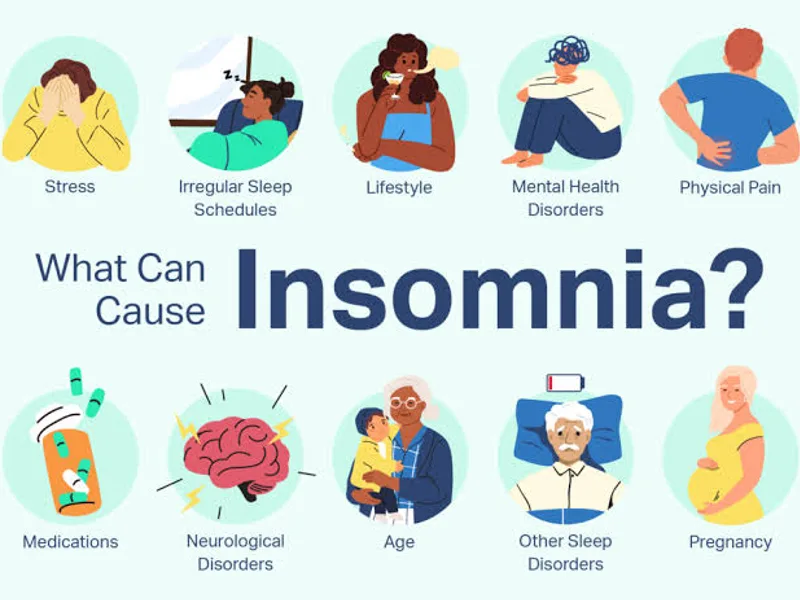
Psychological conditions — anxiety, depression, PTSD, and chronic stress are the leading causes
Medical conditions — chronic pain, asthma, acid reflux, heart disease, and hormonal changes (menopause)
Medications — certain antidepressants, blood pressure drugs, steroids, and stimulants
Substance use — caffeine, nicotine, and alcohol (which fragments sleep architecture)
Environmental factors — noise, light, extreme temperatures, or an uncomfortable sleeping environment
Poor sleep habits — irregular sleep schedules, using screens before bed, long daytime naps
Risk Factors:
Being female (hormonal changes increase vulnerability)
Age over 60 (sleep architecture changes with ageing)
Mental health disorders
Night or rotating shift work
Travel across time zones (jet lag)
Major life stressors or life transitions
Early Warning Signs
Insomnia often begins subtly. Early warning signs include:
Taking more than 30 minutes to fall asleep on a regular basis
Frequently waking during the night and struggling to return to sleep
Waking up earlier than intended and being unable to fall back asleep
Feeling unrefreshed even after a full night in bed
Daytime fatigue, irritability, or difficulty concentrating
Increasing reliance on sleep aids or alcohol to fall asleep
Growing anxiety about bedtime as the evening approaches
Common Symptoms
Full-blown insomnia presents with a consistent pattern of:
Sleep onset difficulty — lying awake for an hour or more before sleeping
Sleep maintenance difficulty — waking multiple times during the night
Early morning awakening — waking at 3–4 a.m. and being unable to sleep again
Non-restorative sleep — sleeping but feeling no better upon waking
Daytime impairment — fatigue, poor concentration, memory problems, low mood
Increased errors or accidents at work or while driving
Physical symptoms — headaches, gastrointestinal problems, increased sensitivity to pain
Preoccupation with sleep — spending excessive mental energy worrying about sleep
Stages of the Disease
Transient Insomnia (Acute Insomnia)
Lasts a few nights to a few weeks. Usually triggered by a specific stressor (an exam, a new job, grief, travel). Typically resolves once the stressor passes.
Short-Term Insomnia
Lasts up to three months. Often linked to ongoing stressors — a relationship breakdown, illness, or workplace difficulties. Without treatment, can develop into chronic insomnia.
Chronic Insomnia
Occurs at least three nights per week for three months or more. At this stage, the insomnia often becomes self-perpetuating: anxiety about poor sleep itself prevents sleep, creating a vicious cycle.
How Doctors Diagnose the Condition
Diagnosing insomnia involves a thorough clinical evaluation:
Sleep history — detailed discussion of sleep patterns, duration, timing, and daytime functioning
Sleep diary — the patient records sleep and waking times over 1–2 weeks to identify patterns
Validated questionnaires — such as the Insomnia Severity Index (ISI) or Pittsburgh Sleep Quality Index (PSQI)
Medical history and medication review — to identify underlying causes
Actigraphy — a wrist-worn device that monitors movement and estimates sleep patterns over several weeks
Polysomnography (sleep study) — not routinely used for insomnia, but may be ordered if sleep apnoea or restless legs syndrome is suspected
For complex cases or when an underlying neurological or medical condition is suspected, consulting a Neurologist can be highly valuable. A neurologist can assess for conditions like restless legs syndrome, circadian rhythm disorders, and sleep-related movement disorders.
Available Treatment Options
Medications
Medications may be used short-term but are not recommended as a long-term solution:
Non-benzodiazepine hypnotics (zolpidem, eszopiclone) — help with sleep onset; carry risks of dependence
Melatonin receptor agonists (ramelteon) — suitable for sleep onset difficulties; low abuse potential
Low-dose antidepressants (doxepin, trazodone) — used for sleep maintenance insomnia
Orexin receptor antagonists (suvorexant, lemborexant) — newer class; reduce wakefulness-promoting signals
Antihistamines (diphenhydramine) — over-the-counter; tolerance develops quickly, so not recommended for chronic insomnia
Melatonin supplements — helpful for jet lag and circadian adjustment; modest effect on primary insomnia
Therapies
Cognitive Behavioural Therapy for Insomnia (CBT-I) is the gold-standard, first-line treatment for chronic insomnia and is more effective than sleeping pills in the long term. It includes:
Sleep restriction therapy — limiting time in bed to increase sleep drive
Stimulus control — retraining the brain to associate the bed only with sleep
Cognitive restructuring — challenging unhelpful thoughts about sleep
Relaxation training — progressive muscle relaxation, diaphragmatic breathing, and guided imagery
Sleep hygiene education — optimising the sleep environment and pre-sleep routine
Lifestyle Management
Maintain a consistent sleep and wake time, even on weekends
Avoid caffeine after 2 p.m.
Limit alcohol — while it may help you fall asleep initially, it fragments sleep in the second half of the night
Regular physical exercise (but not within 2–3 hours of bedtime)
Keep the bedroom cool, dark, and quiet
Avoid screens for at least one hour before bed
Daily Living Tips for Patients
If you can't sleep after 20 minutes, get out of bed and do something calm until you feel sleepy
Do not watch the clock — turn it away or remove it from the bedroom
Wind down with a consistent pre-sleep routine (light reading, a warm bath, herbal tea)
Address daytime stress directly — journaling, therapy, or mindfulness
Avoid long naps (keep them under 20 minutes and before 3 p.m.)
Patients across West Bengal looking for comprehensive sleep medicine care can visit Advanced Treatment Hospitals in Kolkata for access to sleep clinics, polysomnography facilities, and CBT-I therapists.
Complications if Left Untreated
Chronic insomnia can have serious downstream health consequences:
Significantly increased risk of depression and anxiety disorders
Impaired immune function — higher susceptibility to infections
Increased risk of cardiovascular disease, high blood pressure, and diabetes
Weight gain and metabolic disruption
Impaired cognitive function, memory, and decision-making
Higher risk of accidents — drowsy driving is as dangerous as drunk driving
Reduced quality of life and work productivity
Prevention and Risk Reduction
Establish good sleep hygiene habits from an early age
Address mental health conditions promptly — anxiety and depression are the top causes of insomnia
Limit caffeine and alcohol intake, especially in the afternoon and evening
Create a bedroom environment that is conducive to sleep
Manage stress proactively through exercise, mindfulness, and social connection
Avoid irregular sleep schedules, especially during weekends or holidays
Treat medical conditions (pain, reflux, respiratory issues) that can disrupt sleep
Frequently Asked Questions (FAQs)
1. How many hours of sleep do adults need? Most adults need 7–9 hours per night. However, individual needs vary. What matters most is how you feel and function during the day.
2. Is it normal to wake up during the night? Brief awakenings are a normal part of sleep architecture. Insomnia is when you struggle to return to sleep and feel significantly impaired during the day as a result.
3. Can insomnia go away on its own? Transient insomnia often resolves on its own. Chronic insomnia typically requires treatment, particularly CBT-I, to break the cycle.
4. Are sleeping pills safe for long-term use? No. Most sleeping pills are intended for short-term use. They can lead to dependence, tolerance, and rebound insomnia. CBT-I is the preferred long-term treatment.
5. Can stress cause insomnia? Yes. Psychological stress is the single most common trigger for insomnia. Addressing the underlying stress is an important part of treatment.
6. Does alcohol help with sleep? Alcohol may help you fall asleep faster but it disrupts sleep quality — particularly REM sleep — in the second half of the night, leaving you feeling unrefreshed.
7. What is sleep hygiene? Sleep hygiene refers to a set of behaviours and environmental conditions that promote consistent, quality sleep. It includes consistent sleep times, a dark and cool bedroom, limiting screen time before bed, and avoiding caffeine.
8. Can insomnia cause depression? Yes. Insomnia and depression are bidirectionally related — insomnia increases the risk of depression, and depression often worsens insomnia.
9. Is CBT-I available online? Yes. Several digital CBT-I programmes have been validated in clinical trials and are available through apps and websites.
10. When should I see a doctor about my sleep problems? If sleep difficulties persist for more than a few weeks and are affecting your daily functioning, consult a doctor or Neurologist to rule out underlying conditions and discuss treatment options.
Conclusion
Insomnia is far more than a minor inconvenience — it is a serious medical condition with significant physical, mental, and social consequences. The good news is that effective, evidence-based treatments exist, and most people with insomnia can see major improvement with the right help. Whether you have been struggling with sleeplessness for weeks or years, understanding insomnia and taking action is the first and most important step toward reclaiming restful, restorative sleep.