Migraine Disease: Causes, Symptoms, Stages & Treatment
Introduction
Migraine is one of the most disabling neurological conditions in the world, yet it remains widely misunderstood and undertreated. It is not "just a bad headache" — migraine is a complex neurological disease that affects approximately 1 billion people worldwide, making it the second leading cause of disability globally. In India, over 150 million people suffer from migraines. Migraine attacks can last from 4 to 72 hours and are often so severe that they prevent normal activity. Women are three times more likely to be affected than men, largely due to hormonal influences. Understanding migraine — its triggers, types, and treatments — can dramatically reduce its impact on daily life.
What is Migraine?
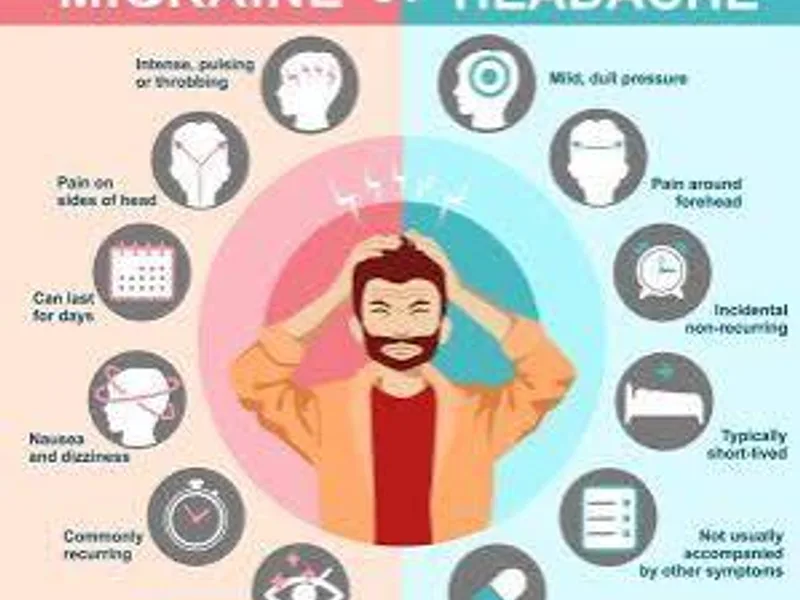
Migraine is a neurological disorder characterised by recurrent, moderate to severe headaches — typically pulsating and often one-sided — accompanied by nausea, vomiting, and heightened sensitivity to light and sound. The attacks tend to be severe enough to interfere significantly with daily functioning. Migraine is classified into two main types:
Migraine without aura (common migraine): The most prevalent type, accounting for about 75% of cases
Migraine with aura (classic migraine): Involves transient neurological symptoms (aura) — typically visual disturbances — that precede or accompany the headache
Other types include:
Chronic migraine (15+ days per month)
Hemiplegic migraine (causes temporary weakness on one side)
Vestibular migraine (causes vertigo and balance problems)
Menstrual migraine (linked to hormonal fluctuations)
How the Nervous System is Affected
Migraine involves a cascade of neurological events originating in the brain. The leading theory involves:
Cortical Spreading Depression (CSD): A wave of electrical activity spreading across the brain's cortex, followed by suppression — believed to cause aura symptoms
Trigeminovascular activation: The trigeminal nerve (largest cranial nerve) releases inflammatory neuropeptides including CGRP (Calcitonin Gene-Related Peptide), which dilate blood vessels and activate pain pathways around the brain
Brainstem involvement: The brainstem's role in modulating pain signals is disrupted, lowering the threshold for migraine attacks
Central sensitisation: Repeated attacks can make the pain pathways increasingly sensitive, contributing to the progression from episodic to chronic migraine
The brain of a migraineur is fundamentally different — more sensitive and reactive to environmental and internal changes.
Causes and Risk Factors
Migraine has a strong genetic component — about 50–75% of migraine sufferers have a first-degree relative with the condition. It is best understood as a neurological hypersensitivity that can be triggered by various factors.
Triggers (factors that provoke attacks in susceptible individuals):
Hormonal changes — fluctuating oestrogen levels (menstrual cycle, oral contraceptives, menopause)
Sleep disturbances — too much or too little sleep
Dietary factors — skipping meals, dehydration, alcohol (especially red wine), caffeine (both consumption and withdrawal), aged cheese, processed meats
Stress — and notably, the "let-down" after stress
Sensory stimuli — bright lights, loud sounds, strong smells
Weather changes — barometric pressure changes
Physical exertion — particularly in those prone to exertional migraine
Medications — medication overuse headache (rebound headache) is a significant trigger for chronic migraine
Risk Factors:
Early Warning Signs
The migraine attack often begins hours before the headache itself. Early warning signs (the prodrome phase) include:
Mood changes — irritability, depression, or unusual euphoria
Food cravings (particularly for sweet or salty foods)
Yawning excessively
Neck stiffness
Increased thirst and urination
Fatigue or difficulty concentrating
Recognising these signs allows patients to take early action — resting, hydrating, and taking prescribed medication before the full attack develops.
Common Symptoms
Migraine symptoms vary by phase:
Aura (affecting about 25% of migrainers, lasts 20–60 minutes):
Visual aura — zigzag lines, flashing lights, blind spots (scotoma)
Sensory aura — tingling or numbness (typically in the face or arm)
Speech disturbances
Motor weakness (in hemiplegic migraine)
Headache Phase (4–72 hours):
Moderate to severe pulsating or throbbing pain
Usually one-sided (unilateral), though can become bilateral
Worsened by routine physical activity
Nausea and/or vomiting
Photophobia (sensitivity to light)
Phonophobia (sensitivity to sound)
Osmophobia (sensitivity to smells)
Postdrome ("migraine hangover," lasting 24–48 hours):
Stages of the Disease
Stage 1 – Episodic Migraine (Low Frequency)
Fewer than 15 headache days per month, with fewer than 8 being migraines. Manageable with acute medications and trigger management.
Stage 2 – Episodic Migraine (High Frequency)
8–14 headache days per month. Higher risk of progression to chronic migraine. Preventive treatment is strongly recommended.
Stage 3 – Chronic Migraine
15 or more headache days per month for more than 3 months, with at least 8 fulfilling migraine criteria. Often associated with medication overuse. Significantly disabling and requires comprehensive preventive management.
How Doctors Diagnose the Condition
Migraine diagnosis is primarily clinical — based on the patient's history and symptom pattern. There is no single test:
Detailed headache history — frequency, duration, location, quality, associated symptoms, triggers, and family history
Neurological examination — to identify any focal neurological deficits that might suggest a different, more serious cause
Headache diary — tracking attacks over 4–8 weeks provides invaluable information
Brain MRI or CT scan — not routinely required for typical migraine but ordered if red flag symptoms are present (sudden onset "thunderclap" headache, progressive worsening, focal neurological signs, fever, or first headache over age 50)
For accurate diagnosis and the development of a personalised treatment plan, consulting a Neurologist experienced in headache disorders is strongly recommended. A headache neurologist can distinguish migraine from other headache types and initiate appropriate preventive therapy.
Available Treatment Options
Migraine management has two broad components: acute (treating attacks when they occur) and preventive (reducing the frequency and severity of attacks).
Medications
Acute Treatments:
NSAIDs (ibuprofen, naproxen) — effective for mild-to-moderate attacks
Paracetamol — with anti-emetic if nausea is present
Triptans (sumatriptan, rizatriptan, eletriptan) — serotonin agonists; gold standard for acute migraine; should be taken early in the attack
Ergotamines — older class; still used in some patients
CGRP receptor antagonists (gepants) — e.g., ubrogepant, rimegepant; newer, very effective; can be used when triptans are contraindicated
Lasmiditan (ditan) — useful for patients with cardiovascular contraindications to triptans
Anti-emetics — metoclopramide, prochlorperazine (also have mild analgesic effect)
Preventive Treatments (recommended when attacks are frequent or severely disabling):
Beta-blockers (propranolol, metoprolol) — first-line preventives
Antidepressants (amitriptyline) — particularly useful when insomnia or depression co-occurs
Anticonvulsants (topiramate, valproate) — highly effective; valproate avoided in women of childbearing age
Calcium channel blockers (flunarizine) — widely used in India
CGRP monoclonal antibodies (erenumab, fremanezumab, galcanezumab) — revolutionary new preventives; monthly injections; very well-tolerated
OnabotulinumtoxinA (Botox) — injected every 12 weeks; approved for chronic migraine
Therapies
Cognitive Behavioural Therapy (CBT): Helps manage stress triggers and pain catastrophising
Biofeedback: Teaches patients to control physiological responses (muscle tension, heart rate) that contribute to migraine
Mindfulness-based stress reduction (MBSR): Reduces overall attack frequency
Acupuncture: Evidence supports its use as an effective preventive strategy
Lifestyle Management
Maintain a consistent sleep schedule (even on weekends)
Stay well hydrated — dehydration is a common trigger
Eat regular meals — never skip meals
Identify and manage personal triggers using a headache diary
Regular, moderate exercise (excessive intensity can trigger migraines)
Limit alcohol and monitor caffeine intake
Daily Living Tips for Patients
Keep a headache diary — track date, duration, severity, triggers, medications used, and their effectiveness
Prepare a "migraine kit" — keep your acute medication, eye mask, and earplugs accessible
Inform your employer or school about your condition — accommodations may be available
Manage medication use carefully — taking acute medication more than 10–15 days per month can cause medication overuse headache
Join a migraine support community — shared experience and practical tips are invaluable
Patients across West Bengal can access specialist headache neurology at Multispecialty Hospitals in Kolkata, with facilities for neuroimaging, preventive therapy, and Botox administration for chronic migraine.
Complications if Left Untreated
Poorly managed migraine can lead to:
Progression from episodic to chronic migraine
Medication overuse headache — a major complication of overusing acute pain relievers
Status migrainosus — a debilitating attack lasting more than 72 hours, requiring emergency treatment
Migrainous infarction — rare but serious; stroke during a migraine with aura
Persistent aura without infarction
Significantly impaired quality of life, productivity, and relationships
Depression and anxiety (bidirectionally associated with migraine)
Prevention and Risk Reduction
Identify and avoid personal triggers using a detailed headache diary
Start preventive medications if attacks occur more than 4 times per month
Maintain a healthy, regular lifestyle — consistent sleep, meals, hydration, and moderate exercise
Manage stress with relaxation techniques
Limit alcohol and caffeine
Be cautious with hormonal contraceptives if you have migraine with aura (increases stroke risk)
Seek early treatment to prevent progression to chronic migraine
Frequently Asked Questions (FAQs)
1. Is migraine just a severe headache? No. Migraine is a neurological disease with multiple phases and symptoms beyond headache, including aura, nausea, extreme sensitivity to light and sound, and postdrome fatigue.
2. Can migraines be cured? There is no permanent cure, but they can be very effectively managed with preventive and acute treatments, significantly reducing frequency and severity.
3. Are migraines dangerous? Most migraines, while very painful and disabling, are not life-threatening. Rare complications include migrainous infarction. Sudden onset "worst headache of my life" requires urgent medical evaluation to rule out subarachnoid haemorrhage.
4. Can children get migraines? Yes. Migraines affect children and adolescents. In children, attacks are often shorter and symptoms may differ — including abdominal migraine (stomach pain without headache).
5. Why are migraines more common in women? Hormonal fluctuations — particularly in oestrogen — are major migraine triggers. This explains the higher prevalence in women, peak incidence around menstruation, and frequent improvement after menopause.
6. What is a migraine aura? Aura refers to transient neurological symptoms — most commonly visual (zigzag lines, blind spots) — that occur before or during the headache. It lasts 20–60 minutes and is caused by cortical spreading depression.
7. Can lifestyle changes prevent migraines? Yes. Regular sleep, consistent meal times, adequate hydration, stress management, and trigger avoidance can all significantly reduce migraine frequency.
8. What is medication overuse headache? Medication overuse headache occurs when acute headache medications are used too frequently (more than 10–15 days per month), paradoxically causing more frequent headaches.
9. Are the new CGRP treatments effective? Yes. CGRP monoclonal antibodies are a breakthrough in migraine prevention, offering significant reduction in monthly attack days with minimal side effects for many patients.
10. When should I see a neurologist for my migraines? See a Neurologist if your headaches are frequent, severely disabling, not responding to over-the-counter medications, or associated with neurological symptoms like visual changes, weakness, or speech difficulties.
Conclusion
Migraine is a complex, often debilitating neurological condition — but it is not one you have to simply endure. With a growing range of effective preventive and acute treatments, lifestyle modifications, and professional support, most people with migraine can dramatically reduce the impact of this condition on their lives. If migraine is limiting your work, relationships, or quality of life, please seek specialist help. Effective, personalised treatment is available — and a life with fewer migraines is within reach.