PTSD: Causes, Symptoms, Diagnosis & Effective Treatment
Introduction
Post-Traumatic Stress Disorder (PTSD) is a serious mental health condition that develops in some people after experiencing or witnessing a deeply traumatic event. While trauma is a universal human experience, not everyone who goes through a traumatic event develops PTSD. The condition is characterised by intrusive memories, avoidance, emotional numbness, and heightened alertness — symptoms that can persist for months or years and profoundly disrupt daily life. Globally, an estimated 3.9% of the world's population will experience PTSD at some point in their lives, with women twice as likely to develop it as men. Understanding PTSD is the first step toward recovery — and recovery is absolutely possible.
What is PTSD?
Post-Traumatic Stress Disorder is a psychiatric condition that occurs when the normal process of processing a traumatic experience goes wrong — leaving the trauma "frozen" in the nervous system in a way that causes ongoing distress. Traumatic triggers that can lead to PTSD include:
Combat and war exposure
Sexual assault or abuse
Serious accidents (road accidents, industrial accidents)
Natural disasters (floods, earthquakes)
Terrorist attacks or violence
Sudden unexpected loss of a loved one
Serious medical diagnoses or life-threatening illness
Childhood abuse or neglect
Witnessing violence or death
It is important to note that PTSD is not a sign of weakness. It is a normal nervous system response to an abnormal and overwhelming experience.
How the Nervous System is Affected
PTSD involves profound changes in the brain and nervous system. Three key areas are affected:
Amygdala: Becomes hyperactive — acting like an overly sensitive smoke detector, triggering alarm responses to cues that resemble the original trauma (reminders, sounds, smells, people)
Prefrontal Cortex: Becomes underactive — unable to properly assess safety and regulate emotional responses
Hippocampus: Often shrinks in people with PTSD — impairing the brain's ability to place trauma memories in their proper time and context (contributing to flashbacks and reliving)
The autonomic nervous system also becomes dysregulated — the person is stuck in chronic "fight-or-flight" or "freeze" mode. The hypothalamic-pituitary-adrenal (HPA) axis is altered, producing abnormal cortisol levels. This explains why PTSD has both psychological and physical symptoms.
Causes and Risk Factors
Not everyone who experiences trauma develops PTSD. Several factors influence vulnerability:
Risk Factors:
Direct exposure to severe trauma (especially repeated or prolonged)
Childhood trauma or adverse experiences
Prior mental health conditions — anxiety, depression
Lack of social support after the trauma
Being female
Biological factors — certain genetic profiles
Experiencing multiple traumatic events
Dissociation during the traumatic event
Protective Factors (reduce PTSD risk):
Strong social support network
Access to timely mental health care after trauma
Sense of control and resilience
Not having prior trauma history
Early Warning Signs
PTSD typically develops within 3 months of the trauma, though it can emerge months or even years later. Early warning signs include:
Nightmares or disturbing dreams about the traumatic event
Intrusive waking thoughts or memories about the trauma
Emotional numbing or feeling detached from others
Avoiding reminders of the trauma (places, people, conversations)
Feeling constantly on guard or "jumpy"
Irritability or angry outbursts
Sleep difficulties
Difficulty feeling positive emotions
If these symptoms persist for more than a month and significantly impair daily functioning, PTSD should be assessed.
Common Symptoms
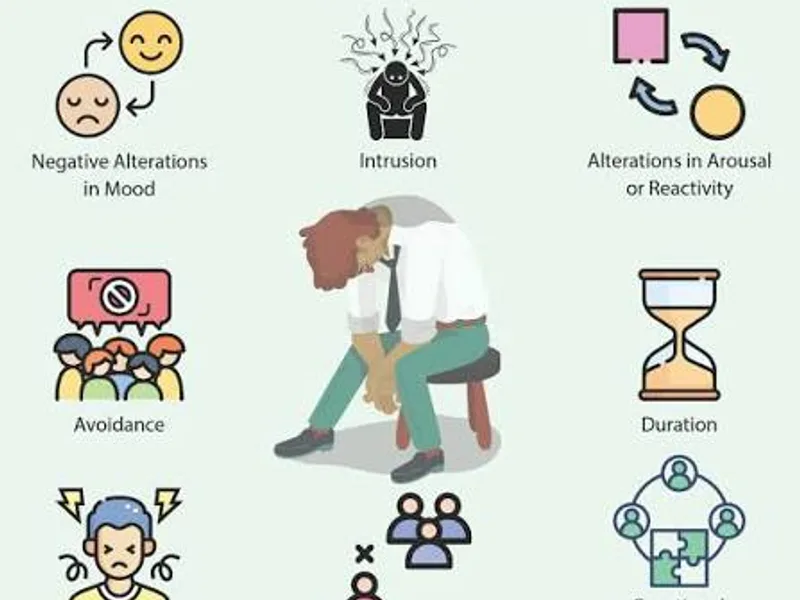
The DSM-5 organises PTSD symptoms into four clusters:
1. Intrusion Symptoms
Flashbacks — reliving the trauma as if it is happening right now
Nightmares related to the traumatic event
Intrusive distressing memories
Intense psychological or physical distress when reminded of the trauma
2. Avoidance
Avoiding thoughts, feelings, or memories related to the trauma
Avoiding external reminders — people, places, conversations, activities
3. Negative Changes in Thinking and Mood
Persistent negative beliefs about oneself ("I am broken," "The world is entirely dangerous")
Persistent negative emotions — shame, guilt, horror, anger
Feeling emotionally numb or cut off from others
Loss of interest in previously enjoyed activities
Feeling distant or estranged from people
4. Changes in Arousal and Reactivity
Hypervigilance (constantly scanning for danger)
Exaggerated startle response
Sleep disturbance
Irritability and angry outbursts
Difficulty concentrating
Reckless or self-destructive behaviour
Stages of the Disease
Acute Stress Response (0–4 weeks after trauma)
Normal, expected reactions including shock, distress, and some intrusive thoughts. At this stage, symptoms are common and do not necessarily indicate PTSD.
Acute PTSD (1–3 months after trauma)
Diagnostic criteria are met. Symptoms cause significant distress and impairment. Early treatment at this stage produces the best outcomes.
Chronic PTSD (3+ months, often years)
Symptoms persist and become entrenched. Co-occurring depression, substance abuse, and physical health problems become more common.
Complex PTSD (C-PTSD)
Develops after prolonged, repeated trauma (childhood abuse, domestic violence, war captivity). Includes all PTSD symptoms plus severe difficulties in emotional regulation, self-identity, and relationships.
How Doctors Diagnose the Condition
PTSD is diagnosed through a careful clinical assessment:
Structured clinical interview — exploring trauma history, symptom clusters, and duration
Validated screening tools — the PTSD Checklist for DSM-5 (PCL-5) and Clinician-Administered PTSD Scale (CAPS-5)
Functional impact assessment — how symptoms affect work, relationships, and daily activities
Medical examination — to rule out physical causes of symptoms (thyroid disorders, traumatic brain injury)
Co-occurring conditions assessment — screening for depression, anxiety, and substance use
Consulting a Neurologist is important when PTSD follows a physical trauma such as a road accident or assault, as traumatic brain injury (TBI) can co-occur and require separate assessment and management.
Available Treatment Options
PTSD is very treatable. Trauma-focused therapies are the most effective interventions available.
Medications
SSRIs (sertraline, paroxetine): FDA-approved for PTSD; reduce symptom severity across all clusters
SNRIs (venlafaxine): Effective alternative to SSRIs
Prazosin: Alpha-1 blocker used specifically for trauma-related nightmares
Second-generation antipsychotics: Used as augmentation when SSRIs are insufficient
Benzodiazepines: Generally avoided in PTSD due to evidence they may worsen outcomes long-term
Therapies
Trauma-Focused Cognitive Behavioural Therapy (TF-CBT): Processes traumatic memories and addresses negative thinking patterns. One of the most well-evidenced PTSD treatments.
Eye Movement Desensitisation and Reprocessing (EMDR): Uses bilateral stimulation (eye movements, taps, or tones) while the patient processes traumatic memories. Rapid and highly effective.
Prolonged Exposure Therapy (PE): Involves gradually confronting avoided trauma reminders, helping the nervous system learn that they are no longer dangerous.
Cognitive Processing Therapy (CPT): Focuses specifically on challenging distorted beliefs that develop after trauma ("It was my fault").
Somatic therapies: Body-based approaches like Sensorimotor Psychotherapy that address trauma stored in the body.
Lifestyle Management
Regular physical exercise — particularly yoga, which has strong evidence for PTSD
Mindfulness practices to manage hyperarousal and emotional reactivity
Establishing safety and predictability in daily life
Peer support groups with other trauma survivors
Reducing alcohol and drug use (common coping mechanisms that worsen PTSD)
Daily Living Tips for Patients
Educate your family and close friends about PTSD — understanding helps them provide better support
Identify your personal triggers and develop a plan for managing them
Use grounding techniques during flashbacks (focus on five things you can see, four you can feel, etc.)
Create a safety plan with your therapist for managing crisis moments
Maintain a routine — structure reduces hyperarousal and anxiety
Practice self-compassion — PTSD is a wound, not a weakness
For those in Kolkata seeking trauma-informed care and PTSD treatment, exploring Advanced Treatment Hospitals in Kolkata can help identify hospitals with psychiatry, psychology, and neurology departments experienced in trauma care.
Complications if Left Untreated
Without appropriate treatment, PTSD can result in:
Chronic depression and suicide risk
Alcohol and substance use disorders (affect over 50% of people with PTSD)
Social isolation and breakdown of relationships
Occupational impairment and unemployment
Physical health problems — cardiovascular disease, chronic pain, autoimmune disorders
Sleep disorders and chronic fatigue
Interpersonal violence (particularly in complex PTSD related to domestic violence)
Prevention and Risk Reduction
While trauma cannot always be prevented, steps can reduce the risk of developing PTSD after trauma:
Seek social support immediately after a traumatic event — isolation increases PTSD risk
Access psychological first aid promptly after mass trauma events
Trauma-focused debriefing (when done correctly) for high-risk professions (military, emergency services)
Maintain strong social networks and relationships
Address prior mental health vulnerabilities before high-risk exposures
Advocate for safe environments — reduce violence, abuse, and unsafe conditions in communities
Frequently Asked Questions (FAQs)
1. Does everyone who experiences trauma get PTSD? No. Most people who experience trauma do not develop PTSD. Vulnerability depends on a combination of biological, psychological, and social factors.
2. How long does PTSD last? Without treatment, PTSD can persist for years or decades. With effective treatment, most people experience significant symptom reduction within 3–6 months of starting therapy.
3. Can PTSD develop years after a trauma? Yes. Delayed-onset PTSD (where symptoms emerge more than 6 months after the trauma) is well recognised and can occur many years later.
4. Is PTSD only caused by war or combat? No. Any traumatic event — assault, accidents, medical emergencies, childhood abuse, natural disasters — can cause PTSD.
5. Can children get PTSD? Yes. Children can develop PTSD after traumatic experiences. Their symptoms may present differently — through play, regression, school avoidance, or physical complaints.
6. What is the difference between PTSD and grief? Grief is a natural response to loss that typically improves over time. PTSD involves trauma-specific symptoms (flashbacks, hypervigilance, avoidance) that are distinct from the grieving process, though both can co-occur.
7. Is EMDR effective for PTSD? Yes. EMDR is recognised as a first-line treatment for PTSD by the WHO, NICE (UK), and APA. It is especially useful when verbal processing of trauma is difficult.
8. Can PTSD affect physical health? Absolutely. Chronic PTSD is associated with cardiovascular disease, fibromyalgia, autoimmune conditions, and reduced life expectancy.
9. What is Complex PTSD? Complex PTSD (C-PTSD) develops after prolonged, repeated trauma. It includes all PTSD symptoms plus significant difficulties with emotional regulation, self-identity, and interpersonal relationships.
10. Where can I find trauma-informed care? Ask your GP for a referral to a psychiatrist or clinical psychologist specialising in trauma. You can also contact a Neurologist if neurological symptoms are present alongside PTSD.
Conclusion
PTSD is a condition born from extraordinary human suffering — but it does not define the person who carries it, and it does not have to be a life sentence. With evidence-based treatments like EMDR and trauma-focused CBT, alongside compassionate support from family and professionals, recovery from PTSD is genuinely achievable. If you or someone you love is struggling with the aftermath of trauma, please reach out for help. Healing is possible — and you do not have to face it alone.