Understanding Skin Cancer: A Vital Health Concern
Skin cancer is a common condition, but recognizing its early indicators is crucial for effective treatment. Many people wonder about the visual cues that signal potential danger. Have you ever wondered why? Early detection significantly boosts the chances of a successful outcome.
Practically speaking, understanding what skin cancer looks like involves recognizing changes in existing moles or the appearance of new, unusual growths. We often see patients who have delayed seeking help due to uncertainty about a spot they've noticed.
prevalent Types and Their Appearance
There are several types of skin cancer, each with distinct visual characteristics. The most frequent ones include basal cell carcinoma, squamous cell carcinoma, and melanoma.
Basal Cell Carcinoma (BCC)
BCC is the most prevalent form. It often appears as a flesh-colored, pearl-like bump or a waxy, white, or tan scar. Sometimes, it can bleed or form a scab. These lesions typically develop on sun-exposed areas like the face, ears, and neck. In many cases, BCCs grow slowly and rarely spread to other parts of the body.
Squamous Cell Carcinoma (SCC)
SCC can present as a firm, red nodule or a scaly, crusted patch. It may also resemble a sore that doesn't heal. Like BCC, SCC commonly occurs on sun-exposed skin, including the arms, legs, and face. While less frequent than BCC, SCC has a higher potential to spread if not treated promptly.
And yet, so many people miss it.
Melanoma
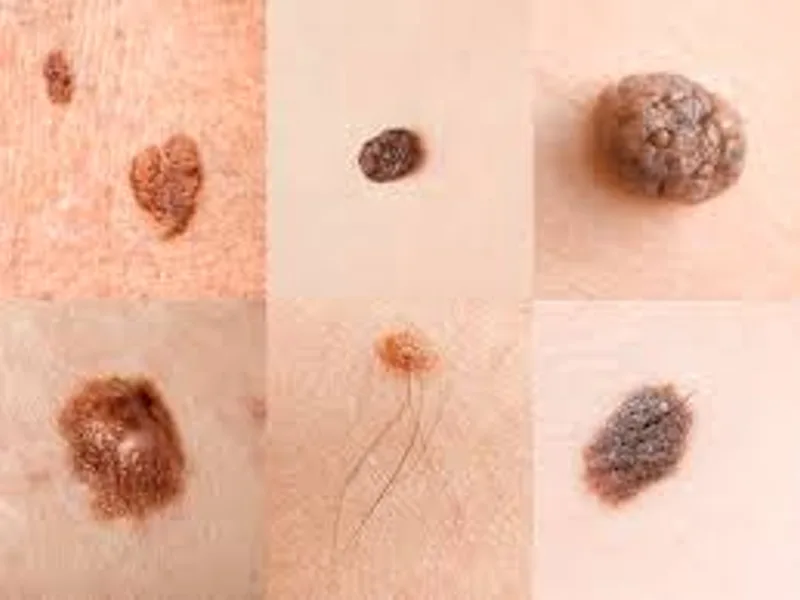
Melanoma is the most dangerous form of skin cancer because it is more likely to spread to other organs if not detected early. It can develop within an existing mole or appear as a new dark spot on the skin. The key indicators for melanoma are often described using the ABCDE rule:
Asymmetry: One half of the mole or spot does not match the other.
Border: The edges are irregular, ragged, notched, or blurred.
Color: The color is not uniform and may include shades of brown or black, sometimes with patches of pink, red, white, or blue.
Diameter: Melanomas are typically larger than 6 millimeters (about the size of a pencil eraser), although they can be smaller.
Evolving: The mole or spot looks different from the others or is changing in size, shape, or color.
Honest assessment of any mole changes is vital. What should you actually do if you notice these signs? Consult a dermatologist immediately.
Other Less widespread Types
While BCC, SCC, and melanoma are the most prevalent, other skin cancers exist. Merkel cell carcinoma, for instance, is a rare but aggressive cancer that often appears as a firm, shiny nodule. Actinic keratoses are considered pre-cancerous lesions that can develop into squamous cell carcinoma if left untreated.
Patient Experiences and Visual Clues
We have seen many people whose skin cancer was first noticed as a minor, persistent irritation or a spot that simply didn't look right. One patient described a basal cell carcinoma as a small, shiny pimple that never went away.
Another noticed a change in a mole's border, which prompted her visit to a specialist. These firsthand accounts highlight the importance of paying attention to even subtle skin changes.
Living with the worry of a suspicious skin spot is genuinely hard. Regular self-examinations are a key component of early detection, enabling you to spot anomalies quickly.
When to Seek Medical Attention
If you observe any new or changing skin lesion, especially one that bleeds, itches, or looks unusual, it is imperative to see a doctor. As per the American Academy of Dermatology (AAD), a yearly skin check with a dermatologist is recommended for everyone, particularly those with a history of skin cancer or significant sun exposure.
It sounds simple. It rarely is.
A 2023 study published in The Lancet emphasized that prompt diagnosis and approach dramatically improve patient outcomes. Specialists can perform biopsies to confirm a diagnosis and recommend the most appropriate care plan.
Preventive Measures and Early Detection
Sun protection is the most impactful way to reduce your risk of developing skin cancer. This includes wearing sunscreen with an SPF of 30 or higher daily, seeking shade, and wearing protective clothing. Remember, consistent protection helps prevent future issues.
Self-examination of your skin once a month can assist you become familiar with your moles and freckles. This familiarity enables you to detect any new growths or changes more easily. Think of it like checking your car regularly for any unusual sounds or warning lights.
Conclusion: Your Skin Health Matters
Recognizing the signs of skin cancer is a powerful tool for safeguarding your health. By understanding the visual indicators of typical skin cancers and performing regular self-checks, you empower yourself to act early. Have you ever wondered why? Because acting swiftly can make all the difference.
Recovery is rarely linear.
Always consult a qualified physician before making medical decisions.
Medically reviewed by a qualified physician. Last updated April 2025. For informational purposes only.
Frequently Asked Questions
Can I still get skin cancer if I don't tan easily?
Yes, absolutely. While tanning increases likelihood, individuals with fair skin who burn easily are particularly susceptible. Even those who don't tan can develop skin cancer due to cumulative sun exposure over time.
How often should I check my skin for suspicious moles?
It is advisable to perform a self-examination of your skin at least once a month. This allows you to become familiar with your skin and detect any new or changing moles or lesions early.
What is the difference between a mole and melanoma?
A mole is a frequent skin growth, usually benign. Melanoma is a type of skin cancer that develops from pigment-producing cells called melanocytes. Melanomas often exhibit irregular shapes, borders, colors, and can evolve over time, unlike most typical moles.