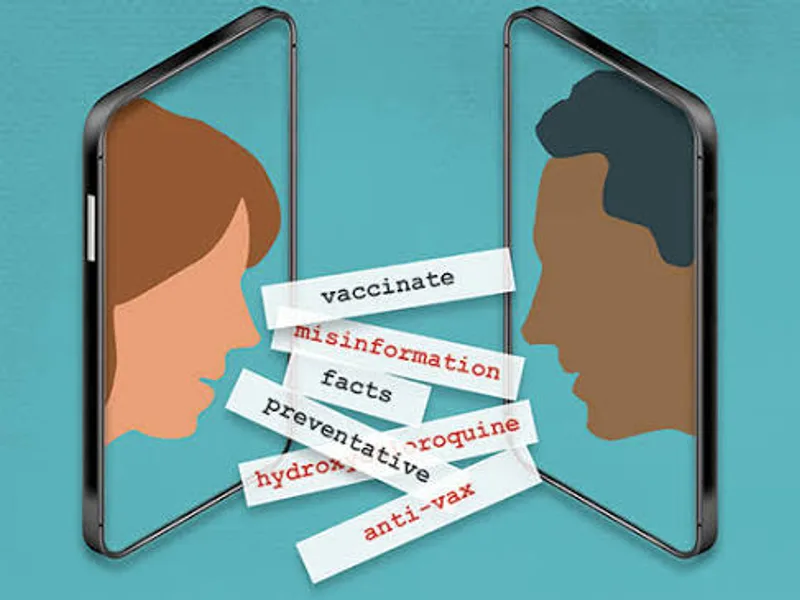
What Is a Fake Health News Viral Tracker?
A fake health news viral tracker is best understood as a method for monitoring and checking health claims that are spreading rapidly online.
It is not necessarily one website or one official database. Instead, it is a fact-checking approach that follows a claim from the moment it starts circulating to the evidence available from qualified medical and public-health sources.
DOCTAR's health blogs and medical insights include a dedicated Myth vs Fact category, which is particularly relevant when readers want to distinguish established medical information from common misconceptions.
The need is straightforward. A post can look professional, include a doctor's photograph and quote a scientific study while still being misleading.
Why Do False Health Claims Go Viral?
False health stories often succeed because they are simple.
"Eat this and cure diabetes." "Doctors don't want you to know this." "This common food destroys your kidneys." Such statements are easier to remember and share than a careful explanation that says the answer depends on the person, diagnosis and available evidence.
DOCTAR's guide to medical misinformation on social media explains how emotional language, personal anecdotes, commercial interests, echo chambers and rapid sharing can help misinformation spread.
The problem becomes more serious when the viral claim changes behaviour. Someone may stop prescribed treatment, try an unsafe home remedy or delay seeing a doctor.
How to Track a Viral Health Claim
Start With the Exact Claim
Do not fact-check a vague feeling. Write down what the post actually claims.
Is it saying a food cures a disease? Is it claiming that a medicine is dangerous? Does it say a vaccine causes a particular condition? Does it recommend a home test or treatment?
This small step prevents the original message from quietly changing as you investigate it.
For example, DOCTAR's article on the soap pregnancy test examines a viral DIY claim and explains why an online household method should not be confused with a scientifically validated pregnancy test.
Find the Original Source
A screenshot is not a source.
Look for the first article, study, video, official statement or interview behind the claim. Check the publication date and whether the material has been taken out of context.
A social media post saying "research proves..." is not enough. Which research? Published where? Who conducted it? Does the study actually support the conclusion being shared?
This is one of the most useful habits in a fake health news viral tracker: follow the claim backward before accepting it forward.
Check Who Is Making the Claim
A white coat in a video does not establish medical expertise.
Check whether the person is a qualified professional and whether their training matches the subject they are discussing. A doctor speaking about a field outside their expertise may still be providing an opinion rather than established medical guidance.
DOCTAR's explanation of medically reviewed health content describes medical review as a process in which qualified professionals examine health content for accuracy, completeness, currency and clinical relevance.
That distinction matters. Health information deserves a higher standard than ordinary internet commentary.
Watch for the Most Common Red Flags
Some warning signs appear again and again.
A claim promising a miracle cure should immediately raise questions. So should statements that a treatment works for everyone, that doctors are hiding a simple cure, or that one personal success story proves something works.
DOCTAR's guide to spotting medical misinformation identifies sensational language, secret-treatment claims, anecdotal evidence and missing scientific references as important warning signs.
Another useful rule: certainty is suspicious when the science is complicated.
Real medicine often includes uncertainty, different treatment options and exceptions.
Viral Home Remedies Need Extra Scrutiny
Home remedies are particularly easy to turn into viral content because the ingredients are usually cheap and accessible.
That does not make them safe.
DOCTAR's article on cleaning myths and household health shows how familiar advice about bleach, vinegar, baking soda and disinfection can become misleading when the limits of those methods are ignored.
The same principle applies to health hacks. A substance that is safe for one purpose may be unsuitable for another.
The viral toothpaste-on-hair trend is another example of how an everyday product can be promoted online for a purpose it was never designed to serve.
Myth Versus Fact: Why Context Matters
Not every false health post is completely fabricated.
Sometimes the original fact is real but the conclusion is wrong. A study may find an association, for example, and a viral post may present it as proof that one thing causes another.
That is why fact-checking should examine context, not just search for a sentence saying "false."
DOCTAR's blood type and personality myth demonstrates this distinction: blood type has genuine medical importance, but that does not mean it determines personality or destiny.
Similarly, urine sterility myths show how a widely repeated belief can sound medically plausible while being misunderstood.
Watch Viral Vaccine and Disease Claims Closely
Claims involving vaccines, cancer, infections and serious diseases deserve particular caution because misinformation can change whether someone seeks treatment or prevention.
DOCTAR's VAIDS fact-check addresses a false claim about vaccines and immune deficiency and explains why the alleged condition is not a recognized medical diagnosis.
Its article on whether cancer is a fungus similarly examines how a persistent claim can confuse an actual medical topic with an unsupported conclusion.
These examples show why a viral health tracker should record not only whether something is false, but why it is false and what reliable evidence says instead.
A Practical Viral Health Claim Checklist
Before sharing a health post, ask:
Who published it?
Is there a named author or qualified medical professional?
Where is the evidence?
Does the post provide a genuine study, guideline or official source?
Is the date clear?
Old health information can become outdated, particularly when guidance changes.
Does the headline exaggerate?
Words such as "cure," "secret," "miracle" and "guaranteed" deserve scrutiny.
Could the advice cause harm?
If following the claim could lead someone to stop treatment or delay care, do not treat it casually.
Can another reliable source confirm it?
Check established medical organisations, government health agencies, peer-reviewed research and medically reviewed resources.
Why Medical Review Matters
Health misinformation is not just an internet nuisance. It can affect real decisions.
In clinical practice, this is often missed because patients may arrive after acting on something they saw online, and the original post may no longer be available. By then, separating the claim from the evidence can be surprisingly difficult.
A trustworthy health article should therefore show where its information comes from and clearly distinguish evidence from opinion.
DOCTAR's medically reviewed content guide explains why expert review can help protect readers from inaccurate or incomplete health information.
More Examples of Viral Health Myths
The pattern appears across many subjects.
DOCTAR examines masturbation and kidney health myths, masturbation and acne claims, wisdom teeth removal myths, and sunburn through clothing.
It also covers mosquito bite and blood-type myths, red-light therapy and melanoma claims, and chiropractic myths and limitations.
The subjects are different, but the checking method is the same: identify the claim, examine the source, assess the evidence and consider the potential harm.