

Emergency & Help
24/7 Emergency & General Advisory
🚨 24/7 Medical Emergency
Non-Emergency Advisory
10:00 AM – 6:00 PM, Mon–Sat
For appointments & general queries.
24/7 Emergency & General Advisory
🚨 24/7 Medical Emergency
Non-Emergency Advisory
10:00 AM – 6:00 PM, Mon–Sat
For appointments & general queries.
Most athletes know they should "stay hydrated," but the advice usually stops there. This piece goes further — how much fluid you actually lose sweating, when plain water is enough and when it isn't, why overhydrating is its own real risk,
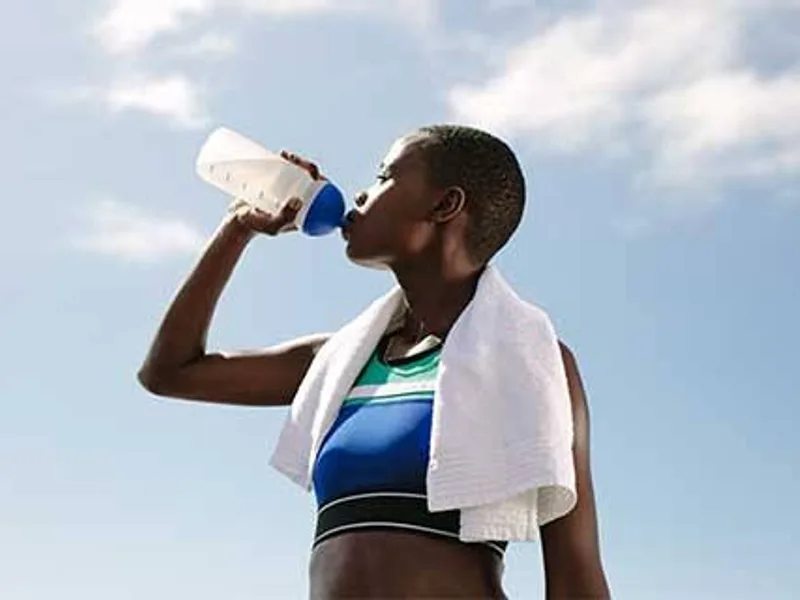
Every gym has that one person reminding everyone to "stay hydrated" without ever explaining what that actually means in practice. It's not wrong advice. It's just incomplete, and incomplete advice is how people end up either underhydrated and cramping or overhydrated and in real trouble.
Hydration for performance isn't about hitting some fixed number of litres a day. It's about matching intake to what you're actually losing, and that changes with heat, humidity, intensity, and how long you're training.
Sweat rate varies enormously between people. Someone training in Kolkata's monsoon humidity in July can lose noticeably more fluid per hour than the same person doing the identical workout in a cool, dry gym. Body size, fitness level, and even genetics play a role too.
A rough, practical way to estimate your own sweat rate: weigh yourself before and after a one-hour training session, without drinking during that hour. Each kilogram lost is roughly a litre of fluid. It's not laboratory-precise, but it's more useful than guessing.
In clinical practice, this is often missed because people assume thirst is a reliable early warning sign. It isn't. Thirst usually kicks in after you're already a couple of percent dehydrated, by which point performance has typically already started slipping.
For sessions under an hour, plain water usually does the job. Once you're past 60 to 90 minutes, especially in heat, sodium losses through sweat start to matter, and water alone can actually make things worse by diluting the sodium you have left.
This is where electrolyte drinks earn their place, not as a marketing add-on but as a genuine physiological need for longer or hotter sessions. If you're deciding between an electrolyte drink and something like salt tablets, it's worth understanding when each is actually appropriate rather than reaching for whichever is more convenient. And if you've ever gotten a mid-workout muscle cramp and assumed it was "just electrolytes," this breakdown of dehydration-related cramps is worth a read, because the cause isn't always as simple as it sounds.
Here's an uncomfortable fact: drinking too much plain water during endurance events can cause a condition called hyponatremia, where blood sodium drops dangerously low. It's rare, but it has caused real harm in marathon and endurance sport settings, and it happens precisely because someone was trying to "stay ahead" of dehydration.
The lesson isn't to drink less carelessly. It's to drink deliberately, matched to sweat losses and event duration, rather than just constantly sipping because more water sounds safer. It generally isn't, past a point.
Before training, aim to start well hydrated rather than trying to fluid-load right beforehand, which mostly just means more bathroom breaks. During training, sip regularly rather than gulping large amounts infrequently. After training, replace both fluid and sodium, particularly if the session was long, hot, or heavy on sweat.
Post-workout nutrition ties into this more than people expect. Rebuilding glycogen and rehydrating properly go hand in hand, and this explainer on glycogen and recovery covers the carbohydrate side of that equation well. If you're also using a protein shake post-session, a fast-absorbing option like the ones reviewed in this whey protein isolate breakdown or this sports supplement review pairs naturally with a proper rehydration routine, not instead of one.
If you use creatine as part of your training, hydration needs a slightly closer look, since creatine draws water into muscle cells. This guide to creatine and headaches and this piece on creatine while cutting both touch on how hydration status changes the experience of using it.
need individualised fluid guidance, since both under- and overhydration carry different risks depending on kidney function. This isn't something to self-manage from a blog post; a nephrologist should be involved if you're training hard and have any history of kidney issues.
should know that dehydration can affect blood sugar readings and that some diabetes medications change fluid balance. An endocrinologist can help you build a hydration plan that accounts for your specific medication regimen.
including some antidepressants, can have altered heat tolerance and sweat response without realising it — this piece on antidepressants and heat intolerance is worth reading if that applies to you, alongside a conversation with your prescribing doctor.
training in heat should get cleared by a cardiologist first, since fluid shifts during intense heat exposure put extra load on the heart.
If you're simply unsure how to structure a hydration and fueling plan around your specific training load, a sports-oriented dietician or physiotherapist can build something tailored rather than generic. And if fatigue, dizziness, or muscle tremors are becoming a regular post-workout pattern rather than an occasional one, it's worth reading this explainer on post-exercise shakiness and getting checked by a general physician rather than assuming it will resolve on its own.
Visit Hospital
Near You