

Emergency & Help
24/7 Emergency & General Advisory
🚨 24/7 Medical Emergency
Welcome to Doctar
Join our healthcare community
Free Eye Test
AI powered and calibrated eye test
24/7 Emergency & General Advisory
🚨 24/7 Medical Emergency
Join our healthcare community
Multiple studies out of Penn State have tested whether eating one avocado a day can improve cholesterol. The results are consistent but modest: daily avocado eaters see measurable drops in LDL ("bad") cholesterol and LDL particle number, without significant weight gain. This piece walks through what
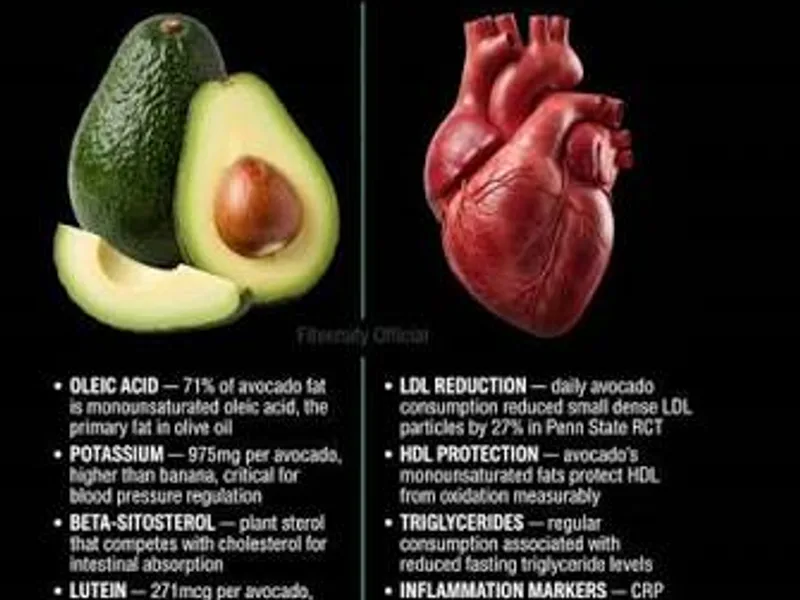
Yes, modestly. Randomized controlled trials from Pennsylvania State University found that replacing other fats with one avocado a day lowered LDL ("bad") cholesterol and reduced the number of small, dense LDL particles linked to heart disease. In the most recent trial, that translated to roughly a 4% reduction in estimated heart disease risk — a real but incremental benefit, not a substitute for an overall healthy diet.
The foundational trial, published in the Journal of the American Heart Association in 2015, was a controlled feeding study of 45 overweight or obese adults. Researchers put participants on three different cholesterol-lowering diets for five weeks each: a low-fat diet, a moderate-fat diet using oils, and a moderate-fat diet built around one fresh Hass avocado per day.
The avocado diet outperformed the other two. Compared with baseline, LDL cholesterol fell by 13.5 mg/dL on the avocado diet, versus 8.3 mg/dL on the oil-matched diet and 7.4 mg/dL on the low-fat diet. Only the avocado diet significantly reduced LDL particle number and small, dense LDL cholesterol — the subtype most strongly tied to artery-clogging plaque.
[REVIEWER: add clinical insight here — e.g., how you explain LDL particle number versus LDL cholesterol concentration to patients, and whether you find this distinction clinically meaningful in practice]
That matters because two people can have identical LDL cholesterol numbers on a standard blood test and still carry very different cardiovascular risk. The difference often comes down to particle count: the same amount of cholesterol packed into more, smaller particles appears to raise risk more than fewer, larger ones.
A controlled feeding study proves a diet can work under tightly managed conditions, but most people don't eat that way. A 2022 randomized trial in the Journal of the American Heart Association, again led by Penn State researchers, tested daily avocado intake in less controlled, real-world conditions over six months.
Participants who ate an avocado a day didn't lose more belly fat or body weight than those who kept their usual diet, but they did see a modest drop in LDL cholesterol, and their overall diet quality score improved by about eight points on a 100-point scale. Researchers noted this matters because adherence to general dietary guidelines is often poor, and a single, simple substitution — swapping in an avocado — was enough to nudge overall eating patterns in a healthier direction.
The most recent study, published in the Journal of Clinical Lipidology, followed a large group of adults with obesity and measured LDL particle concentration directly rather than relying on standard cholesterol panels. Daily avocado eaters saw LDL particle counts drop by an amount researchers estimated corresponds to about a 4% reduction in heart disease risk.
Researchers were careful to frame that number honestly. A 4% reduction is real, but it's modest set against the 14% to 29% lower heart disease risk associated with broader improvements to overall diet quality. The point isn't that avocados are a magic food — it's that a single, sustainable change can move the needle, especially for people who find sweeping diet overhauls unrealistic.
[REVIEWER: add clinical insight here — e.g., how you counsel patients who are looking for a "one small change" strategy versus a comprehensive dietary overhaul]
Avocados are dense in monounsaturated fat, most of it oleic acid, the same fat that makes olive oil heart-healthy. When these unsaturated fats replace saturated fats in the diet — butter, fatty cuts of meat, full-fat dairy — total and LDL cholesterol tend to fall. The Mayo Clinic lists avocados alongside olive oil, nuts, and seeds as foods that can help lower LDL cholesterol when substituted for saturated fat sources, and Mayo Clinic guidance on heart-healthy eating patterns includes avocados as a recommended source of polyunsaturated and monounsaturated fat.
Avocados are also calorie-dense — typically 200 to 300 calories per fruit — so "add an avocado" works best as a substitution for less healthy fats, not as an addition on top of an already high-calorie diet.
None of these studies suggest an avocado a day will reverse existing heart disease or replace medication for high cholesterol. What they consistently show is that swapping saturated fat for the unsaturated fat in avocados, as part of an otherwise reasonable diet, produces small, measurable improvements in cholesterol markers — improvements that appear to matter for long-term cardiovascular risk.
Anyone managing high cholesterol or existing heart disease should talk with a doctor or registered dietitian before making significant dietary changes, especially if cholesterol-lowering medication is already part of their care plan.
Does one avocado a day actually lower cholesterol? Randomized trials show it can modestly lower LDL cholesterol and reduce harmful LDL particle counts when it replaces saturated fat in the diet, though the effect size is small compared with broader dietary changes.
How much does avocado lower LDL cholesterol? In a controlled feeding trial, daily avocado consumption lowered LDL cholesterol by about 13.5 mg/dL from baseline over five weeks, more than comparable diets without avocado.
Can eating avocado every day cause weight gain? Research found daily avocado consumption did not cause significant weight gain or increased belly fat, likely because it was used to replace other fat sources rather than added on top of a typical diet.
Is avocado a substitute for cholesterol medication? No. It's a diet-level change that may modestly support cholesterol management, not a replacement for prescribed treatment. Anyone on cholesterol medication should consult their doctor before changing their diet.
Why does avocado affect cholesterol more than other fats? Researchers believe avocados' effect goes beyond their fatty acid content; daily consumption specifically reduced LDL particle number and small, dense LDL cholesterol in ways matched oils did not replicate.
The research on avocados and cholesterol is consistent, but it's modest, not miraculous. Swapping saturated fats for the monounsaturated fat in avocados can meaningfully improve cholesterol markers over time, particularly LDL particle number — but it works best as one piece of an overall heart-healthy eating pattern, not a stand-alone fix.
Effect of a moderate fat diet with and without avocados on lipoprotein particle number, size and subclasses in overweight and obese adults: a randomized, controlled trial. Journal of the American Heart Association, 2015. (PubMed/PMC)
Effect of Incorporating 1 Avocado Per Day Versus Habitual Diet on Visceral Adiposity: A Randomized Trial. Journal of the American Heart Association, 2022.
Penn State avocado/LDL particle study, Journal of Clinical Lipidology, 2026 (as reported via Penn State News and affiliated outlets).
Mayo Clinic: "Cholesterol: Top foods to improve your numbers"
Mayo Clinic: "Heart-healthy diet: 8 steps to prevent heart disease"
American Heart Association news release: "An avocado a day may help keep bad cholesterol at bay"
Visit Hospital
Near You

Are night owls really more likely to gain weight than early risers? A 2026 study of nearly 300 women found evening types had higher body fat, higher blood sugar and triglyceride levels, and a pattern of eating fewer nutrients in the morning but far more energy-dense food late at night. This piece br
July 23, 2026
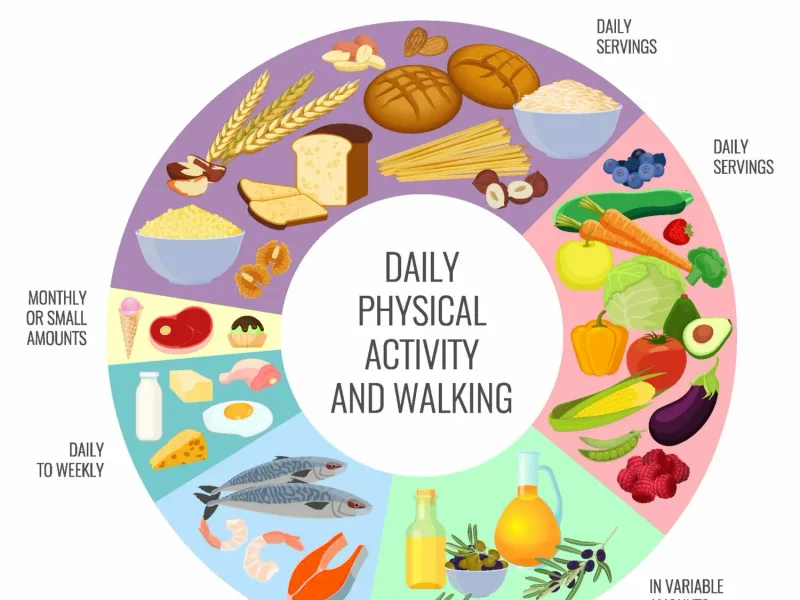
Scientists have long known the Mediterranean diet protects the heart and brain — but not exactly how. A 2026 USC-led study offers a clue: people who closely follow the diet have higher blood levels of two mitochondrial microproteins, humanin and SHMOOSE, both tied to cardiovascular and brain protect
July 23, 2026
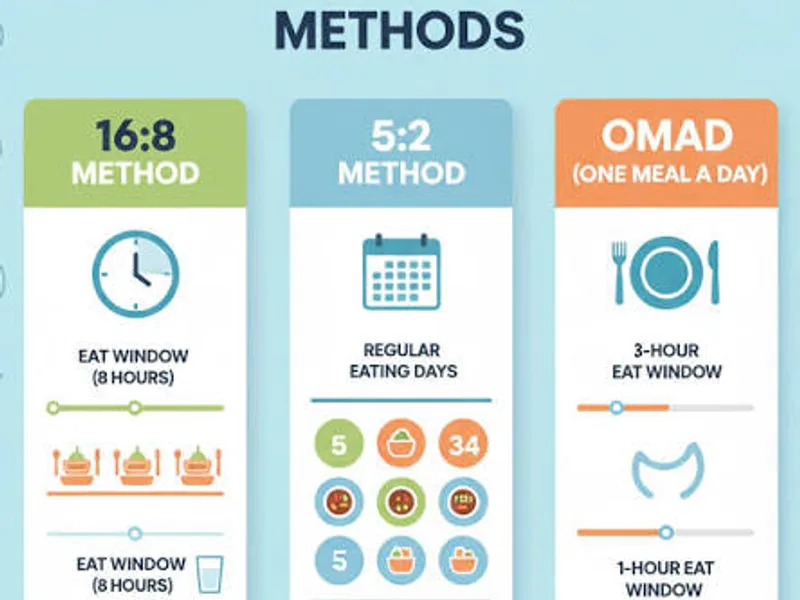
An 8-hour eating window, also called 16:8 time-restricted eating, has become one of the most popular ways to structure intermittent fasting. But what does it actually do for your body? Research led by the University of Granada and NIH-affiliated researchers has linked it to visceral fat loss, better
July 23, 2026