

Emergency & Help
24/7 Emergency & General Advisory
🚨 24/7 Medical Emergency
Non-Emergency Advisory
10:00 AM – 6:00 PM, Mon–Sat
For appointments & general queries.
24/7 Emergency & General Advisory
🚨 24/7 Medical Emergency
Non-Emergency Advisory
10:00 AM – 6:00 PM, Mon–Sat
For appointments & general queries.
Long before "isolation" became a household word during lockdowns, scientists were already studying it in one of the most extreme settings on Earth: Antarctic research stations. This article looks at what isolation psychology research from Antarctica has actually found, from mood shifts during the da
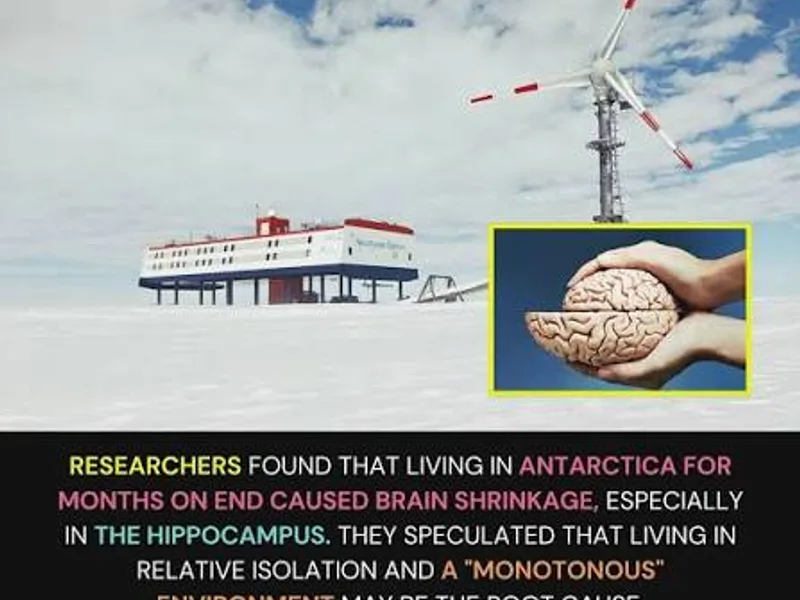
Antarctic research stations offer something psychologists rarely get elsewhere: a small group of people confined together, cut off from the outside world, for months at a time, often through total winter darkness. That combination of isolation, confinement, and extreme environment has earned its own shorthand in research circles, usually just called "ICE" studies.
Space agencies take this seriously too. NASA and the European Space Agency have both used Antarctic stations, along with similar isolated settings, as stand-ins for what long-duration space missions might do to the human mind, since sending psychologists to Mars isn't an option yet.
What makes Antarctica useful isn't just the isolation itself. It's the length of exposure, sometimes six to nine months without outside contact beyond limited communication, that lets researchers observe changes unfold gradually rather than guessing from short-term lab experiments.
Researchers who study the "winter-over" period, when crews are cut off during the darkest, coldest months, have repeatedly documented shifts in mood and sleep among station residents. Reported patterns include irritability, low motivation, and a kind of mental fog that some crew members describe as slower thinking or trouble concentrating.
Sleep is one of the more consistently disrupted areas. Extended darkness throws off the body's natural circadian rhythm, the internal clock that normally syncs with daylight, and disrupted sleep tends to compound mood and cognitive effects rather than existing separately from them.
Some studies have also looked at hormonal changes during prolonged isolation, including shifts in thyroid hormone levels that researchers have loosely associated with cognitive slowing in some winter-over crews. This area is still being studied, and it would be overstating things to call it a settled explanation for every symptom reported. It's an interesting thread, not a complete answer.
Here's something that gets lost in casual summaries of this research: individual variation is large. Some crew members report the winter months as manageable, even meditative. Others struggle significantly, and personality traits like emotional stability and how someone typically copes with stress seem to predict outcomes better than the isolation itself.
Group dynamics matter too. A crew with strong social cohesion tends to fare differently than one dealing with interpersonal friction, which makes sense once you consider that isolation research is never really testing "isolation" in a vacuum. It's testing isolation plus whatever social environment exists within that isolation.
In clinical practice, this individual variation is often missed because people want a single takeaway, like "isolation causes depression." The more accurate picture is that isolation raises risk, but pre-existing coping style, social support, and even sleep habits all shape how that risk actually plays out for a given person.
Most people will never spend a winter at a polar station, so why does any of this matter? Because the underlying mechanisms researchers study there, disrupted routine, reduced social contact, and altered light exposure, show up in far more ordinary situations too.
An elderly person living alone with limited social contact experiences a milder, longer version of some of the same isolation dynamics. So does a remote worker who's gone days without an in-person conversation, or someone recovering from illness and confined mostly to their home. The Antarctic research doesn't map perfectly onto these situations, but it does offer useful signals about what prolonged isolation tends to do to mood, sleep, and cognitive sharpness over time.
If isolation-related mood or sleep changes are showing up in your own life or a family member's, that's worth taking seriously rather than assuming it will resolve on its own. A general physician is a reasonable starting point for an initial assessment, especially if physical symptoms like fatigue or appetite changes are part of the picture.
Mild loneliness or a rough stretch of isolation doesn't automatically require professional intervention. But when mood changes persist for weeks, when sleep stays disrupted, or when someone starts withdrawing further rather than reconnecting, that's a different situation.
A psychiatrist can properly assess whether isolation has contributed to something like depression or anxiety that needs structured treatment, rather than something that will lift once circumstances change. This distinction matters, since treating isolation-related mood changes as purely situational can delay care someone actually needs.
If cognitive symptoms, like memory lapses or difficulty concentrating, feel significant, a neurologist can rule out other causes before assuming isolation is the sole explanation. It's also worth reading about how sleep and neurological health are connected, since sleep disruption shows up so consistently in both the Antarctic research and everyday isolation experiences. A broader neurologist search can also help if you're looking for options beyond a single city.
Isolation-related symptoms can overlap with other conditions that deserve their own evaluation. Mood shifts that look like situational low spirits sometimes turn out to be something more specific, and it's worth reading about how conditions like bipolar disorder are properly diagnosed to understand how thorough that kind of evaluation actually is.
Attention and motivation changes tied to prolonged isolation can also resemble other conditions, and this piece on attention-seeking behavior patterns offers useful context on distinguishing ordinary behavioral shifts from something needing closer attention. For older adults specifically, isolation combined with cognitive changes should prompt an evaluation rather than being written off as normal aging, and a pediatrician can help if the concern involves a younger family member showing similar withdrawal patterns.
Getting help shouldn't be complicated once you've decided it's needed. Doctar's psychiatrist listings and general doctor search let you filter by experience, language, and consultation fee before booking.
This overview on finding the right mental health doctor is a sensible place to start if you're unsure which specialist fits, and a diagnostic center can coordinate any recommended testing, whether that's bloodwork to check thyroid function or a more detailed cognitive assessment. If ongoing support is needed and leaving home feels difficult, which is common with isolation-related mood changes, home visit doctor services can bring that first consultation to you instead.
Diet and structure matter more than people expect during isolated periods too. A dietitian can help rebuild regular eating patterns that tend to slip during prolonged isolation, and a hospital directory is worth having on hand if more structured support becomes necessary. For acute crises, don't wait, emergency services or an ambulance should be used without hesitation.
This kind of support exists nationwide. Whether you're in Delhi, Mumbai, Bangalore, Chennai, or Kolkata, Doctar's nationwide directory can help locate someone qualified nearby, and the about page explains how doctor verification works on the platform. Doctar's health blog covers additional related topics if you want further reading
Visit Hospital
Near You

Check the list of medical colleges in Jharkhand 2026-27, including government, private and AIIMS institutions, MBBS seats and admission details.
August 20, 2026

MBBS NEET counselling Jharkhand 2026 is being conducted through the Jharkhand Combined Entrance Competitive Examination Board (JCECEB) for eligible NEET-UG candidates.
August 20, 2026

You can text fifty people a day and still feel completely alone. That's the frequent contact loneliness paradox, and it trips up a lot of people who assume loneliness is just about how often you talk to someone. This article looks at why frequency of contact and the actual feeling of connection are
August 10, 2026