

Emergency & Help
24/7 Emergency & General Advisory
🚨 24/7 Medical Emergency
Non-Emergency Advisory
10:00 AM – 6:00 PM, Mon–Sat
For appointments & general queries.
24/7 Emergency & General Advisory
🚨 24/7 Medical Emergency
Non-Emergency Advisory
10:00 AM – 6:00 PM, Mon–Sat
For appointments & general queries.
You can text fifty people a day and still feel completely alone. That's the frequent contact loneliness paradox, and it trips up a lot of people who assume loneliness is just about how often you talk to someone. This article looks at why frequency of contact and the actual feeling of connection are

Loneliness researchers have known for decades that the number of interactions someone has barely predicts how lonely they feel. That's counterintuitive at first. Surely talking to more people should mean feeling more connected?
It doesn't work that way, and this is really the core of the paradox. Loneliness tracks much more closely with perceived connection quality than with contact frequency. Someone can exchange dozens of messages a day and still feel like nobody actually knows what's going on with them.
This distinction has a name in the research literature: social versus emotional loneliness. Social loneliness is about lacking a network of people around you. Emotional loneliness is about lacking someone who truly understands you, and you can have plenty of the first while still deeply missing the second.
Not all contact is built the same, and the difference isn't really about the medium, whether that's texting, calling, or meeting in person. It's about depth. A quick "how's it going" exchanged fifteen times a week doesn't do the same psychological work as one honest thirty-minute conversation.
Self-disclosure, meaning actually sharing something real rather than surface-level updates, shows up repeatedly in research as one of the stronger predictors of felt connection. Interactions where both people share something genuine tend to reduce loneliness more than high-frequency, low-depth contact, even if the low-depth version happens far more often.
In clinical practice, this is often missed because people describe their social life by volume: "I talk to my family every day" or "I'm on group chats constantly." That description can be entirely true and still coexist with real, persistent loneliness, because volume was never the thing that mattered most.
Messaging apps and social media have made frequent contact easier than at any point in history, and that's exactly where the paradox gets sharper. Constant low-effort contact can create the impression of connection without the substance of it.
Some research suggests heavy use of certain types of social media, particularly passive scrolling rather than active engagement with close contacts, is associated with higher loneliness in some populations. Other research finds more mixed or even opposite effects depending on how the platform is used and who's using it. This is genuinely an active area of study, and it would be dishonest to present it as fully settled either way.
What does seem more consistent is that digital contact works best as a supplement to deeper in-person or voice-based connection, not as a full replacement for it. Text-based check-ins keep relationships ticking over, but they rarely substitute for the kind of conversation that actually reduces the feeling of being alone.
Certain life stages and situations seem to make this paradox more common. People with large professional or acquaintance networks but few close confidants often report it, which is why loneliness shows up surprisingly often among people who look, from the outside, like they have an active social life.
New parents frequently describe this too, surrounded by family and well-wishers yet feeling emotionally unseen in the specifics of what they're going through. A pediatrician can be a useful resource here too, not just for the baby's health but often as a point of contact who notices when a parent seems worn thin. Caregivers of chronically ill or aging relatives report something similar, plenty of practical contact with family and care teams, but limited space for anyone to actually ask how they're holding up.
Older adults are a notable group here as well. Frequent check-in calls from family don't always translate into the deeper companionship that reduces loneliness, particularly if those calls stay logistical rather than personal. If you're concerned about an older relative in this position, a conversation with a general physician can be a reasonable starting point, since loneliness in older adults sometimes overlaps with, or gets mistaken for, other health changes.
Occasional loneliness despite an active social calendar isn't automatically a clinical issue. But persistent emotional loneliness has been linked in research to worse sleep, low mood, and in some studies, broader health effects over time, which is part of why it deserves to be taken seriously rather than dismissed as something trivial.
If this kind of loneliness is sitting alongside low mood, appetite changes, or sleep disruption that's lasted more than a couple of weeks, that's worth bringing to a psychiatrist rather than assuming it will resolve with more socializing. More contact isn't the fix if the contact isn't the actual problem.
It's also worth reading about how conditions like bipolar disorder are properly diagnosed, since mood symptoms sometimes get mistaken for ordinary loneliness when something more specific is actually going on underneath. If cognitive symptoms like poor concentration or memory lapses are also part of the picture, a neurologist can help rule out other contributing factors before assuming loneliness alone explains everything.
Research on reducing this kind of loneliness points toward depth over volume pretty consistently. Fewer, more honest conversations tend to move the needle more than adding another group chat or another weekly call that stays surface level.
Naming the feeling directly to someone you trust, rather than assuming they should already know, is a small but genuinely effective step that gets repeated across studies on this topic. It sounds almost too simple, but a lot of emotional loneliness persists specifically because people don't say "I've been feeling kind of alone lately" out loud to anyone.
If sleep or mood symptoms are part of the picture, it's worth reading about how sleep and neurological health are connected, since disrupted sleep and persistent loneliness often show up together and can reinforce each other.
If loneliness has become a fixed background feeling regardless of how much contact you have, and it's affecting daily functioning, that's a reasonable point to seek support rather than continuing to manage it alone. A psychiatrist or licensed therapist can help identify whether this reflects a pattern worth addressing directly, and whether anything else, like depression or social anxiety, is contributing.
This overview on finding the right mental health doctor is a reasonable starting point if you're unsure who to reach out to first. And this piece on attention-seeking behavior patterns is worth a read too, since some behaviors that look like attention-seeking are actually attempts to bridge exactly this kind of connection gap.
Doctar's psychiatrist listings and general doctor search let you filter by experience, language, and consultation fee before booking. If a physical health check makes sense alongside a mental health evaluation, a diagnostic center can coordinate relevant bloodwork.
For older adults or anyone who finds a clinic visit difficult, home visit doctor services bring that first conversation home instead. A dietitian can also help if appetite or eating patterns have shifted alongside mood changes, which happens more often than people expect.
For more structured support, a hospital directory is worth having on hand, and for acute crises, emergency services or an ambulance should never be treated as a last resort. This kind of help is available nationwide, whether you're in Delhi, Mumbai, Bangalore, Chennai, or Kolkata. Doctar's nationwide directory can help locate someone qualified nearby, the about page explains how doctor verification works, and the health blog covers further related reading.
Visit Hospital
Near You

Check the list of medical colleges in Jharkhand 2026-27, including government, private and AIIMS institutions, MBBS seats and admission details.
August 20, 2026

MBBS NEET counselling Jharkhand 2026 is being conducted through the Jharkhand Combined Entrance Competitive Examination Board (JCECEB) for eligible NEET-UG candidates.
August 20, 2026
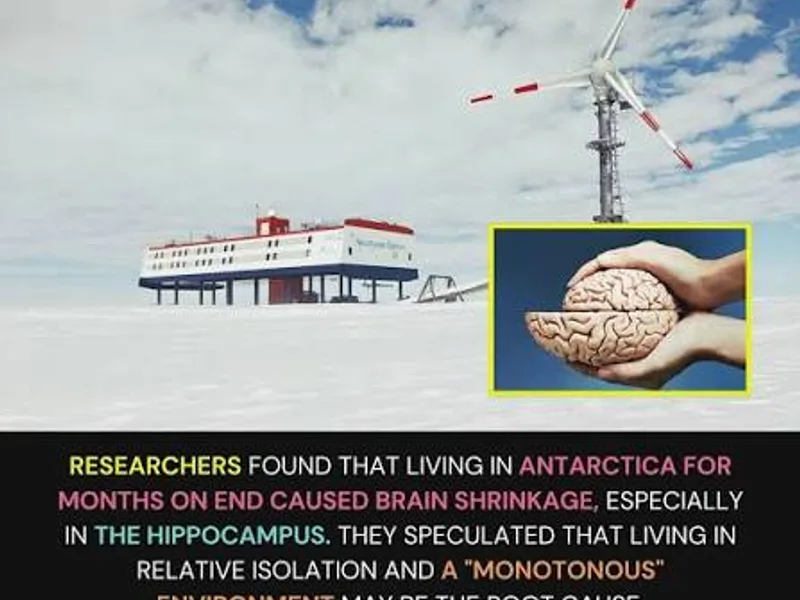
Long before "isolation" became a household word during lockdowns, scientists were already studying it in one of the most extreme settings on Earth: Antarctic research stations. This article looks at what isolation psychology research from Antarctica has actually found, from mood shifts during the da
August 10, 2026