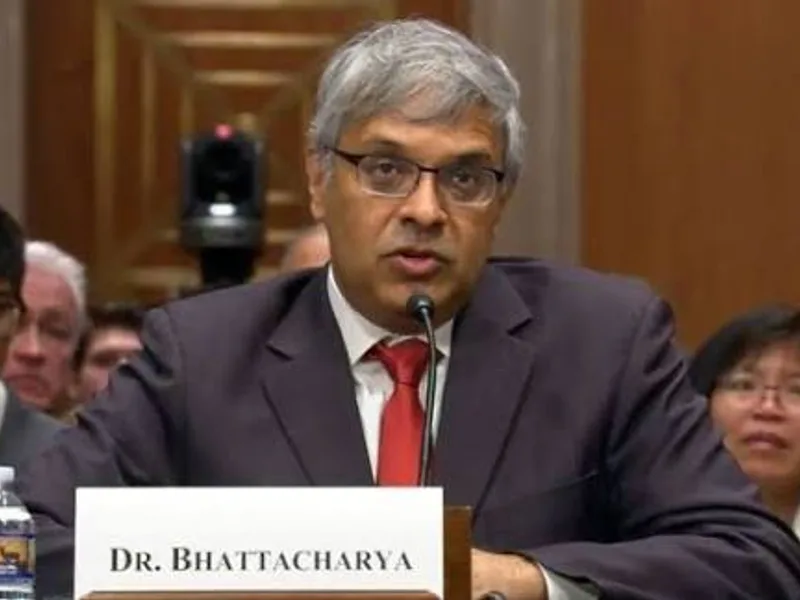
Jay Bhattacharya now has two full-time jobs. He's still Director of the National Institutes of Health, and as of February 2026, he's also acting Director of the Centers for Disease Control and Prevention. One person, two of the most consequential health agencies in the country.
That's not a small administrative footnote. It's the third change in CDC leadership since last summer, and it says something about how unsettled federal public health has become.
How We Got Here
The chain of events is worth laying out plainly, because it explains why this appointment landed the way it did.
Susan Monarez was confirmed by the Senate to lead the CDC last year. She lasted 29 days. Health Secretary Robert F. Kennedy Jr. removed her after she told a Senate committee she refused to sign off on vaccine policy changes without proper review. Kennedy has disputed her version of events, but several senior CDC officials resigned in protest after her removal, which tells you something about how the agency itself read the situation.
Jim O'Neill, HHS Deputy Secretary, stepped in as acting CDC director after that and held the post for roughly five months. During his tenure, the CDC scaled back its recommended pediatric vaccine schedule, a decision that drew sharp criticism from pediatric and infectious disease groups. O'Neill has now moved on, reportedly nominated to lead the National Science Foundation instead.
That's where Bhattacharya comes in. He'll run CDC "for now," officials say, until a permanent director is nominated and confirmed by the Senate. No timeline has been given publicly for when that might happen.
Who Is Jay Bhattacharya?
If the name is new to you, here's the short version. Bhattacharya is a physician and health economist, formerly of Stanford Medicine, who became a prominent name during COVID for co-authoring the Great Barrington Declaration in 2020. That document argued against broad lockdowns and pushed instead for "focused protection" of vulnerable groups while letting most of the population return to normal life. The World Health Organization's then director-general publicly called the approach unethical, and it remains genuinely contested among epidemiologists — reasonable public health experts land on different sides of that debate to this day.
He's led NIH since April, where he has pushed the agency toward funding "high-risk, high-reward" research and called for more replication studies to confirm existing results hold up. He's also aligned NIH's funding priorities with Kennedy's stated interests in chronic disease and nutrition research.
In healthcare policy circles, dual-hatting one person across two major agencies is rarely read as a sign of institutional stability — it's usually a stopgap, and stopgaps tend to signal that finding a confirmable permanent candidate is proving harder than expected.
Why NIH Is Also Short-Staffed
The CDC isn't the only agency dealing with a leadership vacuum. More than half of NIH's 27 institutes and centers are currently without permanent directors, a combination of terminations, resignations, and retirements over the past year.
One departure that drew particular attention: Dr. Jeanne Marrazzo, who succeeded Dr. Anthony Fauci as director of the National Institute of Allergy and Infectious Diseases in 2023, says she was fired in September for defending vaccine science and speaking out against research funding cuts. That's a fairly senior, technical post to leave unfilled for long, and it's one of many across the agency right now.
Why This Matters Beyond Washington
It's fair to ask why any of this matters if you're not a policy wonk. Here's the practical answer: the CDC sets the vaccine schedules pediatricians and family doctors reference, tracks disease outbreaks, and issues the guidance state health departments build their own responses around. When that leadership seat keeps changing hands, consistency in that guidance can wobble too — and continuity of leadership is usually what keeps agency decision-making predictable for the doctors who rely on it.
If you have questions about how current vaccine guidance applies to your child, that's a conversation worth having directly with a pediatrician rather than relying on news headlines alone, since recommendations can vary by state and individual health history.