Most people misread nutrition labels and fall for misleading claims. Here's a step-by-step guide to decoding every section like a nutrition expert.
Nutrition labels are one of the most powerful tools available for making informed food choices — and one of the most frequently misread. Food manufacturers are experts at presenting information in ways that appear transparent while obscuring what matters. Learning to read a nutrition label with precision takes less than 10 minutes to learn and can fundamentally change your purchasing decisions in every grocery aisle.
Step 1: Always Check the Serving Size First
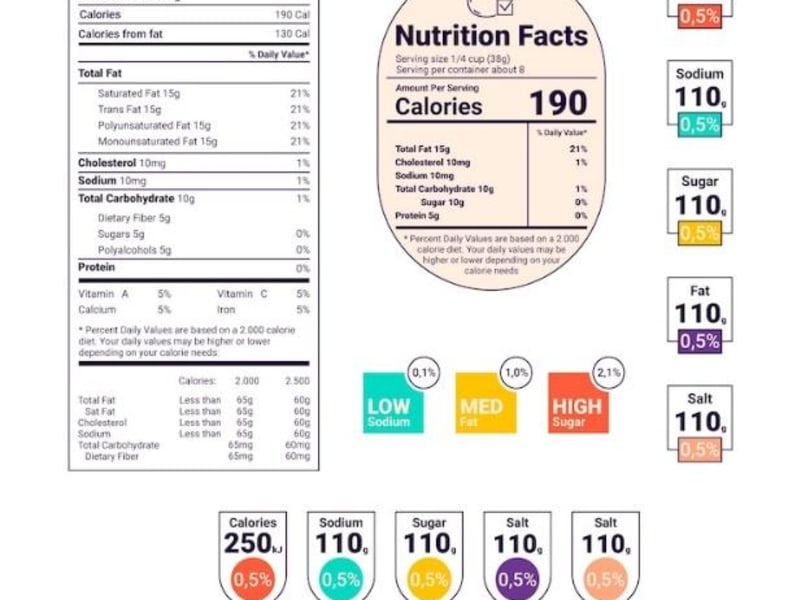
This is the single most manipulated element on a nutrition label, and it's deliberately placed at the top for good reason. All values listed — calories, fat, sodium, sugar — apply to one serving, not the entire package. A bag of chips labelled "150 calories" might contain 3.5 servings, making the true caloric content 525 calories for the bag. Manufacturers have historically used artificially small serving sizes to make products appear lower in calories and sugar than realistic consumption patterns suggest. Always multiply by the number of servings you'll actually consume.
Step 2: The Numbers That Actually Matter
Work through the label systematically:
Total calories: Useful context, but only meaningful relative to your total daily needs.
Total fat and fat type: Saturated fat (limit to under 10% of daily calories) and trans fat (avoid entirely — even "0g" can legally mean up to 0.49g per serving) are more important than total fat.
Sodium: The hidden concern. Many "healthy" products contain 30–50% of the daily sodium limit (2300mg) in a single serving. Sodium is the biggest labelling blind spot for cardiovascular health.
Total carbohydrates vs. dietary fiber vs. added sugars: Subtract fiber from total carbs for a "net carbs" figure. Added sugars are the most important sub-metric here — the World Health Organisation recommends under 25g of added sugar per day for adults.
Protein: Important for satiety and muscle maintenance. Compare per-serving protein to caloric density for a rough quality indicator.
% Daily Value (DV): 5% or less is low; 20% or more is high. Use this for micronutrient assessment (calcium, iron, vitamin D).
Step 3: The Ingredients List Is the Real Label
The Nutrition Facts panel tells you quantities; the ingredients list tells you quality. Ingredients are listed in descending order by weight — so the first three to five ingredients constitute the majority of the product. Key things to look for:
Sugar aliases: There are over 60 names for added sugar on ingredient lists, including dextrose, maltose, barley malt, rice syrup, cane juice, and fruit juice concentrate. Multiple sugar aliases spread throughout the list can collectively represent the primary ingredient.
Refined grains listed as first ingredient: "Enriched wheat flour" or "bleached flour" signals a refined grain product, regardless of any whole grain marketing on the front of pack.
Hydrogenated or partially hydrogenated oils: The source of artificial trans fats, still present in some products despite labelling loopholes.
Additive length: A long ingredients list dominated by chemical names, emulsifiers, and stabilisers typically indicates an ultra-processed product.
Conclusion
Reading a nutrition label like a pro means looking beyond the front-of-pack marketing claims to the serving size, added sugars, sodium, fat type, and most importantly the ingredients list. The more complex an ingredient list, the greater the degree of processing. Once you develop this habit, it takes seconds — and the quality of your food choices improves permanently.
FAQ
1. What should I check first on a nutrition label?
Always check the serving size first, as all values depend on it and can be misleading.
2. Which nutrients should I focus on most?
Focus on added sugars, sodium, unhealthy fats, and fiber for better health decisions.
3. Why is the ingredients list important?
It shows the true quality of the product and reveals hidden sugars and processing levels.
Author: Doctar Team
Disclaimer: For moe information contact Doctar Team