

Emergency & Help
24/7 Emergency & General Advisory
🚨 24/7 Medical Emergency
Non-Emergency Advisory
10:00 AM – 6:00 PM, Mon–Sat
For appointments & general queries.
24/7 Emergency & General Advisory
🚨 24/7 Medical Emergency
Non-Emergency Advisory
10:00 AM – 6:00 PM, Mon–Sat
For appointments & general queries.
A breech baby is positioned feet or buttocks first instead of head down before birth. While many babies turn naturally during pregnancy, some remain in a breech position until delivery. A qualified breech delivery doctor in Kolkata can evaluate the baby's position, recommend safe treatment options,
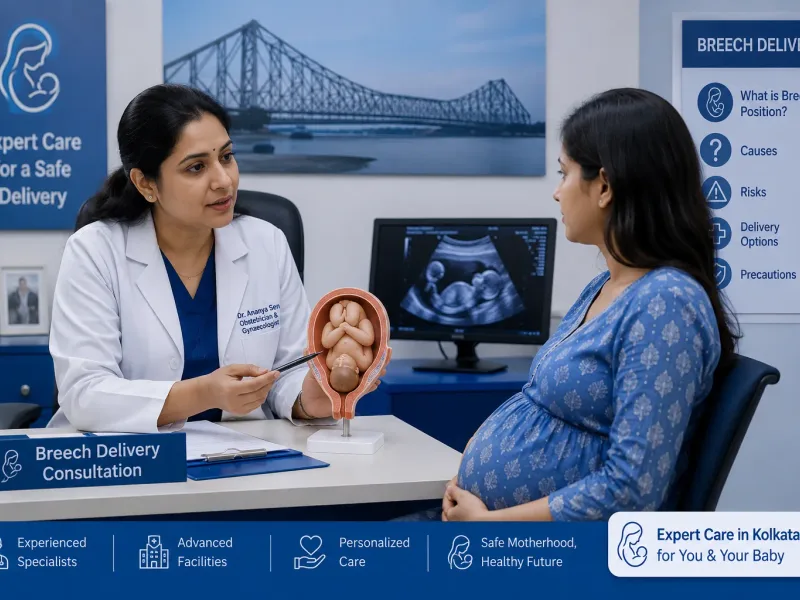
A breech delivery doctor in Kolkata helps diagnose and manage pregnancies where the baby is positioned feet-first or buttocks-first instead of head-down before birth. Early diagnosis through ultrasound and regular prenatal check-ups allows doctors to plan the safest delivery for both mother and baby. Depending on the baby's position, pregnancy stage, and maternal health, treatment may include monitoring, external cephalic version (ECV), planned vaginal birth in selected cases, or cesarean delivery.
Pregnancy is full of changes, and one of the most important milestones is ensuring the baby is in the correct position before labour begins. While most babies naturally move into a head-down position by the final weeks of pregnancy, some remain in a breech position. Understanding what this means can help parents make informed decisions with their healthcare provider.
A breech baby is one that is positioned with the buttocks, feet, or both facing the birth canal instead of the head.
Most babies naturally turn head-down between 32 and 36 weeks of pregnancy. If the baby remains breech after about 36 weeks, your obstetrician will discuss the safest delivery options.
According to the American College of Obstetricians and Gynecologists (ACOG), breech presentation occurs in approximately 3–4% of full-term pregnancies
Buttocks point downward
Legs extend upward toward the baby's head
Most common type
Buttocks point downward
Knees are bent
Baby appears in a sitting position
One or both feet point downward
Feet may enter the birth canal first
Higher risk of complications during vaginal birth
In many pregnancies, there is no identifiable reason.
Several factors can increase the likelihood of a breech position, including:
Premature pregnancy
Multiple pregnancy (twins or triplets)
Low or excessive amniotic fluid
Placenta previa
Uterine abnormalities
Previous pregnancies
Certain fetal conditions affecting movement
Having one or more of these factors does not necessarily mean a baby will remain breech.
Most mothers cannot accurately identify a breech baby without medical examination.
However, some women notice:
Hard round head felt beneath the ribs
Kicks lower in the abdomen
Pressure higher in the abdomen
Unusual fetal movement pattern
These symptoms alone cannot confirm breech presentation.
Doctors use several methods to confirm fetal position.
An experienced obstetrician gently examines the abdomen to estimate the baby's position.
Ultrasound is the most accurate method for confirming breech presentation. It also evaluates:
Baby's position
Placenta location
Amniotic fluid level
Estimated fetal weight
Monitoring helps assess the baby's wellbeing before deciding on delivery planning.
Yes.
Many babies change position naturally before labour.
If the pregnancy is progressing normally and the baby is healthy, your doctor may recommend continued observation before deciding on further treatment.
External Cephalic Version (ECV) is a procedure where an obstetrician gently applies pressure to the mother's abdomen to encourage the baby to turn into a head-down position.
It is generally considered around 36–37 weeks in appropriate pregnancies.
Not every woman is a suitable candidate for ECV. The decision depends on:
Placenta position
Baby's health
Amniotic fluid
Previous uterine surgery
Pregnancy complications
Research shows ECV can reduce the likelihood of cesarean delivery in selected patients.
[REVIEWER: Add practical considerations regarding patient selection, counselling, and safety of ECV.]
In carefully selected situations, yes.
However, vaginal breech birth is not suitable for every pregnancy.
Doctors evaluate:
Type of breech presentation
Baby's size
Mother's pelvic anatomy
Gestational age
Experience of the healthcare team
Availability of emergency surgical care
Many hospitals recommend planned cesarean delivery for persistent breech presentation because it may reduce certain risks for the baby.
A planned cesarean section may be recommended if:
Footling breech presentation
Large baby
Multiple pregnancy with complications
Placenta previa
Fetal distress
Umbilical cord concerns
Failed external cephalic version
Other pregnancy-related medical conditions
The decision is individualized after discussion between the patient and the obstetrician.
Although many breech pregnancies result in healthy births, potential complications can include:
Umbilical cord compression
Birth injuries
Difficulty during delivery
Reduced oxygen supply in rare cases
Increased likelihood of cesarean delivery
Longer recovery after surgery
Bleeding
Infection (as with any major surgery)
Proper prenatal care helps reduce many of these risks.
An experienced obstetrician can provide:
Regular pregnancy monitoring
Accurate ultrasound assessment
Delivery planning
External Cephalic Version evaluation
High-risk pregnancy management
Emergency obstetric care
Post-delivery maternal support
Newborn assessment
Choosing a hospital with experienced obstetricians, anesthesia support, neonatal care, and emergency surgical facilities is important for breech pregnancies.
Seek medical advice if:
Your baby remains breech after 36 weeks
You notice decreased fetal movement
Your water breaks
You develop regular contractions
You experience vaginal bleeding
You suspect labour has started
Do not attempt exercises or techniques to turn the baby without medical guidance.
While you cannot always prevent breech presentation, healthy prenatal care supports the best possible pregnancy outcome.
Helpful habits include:
Attend every antenatal appointment
Follow your doctor's advice
Eat a balanced diet
Stay physically active if medically advised
Manage pregnancy-related conditions
Report unusual symptoms promptly
Frequently Asked Questions
Yes, although it becomes less common as pregnancy progresses because the baby has less room to move. Your obstetrician may monitor the baby's position or discuss whether External Cephalic Version (ECV) is appropriate based on your pregnancy and medical history.
Not always. Some carefully selected pregnancies may be suitable for planned vaginal breech birth. The decision depends on factors such as the baby's position, estimated size, maternal health, and the experience of the medical team managing the delivery.
A breech position alone does not automatically make a pregnancy high risk. However, it requires closer monitoring because certain delivery-related complications may be more likely. Your obstetrician will assess your individual situation and recommend the safest birth plan.
The baby's position is confirmed through a physical examination and an ultrasound scan. Ultrasound provides the clearest information about fetal position, placenta location, amniotic fluid, and other factors that influence delivery planning.
You should consult an obstetrician if your baby remains breech after about 36 weeks of pregnancy, if you have reduced fetal movements, signs of labour, vaginal bleeding, or any pregnancy concerns that require prompt medical assessment.
Visit Hospital
Near You

A cesarean section (C-section) is a surgical delivery in which a baby is born through an incision in the mother's abdomen and uterus. In Kolkata, several experienced obstetricians and well-equipped hospitals offer C-section services for planned and emergency deliveries. Understanding when a C-sectio
July 31, 2026
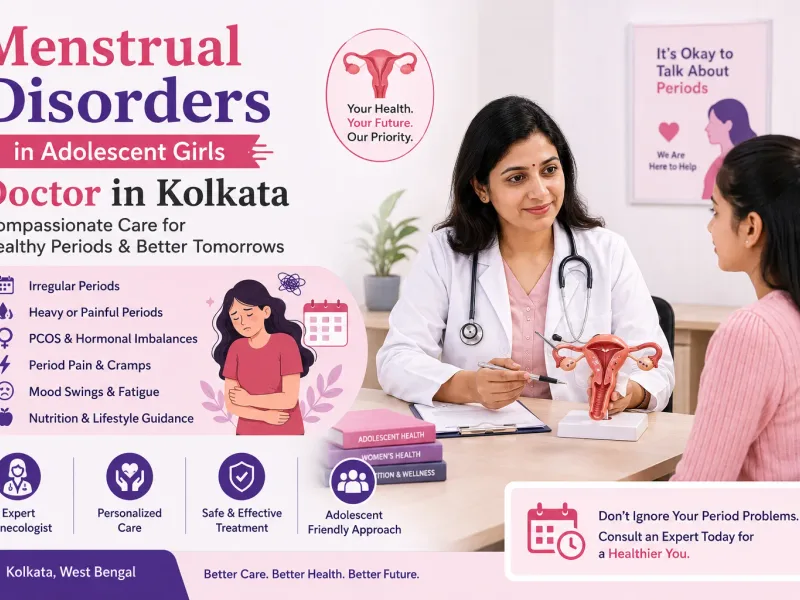
If you are searching for a Menstrual Disorders in Adolescent Girls Doctor in Kolkata, early evaluation by an experienced gynecologist can help identify the underlying cause of irregular or painful periods. While menstrual irregularities are common during the first few years after puberty, persistent
July 31, 2026

If you are searching for a Fibroid & Endometriosis doctor in Kolkata, choosing an experienced gynecologist with expertise in minimally invasive gynecological surgery is essential. Uterine fibroids and endometriosis are two common but different conditions that can cause pelvic pain, heavy menstrual b
July 31, 2026