

Emergency & Help
24/7 Emergency & General Advisory
🚨 24/7 Medical Emergency
Non-Emergency Advisory
10:00 AM – 6:00 PM, Mon–Sat
For appointments & general queries.
24/7 Emergency & General Advisory
🚨 24/7 Medical Emergency
Non-Emergency Advisory
10:00 AM – 6:00 PM, Mon–Sat
For appointments & general queries.
A cesarean section (C-section) is a surgical delivery in which a baby is born through an incision in the mother's abdomen and uterus. In Kolkata, several experienced obstetricians and well-equipped hospitals offer C-section services for planned and emergency deliveries. Understanding when a C-sectio
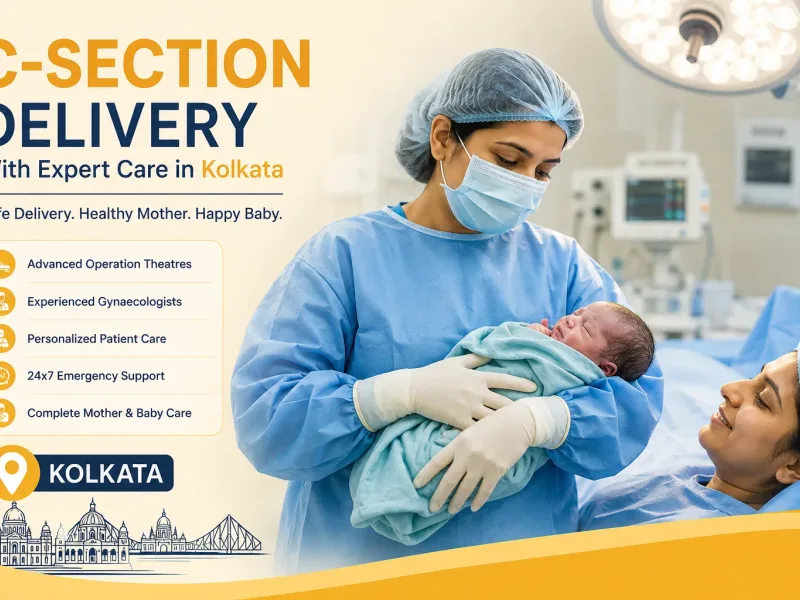
A C-section is a surgical procedure in which a baby is delivered through a carefully made incision in the mother's abdomen and uterus, performed by a qualified obstetrician-gynecologist. In Kolkata, C-sections are performed at a range of private and public hospitals, by specialists with extensive training in both planned (elective) and emergency procedures. If your doctor has recommended a C-section — or you want to be prepared for any outcome — knowing how to find the right surgeon and what to expect makes a real difference.
India's C-section numbers have grown sharply. <cite index="7-1">C-section deliveries now account for over 27 percent of all reported childbirths in India in 2024–25 — more than four times the rate recorded in 2008–09.</cite> That national trend is reflected in West Bengal's cities too.
The picture varies considerably between hospital types. <cite index="6-1">According to the National Family Health Survey (NFHS-5), only 14.3 percent of public hospital births were by C-section, versus 47.4 percent in private hospitals — with private facilities in most states now performing C-sections for over half of all deliveries.</cite>
What's driving the increase? The government-cited 2022 Population Research Centre study points to factors including advanced maternal age, fetal distress, previous C-section, prolonged labour, and changing patient preferences. Not all C-sections reflect unnecessary intervention — some are genuinely life-saving. The key is working with a doctor you trust to make the decision that's right for your specific situation.
[REVIEWER: add clinical insight here — e.g., the most common clinical indications you see for C-sections in your Kolkata practice, and how patients can have an informed conversation about mode of delivery]
A C-section becomes the safer option in several well-defined situations:
Fetal distress. When a baby's heart rate pattern during labour suggests oxygen deprivation, immediate delivery by C-section may be the safest route.
Abnormal baby position. If the baby is breech (feet-first) or lying sideways (transverse), a vaginal delivery is often not safe.
Placenta previa. When the placenta covers the cervix, blocking the birth canal, a C-section is standard.
Failure to progress. If labour stalls despite adequate contractions, surgical delivery may be recommended to prevent complications for mother and baby.
Previous C-section. While vaginal birth after cesarean (VBAC) is possible in carefully selected women — <cite index="13-1">with success rates of 60 to 80 percent, particularly when the prior C-section used a low transverse incision and the interbirth interval is at least 18 months</cite> — repeat C-section remains a common choice in India.
Your obstetrician is the right person to assess which delivery method suits your pregnancy. No online article, including this one, substitutes for a direct clinical evaluation.
Kolkata has a strong concentration of trained obstetricians across both private multispecialty hospitals and smaller nursing homes. When evaluating options, consider:
Qualifications and specialisation. Look for doctors with MD or MS in Obstetrics & Gynaecology, ideally with additional credentials such as DNB, MRCOG (Royal College of Obstetricians and Gynaecologists, London), or FICOG. These signal advanced training and peer recognition.
Hospital infrastructure. A C-section is major surgery. The facility should have a functioning operation theatre with trained anaesthesiologists, a neonatal ICU (NICU) for newborn emergencies, a blood bank, and round-the-clock nursing support.
Experience with high-risk pregnancies. If you have complicating factors — twins, a previous uterine surgery, gestational diabetes, or hypertension — prioritise a doctor who explicitly lists high-risk obstetric care as a specialty.
Emergency availability. Ask whether the doctor you consult will personally perform the surgery, or whether an on-call team handles emergencies. The answer matters, especially for unplanned C-sections.
Several reputed hospitals in Kolkata carry established obstetrics departments that perform both planned and emergency C-sections:
Apollo Multispecialty Hospitals (Canal Circular Road). <cite index="19-1">Apollo Multispecialty in Kolkata offers a full range of obstetric and gynaecological services, with a team of specialists trained to handle the complete spectrum of maternal care.</cite> The hospital has multiple senior obstetricians on its panel, including doctors with MRCOG and FRCOG credentials from London.
Fortis Hospital (Anandapur and FHKI). <cite index="24-1">Fortis Healthcare Kolkata has a team of consultant obstetricians and gynaecologists across its Anandapur and FHKI campuses</cite>, covering routine and complicated deliveries.
Manipal Hospitals / AMRI (Salt Lake and Dhakuria). AMRI, now part of the Manipal group, is a well-known name for maternity care in South Kolkata, with obstetricians experienced in both vaginal and surgical deliveries.
CMRI (CK Birla Hospitals). CMRI carries an established obstetrics and gynaecology unit in the Dhakuria area, known for both quality and accessibility.
Nursing homes and smaller private facilities. Kolkata also has a large number of specialist nursing homes where experienced obstetricians operate. Doctors such as Dr. Jayanta K. Gupta (40+ years of experience) and Dr. Arnab Basak (30+ years) are among the senior practitioners frequently cited in patient directories for C-section deliveries in the city.
<cite index="6-1">The average out-of-pocket cost for a C-section in a private hospital across India is approximately ₹43,000 (around USD 498), compared to roughly ₹8,600 in a public hospital.</cite> Costs in Kolkata's private sector vary by hospital tier, room category, and whether the case involves complications.
[REVIEWER: add clinical insight here — e.g., how you counsel patients on hospital choice, and what questions to bring to the first antenatal consultation]
A planned C-section typically takes 45 minutes to an hour from the first incision to the end of closure. Here is a brief, plain-language walkthrough:
Anaesthesia. Most C-sections use spinal or epidural anaesthesia — you remain awake but feel no pain below the waist. General anaesthesia is reserved for emergencies.
The incision. The surgeon makes a horizontal cut (usually a "bikini cut") just above the pubic hairline through skin, fat, and the uterine wall.
Delivery. The baby is delivered through the incision, the umbilical cord is cut, and the placenta is removed.
Closure. The uterus and abdominal layers are sutured in sequence. The skin may be closed with sutures, staples, or surgical glue.
No direct dosage information is appropriate here — your anaesthesiologist and surgeon will discuss your specific pain management plan before the procedure.
<cite index="10-1">A C-section is major abdominal surgery, and recovery typically takes six to eight weeks</cite>, with hospital stays generally running three to four days after delivery.
First 24–48 hours. Expect soreness and limited mobility. Most hospitals now encourage gentle movement — even a short walk in the ward — within 24 hours, as this helps prevent blood clots and promotes bowel recovery.
Week one to two. <cite index="17-1">For the first couple of weeks, lifting should be restricted to items no heavier than 10 to 15 pounds — roughly the weight of a newborn.</cite>
Weeks three to six. Internal healing continues even if you feel better outwardly. Strenuous activity, including vigorous exercise and heavy housework, should wait until your surgeon gives the all-clear.
Pelvic floor. Many mothers don't realise that pelvic floor muscles are affected by C-sections too. The weight of the uterus and baby during nine months of pregnancy can weaken these muscles regardless of delivery method. A pelvic floor physiotherapist can help with safe postoperative strengthening.
Follow-up appointments. <cite index="15-1">The American College of Obstetricians and Gynecologists recommends a first postpartum assessment no later than three weeks after delivery, with a comprehensive visit no later than 12 weeks postpartum.</cite> Indian guidelines align broadly; confirm the schedule with your own doctor.
When to call your doctor immediately. Warning signs after a C-section include fever above 38°C, increasing redness or pus at the incision site, unusually heavy vaginal bleeding, or severe abdominal pain. These may indicate infection or other complications requiring prompt medical attention. Do not wait for a scheduled appointment — call your doctor or go to the emergency department.
What is the typical cost of a C-section in a private hospital in Kolkata? Costs vary significantly by hospital category, room type, and whether complications arise. As a general guide, C-section packages in mid-tier private hospitals in Kolkata typically range from ₹40,000 to ₹1,20,000 or more. Always ask for a detailed itemised package estimate upfront, and check whether your health insurance covers maternity surgery.
How do I find a good C-section doctor in Kolkata? Start with your existing gynaecologist or a referral from your general practitioner. Look for specialists with postgraduate qualifications in obstetrics (MD/MS/DNB), experience with high-risk deliveries, and hospital privileges at a facility with an operational NICU and blood bank. Online platforms like Practo, Apollo 247, and hospital websites list credentials and patient reviews.
Can I have a normal delivery after a previous C-section in Kolkata? Vaginal birth after cesarean (VBAC) is possible for many women, but only in carefully selected cases. Success depends on factors like the type of incision used in the prior C-section, the gap between pregnancies, and the overall clinical picture. Discuss this specifically with your obstetrician at least one trimester before your due date so there is adequate time to plan.
How long will I stay in hospital after a C-section? Most uncomplicated C-sections in Kolkata's private hospitals involve a three- to four-day hospital stay. Complications, neonatal issues, or the need for additional monitoring can extend this.
Is a planned (elective) C-section safer than an emergency one? Planned C-sections generally carry lower risk than emergency ones, largely because the team and patient are prepared in advance. However, both are safe procedures in skilled hands. The decision should always be based on medical indication, not convenience, and made jointly with your doctor.
Visit Hospital
Near You
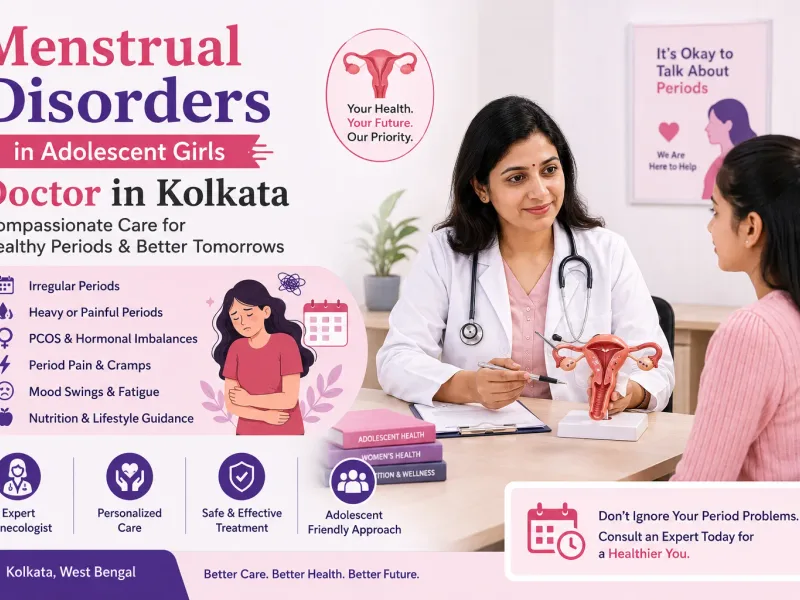
If you are searching for a Menstrual Disorders in Adolescent Girls Doctor in Kolkata, early evaluation by an experienced gynecologist can help identify the underlying cause of irregular or painful periods. While menstrual irregularities are common during the first few years after puberty, persistent
July 31, 2026
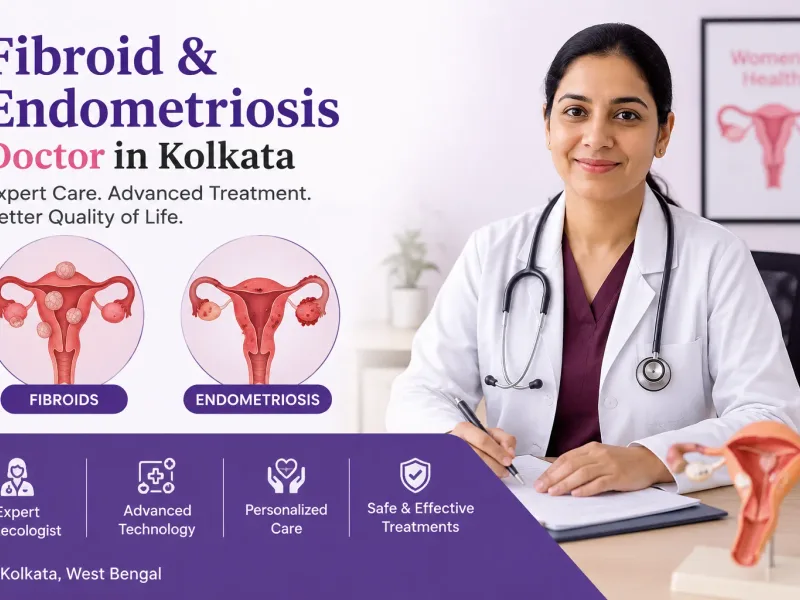
If you are searching for a Fibroid & Endometriosis doctor in Kolkata, choosing an experienced gynecologist with expertise in minimally invasive gynecological surgery is essential. Uterine fibroids and endometriosis are two common but different conditions that can cause pelvic pain, heavy menstrual b
July 31, 2026
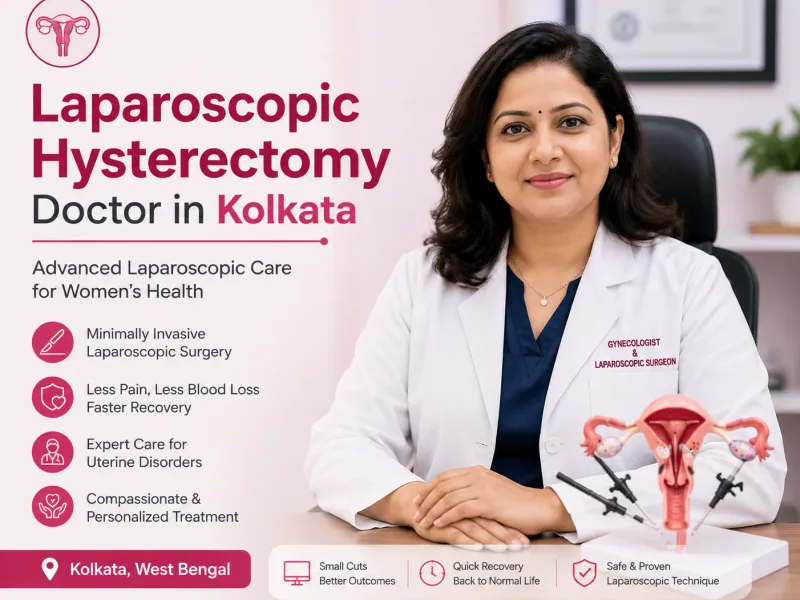
If you are searching for a Laparoscopic Hysterectomy doctor in Kolkata, it is important to choose an experienced gynecologist who specializes in minimally invasive gynecological surgery. Laparoscopic hysterectomy removes the uterus through small incisions using a camera and specialized surgical inst
July 31, 2026