

Emergency & Help
24/7 Emergency & General Advisory
🚨 24/7 Medical Emergency
Non-Emergency Advisory
10:00 AM – 6:00 PM, Mon–Sat
For appointments & general queries.
24/7 Emergency & General Advisory
🚨 24/7 Medical Emergency
Non-Emergency Advisory
10:00 AM – 6:00 PM, Mon–Sat
For appointments & general queries.
A caesarean section (C-section) is a surgical procedure used to deliver a baby through incisions in the abdomen and uterus when vaginal birth is not safe or possible. It may be planned in advance or performed as an emergency. Understanding why a C-section is recommended, what happens during surgery,

A caesarean section is a surgical delivery in which the baby is born through an incision made in the mother's abdomen and uterus, rather than through the vaginal canal. The procedure typically takes 45 minutes to an hour. Most C-sections are performed under regional anaesthesia — a spinal or epidural block — which numbs the lower body while the mother remains awake and alert for her baby's birth.
General anaesthesia is used in some emergency situations, though this is less common.
Planned (elective) C-sections are scheduled before labour begins. They are recommended when a condition identified during pregnancy makes vaginal delivery unsafe for the mother, the baby, or both.
Emergency C-sections are performed during labour when an unexpected complication arises that requires immediate delivery. The timeline can be very short — sometimes under 30 minutes from decision to incision.
Both are real medical procedures with real recovery requirements. Neither is the "easy way out." That framing causes unnecessary guilt and simply is not supported by the medical evidence.
The decision to recommend a C-section is clinical, not arbitrary. Common indications include:
Placenta previa — When the placenta partially or fully covers the cervical opening, vaginal delivery is not possible without life-threatening haemorrhage. The American College of Obstetricians and Gynecologists (ACOG) lists this as an absolute indication for caesarean delivery.
Foetal malpresentation — A baby in the breech position (feet or buttocks first) or transverse lie (lying sideways) cannot safely deliver vaginally in most circumstances.
Foetal distress — When continuous electronic foetal monitoring shows patterns indicating the baby is not tolerating labour — typically due to umbilical cord compression or inadequate oxygen supply — emergency delivery becomes necessary.
Cephalopelvic disproportion (CPD) — When the baby's head is too large to pass safely through the mother's pelvis. This may only become apparent during labour.
Prior uterine surgery — A previous classical (vertical) C-section incision carries a risk of uterine rupture in subsequent labour. Many women with a prior low-transverse caesarean are candidates for vaginal birth after caesarean (VBAC), depending on clinical factors.
Prolonged or arrested labour — When cervical dilation or the baby's descent stalls despite adequate contractions and interventions, surgical delivery may be the safest course.
Multiple pregnancy — Twin pregnancies where the first baby is not head-down, or higher-order multiples, are often delivered by C-section.
Maternal health conditions — Severe preeclampsia, active genital herpes infection at the time of labour, certain heart conditions, and other serious maternal illnesses may make caesarean delivery safer.
[REVIEWER: add clinical insight here — e.g., the most common indication you encounter in your Kolkata practice, or a case type where patients are often surprised to learn a C-section is medically necessary]
After anaesthesia takes effect, the surgical team places a sterile drape so the mother cannot see the incision site, though many hospitals now offer a "gentle caesarean" or "family-centred caesarean" option where a clear or lowered drape allows the mother to see the baby emerge.
The surgeon makes two incisions: one through the abdominal wall (usually horizontal, just above the pubic hairline — the "bikini cut") and one in the lower segment of the uterus. The baby is delivered, the cord is cut, and the placenta is removed. The uterus and abdominal layers are then closed with sutures in sequence.
Skin-to-skin contact in the operating theatre — placing the baby on the mother's chest immediately after birth — is increasingly standard practice and has documented benefits for bonding, breastfeeding initiation, and neonatal thermoregulation, according to research published in the journal PLOS ONE.
Recovery from a C-section is longer and more demanding than many women are prepared for. The incision involves seven layers of tissue — skin, fat, fascia, muscle, and the uterus itself.
In hospital (typically 3–5 days):
A urinary catheter is in place for the first 12–24 hours
Pain management is active — do not hesitate to use it; undertreated pain slows recovery
Mobility is encouraged early, usually within 24 hours, to reduce the risk of blood clots
Breastfeeding can begin in the recovery room
At home (weeks 1–6):
No lifting anything heavier than your baby for the first two weeks
No driving until you can perform an emergency stop without hesitation — typically four to six weeks
Wound care: keep the incision clean and dry; watch for signs of infection (increasing redness, warmth, discharge, or fever)
Full internal healing of the uterine scar takes approximately six weeks, even if the external wound closes sooner
The World Health Organization recommends a minimum of six weeks before returning to strenuous physical activity after a caesarean. Sexual intercourse is generally advised to wait until after the six-week postnatal check-up.
Emotional recovery deserves equal attention. Some mothers feel grief, disappointment, or a sense of failure if they had hoped for a vaginal birth. These feelings are valid and common. If low mood persists beyond two weeks postpartum, screening for postnatal depression is important — it is no less common after surgical birth than after vaginal delivery.
[REVIEWER: add clinical insight here — e.g., what you tell patients about managing incision pain at home, or how you approach the conversation about birth preferences when a C-section becomes necessary]
For many women, yes. ACOG guidelines support offering VBAC as a safe option for women with one prior low-transverse uterine incision, no other contraindications, and access to a hospital that can perform an emergency C-section if needed. Successful VBAC rates range from 60–80% in appropriately selected candidates.
The decision requires a careful conversation with your obstetrician, ideally before the next pregnancy, taking into account the reason for the first caesarean, the interval between pregnancies, and individual risk factors.
A C-section carries the risks of any major surgery: bleeding, infection, adverse reaction to anaesthesia, injury to nearby organs (bladder, bowel), and blood clots. Recovery takes longer than an uncomplicated vaginal birth.
For future pregnancies, repeated C-sections are associated with increasing risks of placenta accreta — a condition where the placenta grows too deeply into the uterine wall — which can cause life-threatening haemorrhage. The risk increases with each subsequent caesarean.
This does not mean C-sections should be avoided when they are medically indicated. It means the decision should always weigh real clinical benefit against real surgical risk, made in partnership between the patient and her doctor.
Q: Is a C-section more painful than a vaginal birth? They involve different types of pain. Labour pain is acute and intense during contractions but typically resolves quickly after vaginal delivery. C-section pain is surgical — the procedure itself is painless under anaesthesia, but recovery involves incision soreness lasting several weeks. Both are manageable with appropriate pain relief and support.
Q: How long after a C-section can I get pregnant again? Most obstetricians recommend waiting at least 18 to 24 months after a C-section before the next pregnancy to allow the uterine scar to heal adequately. Shorter intervals increase the risk of uterine rupture in subsequent labour. The WHO supports an interpregnancy interval of at least 24 months for optimal maternal and infant outcomes.
Q: Will I always need a C-section if I've had one before? Not necessarily. Many women are candidates for vaginal birth after caesarean (VBAC), depending on the reason for the first C-section, the type of uterine incision made, and current clinical factors. This decision requires individual assessment by your obstetrician well before your due date.
Q: Does a C-section affect breastfeeding? It can delay the initial milk let-down by a day or two, since the hormonal signals from labour are absent. However, breastfeeding after a C-section is entirely possible and well-supported. Early skin-to-skin contact in the operating room and consistent feeding or expression from the start help establish supply.
Q: How do I know if my C-section wound is healing properly? A healing incision should show gradual reduction in swelling and bruising, with the wound edges remaining closed and dry. Signs that need prompt medical attention include increasing redness, warmth, swelling, pus or unusual discharge, wound opening, or a fever above 38°C. Contact your doctor immediately if any of these develop.
Visit Hospital
Near You
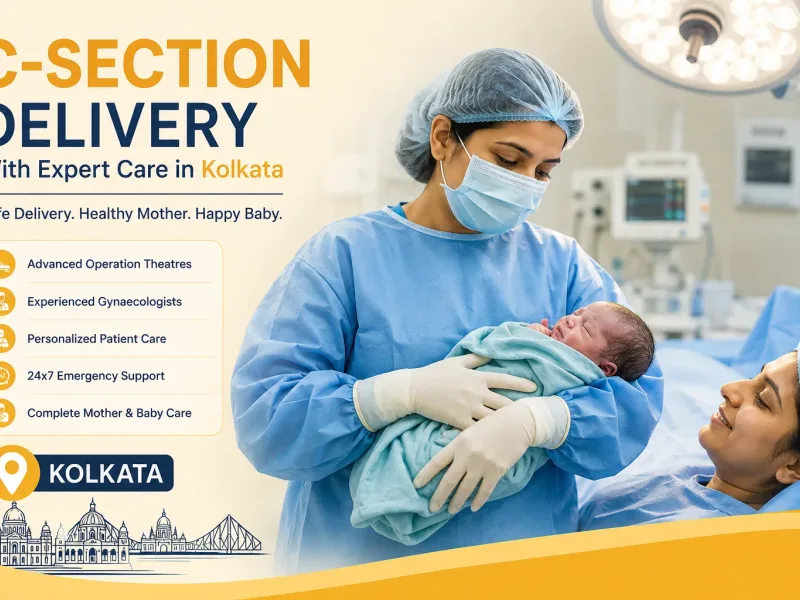
A cesarean section (C-section) is a surgical delivery in which a baby is born through an incision in the mother's abdomen and uterus. In Kolkata, several experienced obstetricians and well-equipped hospitals offer C-section services for planned and emergency deliveries. Understanding when a C-sectio
July 31, 2026
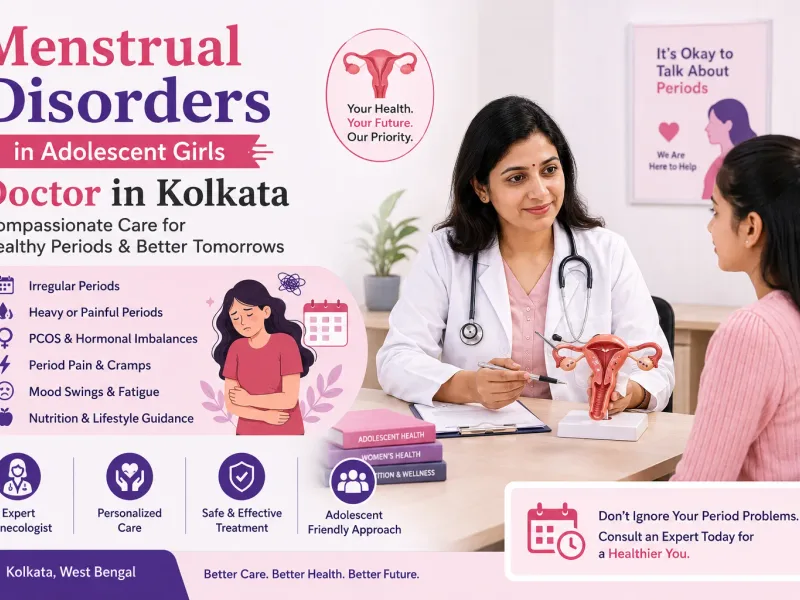
If you are searching for a Menstrual Disorders in Adolescent Girls Doctor in Kolkata, early evaluation by an experienced gynecologist can help identify the underlying cause of irregular or painful periods. While menstrual irregularities are common during the first few years after puberty, persistent
July 31, 2026
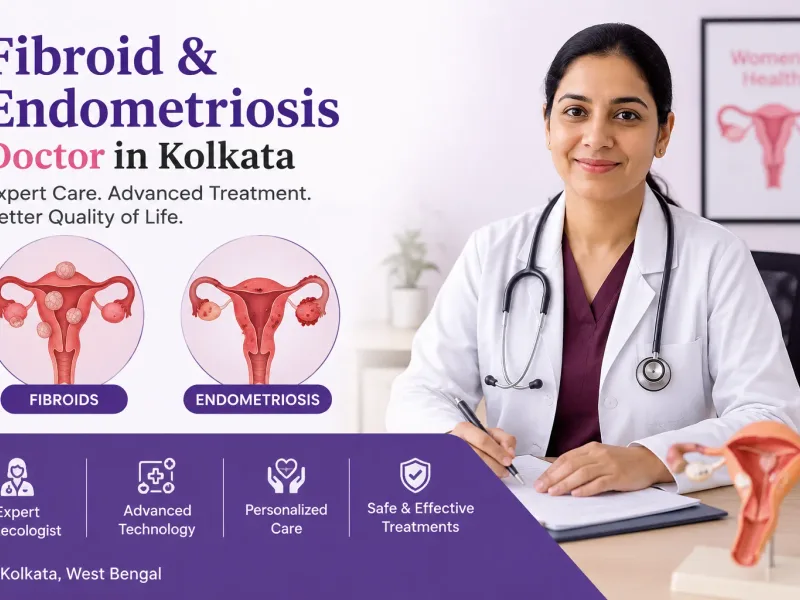
If you are searching for a Fibroid & Endometriosis doctor in Kolkata, choosing an experienced gynecologist with expertise in minimally invasive gynecological surgery is essential. Uterine fibroids and endometriosis are two common but different conditions that can cause pelvic pain, heavy menstrual b
July 31, 2026