

Emergency & Help
24/7 Emergency & General Advisory
🚨 24/7 Medical Emergency
Non-Emergency Advisory
10:00 AM – 6:00 PM, Mon–Sat
For appointments & general queries.
24/7 Emergency & General Advisory
🚨 24/7 Medical Emergency
Non-Emergency Advisory
10:00 AM – 6:00 PM, Mon–Sat
For appointments & general queries.
Picking an antenatal care and delivery doctor in Kolkata isn't just about proximity — it's about finding an obstetrician whose qualifications, hospital access, and communication style match your needs. This guide walks through when to start looking, what credentials and facilities actually matter, h
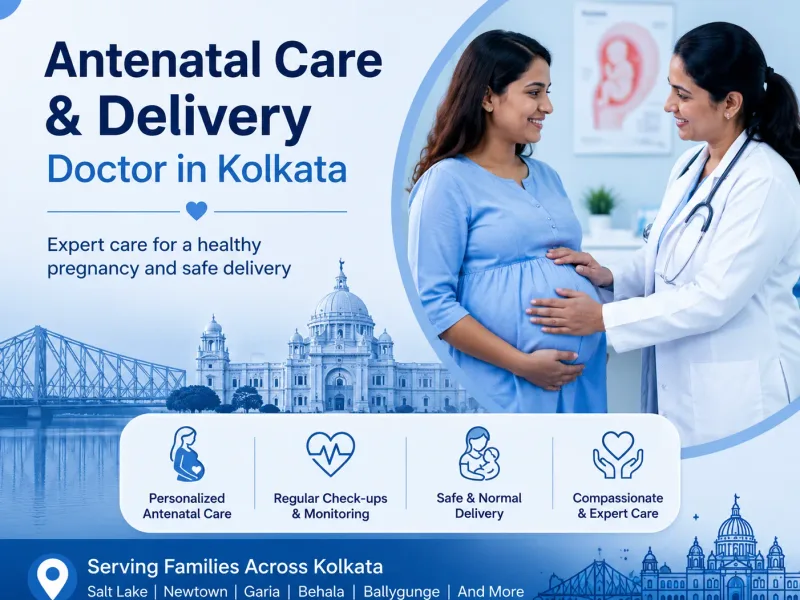
A good antenatal care and delivery doctor in Kolkata should be a qualified obstetrician-gynaecologist (OB-GYN) registered with the West Bengal Medical Council, attached to a hospital with a functioning labour room and neonatal care unit, and someone you can reach quickly if a concern comes up between visits. The right fit matters as much as the right qualifications — pregnancy care works best as an ongoing relationship, not a series of one-off appointments.
Kolkata has no shortage of options, from government teaching hospitals to private maternity centres, which can make the decision feel bigger than it needs to be. Breaking it into a few concrete criteria makes it manageable.
[REVIEWER: add clinical insight here — e.g., how early patients typically present in your practice, and what you notice about outcomes when the first visit is delayed]
<cite index="10-1,10-2">The World Health Organization's antenatal care model recommends that a pregnant woman have her first contact with a health provider within the first 12 weeks of pregnancy, with follow-up contacts at 20, 26, 30, 34, 36, 38, and 40 weeks.</cite> That's a shift from the older model of four visits to a minimum of eight contacts across pregnancy, because <cite index="10-1">more frequent contact improves the detection of problems and is linked to better outcomes.</cite>
In India, government guidance is more conservative but still time-sensitive. <cite index="13-1">The Ministry of Health & Family Welfare recommends a minimum of four antenatal visits at different stages of pregnancy</cite>, delivered through public programmes. Whichever model your doctor follows, the point stands: don't wait until your second trimester to book a first appointment. Early registration lets your doctor establish a baseline, order first-trimester screening on time, and flag risk factors before they become complications.
When you're evaluating a doctor, three things are worth confirming directly, not assuming:
Registration and specialisation. Ask whether they hold an MD/DGO in obstetrics and gynaecology and are registered with the West Bengal Medical Council or Medical Council of India equivalent body.
Delivery hospital. Find out which hospital or nursing home they deliver at, whether it has 24-hour blood bank access, an operation theatre for emergency caesarean sections, and a neonatal intensive care unit (NICU) on-site or on transfer arrangement.
On-call coverage. Solo practitioners sometimes rely on a partner or associate for nights and weekends. Ask who covers if your doctor is unavailable when labour starts — this is one of the most overlooked questions expecting parents ask.
Kolkata's public teaching hospitals, including institutions like SSKM/IPGMER, NRS Medical College, and Calcutta National Medical College, run dedicated obstetrics departments and can be a starting point for antenatal registration, particularly for high-risk pregnancies that need round-the-clock specialist access. Private hospitals and nursing homes across the city offer more scheduling flexibility and continuity with a single named doctor, generally at a higher cost.
[REVIEWER: add clinical insight here — a note on what you personally check for at each trimester, or a common misconception patients have about ANC visits]
<cite index="10-2">Each antenatal contact is meant to include maternal and fetal assessment to detect problems early, clear communication between the provider and the pregnant woman, and monitoring that increases the likelihood of a positive outcome.</cite> <cite index="9-3">The WHO's 49 recommendations touch on diet, physical activity, tobacco use, malaria and blood tests, tetanus vaccination, and the appropriate use of ultrasound, alongside guidance on common complaints like nausea, back pain, and constipation.</cite>
If your visits consistently skip weight and blood pressure checks, blood and urine tests, or a running discussion of your due date and risk factors, that's worth raising directly with your doctor or considering a change in provider.
Private antenatal care isn't the only route to quality checkups. <cite index="12-1,12-2">The Pradhan Mantri Surakshit Matritva Abhiyan (PMSMA) is a Government of India programme that provides free, assured antenatal care to all pregnant women, offered on the 9th of every month at designated public health facilities</cite>, including primary health centres, community health centres, and district hospitals across West Bengal. <cite index="11-1">An extended version of the programme, E-PMSMA, adds extra clinic days and follow-up visits specifically for high-risk pregnancies</cite>, along with financial support for transport and diagnostics.
For women who can't access or afford continuous private care, registering with a nearby government facility under PMSMA is a legitimate way to get specialist-led checkups, ultrasounds, and blood work at no cost, with a private-sector doctor volunteering at many of these camps.
How many antenatal visits do you recommend for a pregnancy like mine, and at what intervals?
Which hospital would I deliver at, and what happens if I need an emergency C-section?
Who is on call if you're unavailable when I go into labour?
How do you handle high-risk conditions such as gestational diabetes or hypertension if they come up?
What's the best way to reach you between scheduled visits?
A doctor who answers these clearly, without brushing past them, is usually a good sign of how they'll handle the rest of your pregnancy.
How early should I book my first antenatal appointment in Kolkata? Ideally within the first 12 weeks of pregnancy. Early registration allows time for first-trimester screening, blood tests, and identification of risk factors, and lines up with both WHO and Indian government antenatal care timelines.
How many antenatal visits will I need? Government guidelines in India recommend a minimum of four visits, while the WHO recommends up to eight contacts for a positive pregnancy experience. Your doctor may adjust this based on whether your pregnancy is low- or high-risk.
Is free antenatal care available in Kolkata? Yes. Public health facilities offer free antenatal checkups, and the PMSMA programme provides an assured package of specialist-led care on the 9th of every month at government hospitals and health centres.
What's the difference between choosing a government hospital and a private doctor? Government teaching hospitals typically offer round-the-clock specialist access and are well-suited to high-risk pregnancies, often at low or no cost. Private doctors and nursing homes usually offer more scheduling continuity with one named physician, at a higher cost.
What should I do if my current doctor isn't available for my due date? Ask upfront who provides backup coverage. Most practices have a partner physician or hospital-based on-call system — confirm this before your third trimester so there are no surprises during labour.
Visit Hospital
Near You
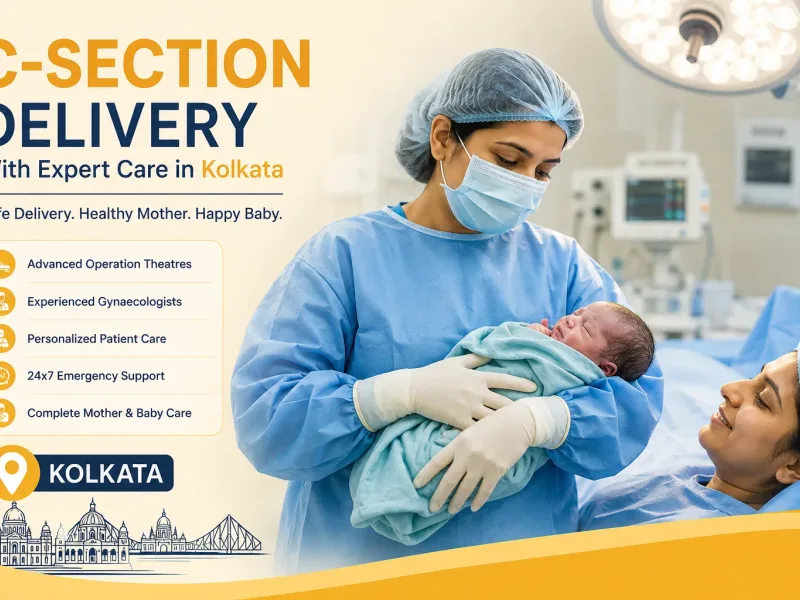
A cesarean section (C-section) is a surgical delivery in which a baby is born through an incision in the mother's abdomen and uterus. In Kolkata, several experienced obstetricians and well-equipped hospitals offer C-section services for planned and emergency deliveries. Understanding when a C-sectio
July 31, 2026
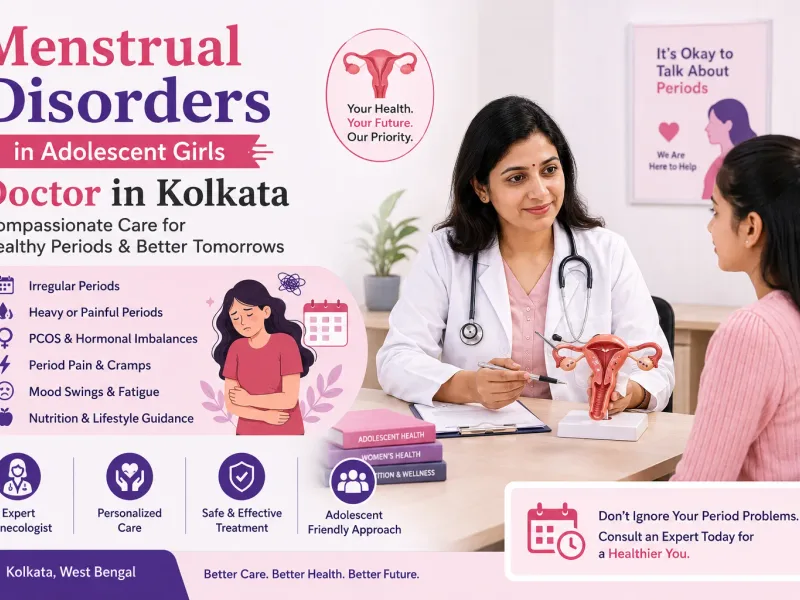
If you are searching for a Menstrual Disorders in Adolescent Girls Doctor in Kolkata, early evaluation by an experienced gynecologist can help identify the underlying cause of irregular or painful periods. While menstrual irregularities are common during the first few years after puberty, persistent
July 31, 2026
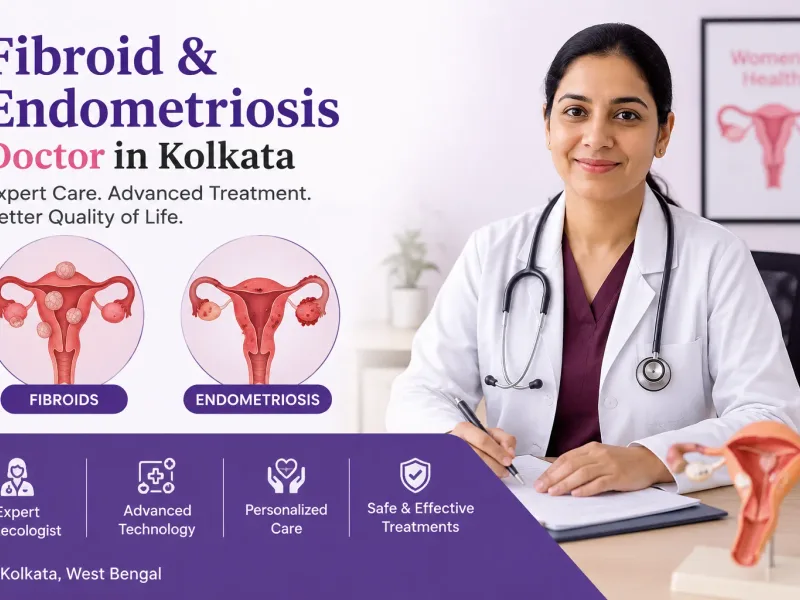
If you are searching for a Fibroid & Endometriosis doctor in Kolkata, choosing an experienced gynecologist with expertise in minimally invasive gynecological surgery is essential. Uterine fibroids and endometriosis are two common but different conditions that can cause pelvic pain, heavy menstrual b
July 31, 2026