

Emergency & Help
24/7 Emergency & General Advisory
🚨 24/7 Medical Emergency
Non-Emergency Advisory
10:00 AM – 6:00 PM, Mon–Sat
For appointments & general queries.
24/7 Emergency & General Advisory
🚨 24/7 Medical Emergency
Non-Emergency Advisory
10:00 AM – 6:00 PM, Mon–Sat
For appointments & general queries.
Fibroids and endometriosis are two of the most common — and most under-diagnosed — gynaecological conditions affecting women in Kolkata and across India. Both can cause heavy periods, pelvic pain, and fertility problems, yet many women spend years being told their symptoms are normal. They are not.
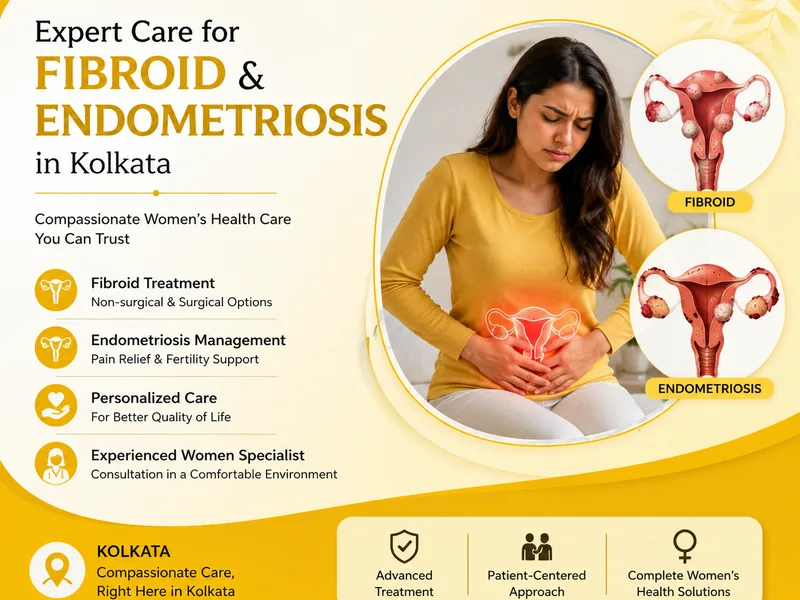
Fibroids and endometriosis are not the same condition, but they share two things: they are extremely common among Indian women, and they are routinely dismissed as "just bad periods." If you have been living with heavy bleeding, pelvic pressure, or pain that disrupts your daily life, you deserve a clear diagnosis — not reassurance that this is normal.
Endometriosis alone affects approximately 42 million women in India, making it a genuine public health crisis hiding in plain sight. Seeing a specialist women doctor in Kolkata for fibroid endometriosis is often the first step toward a pain-free life.
Fibroids are non-cancerous growths that form inside or around the uterus. They are composed of muscle and fibrous tissue, can vary significantly in size and location, and are influenced by hormonal factors such as estrogen and progesterone. The fact that they are almost always benign does not make them harmless — their location and size determine how much disruption they cause.
Common fibroid symptoms include heavy and painful bleeding, a feeling of fullness in the lower abdomen, frequent urination, painful sex, infertility, lower back pain, and complications during pregnancy and labour.
Not every woman with fibroids will have symptoms. Many are discovered incidentally during a routine ultrasound. But for women who do experience symptoms, the impact on quality of life can be significant.
[REVIEWER: add clinical insight here — e.g., a brief note on how fibroid location (submucosal vs. intramural) tends to affect the type and severity of symptoms you see most in your Kolkata practice]
Endometriosis is a different condition entirely, though it can coexist with fibroids. It occurs when tissue similar to the lining of the uterus grows outside the womb — often on the ovaries, fallopian tubes, or other pelvic organs — leading to inflammation, pain, and occasionally problems with conception.
Women with endometriosis commonly experience painful periods, heavy menstrual bleeding, and chronic pelvic pain, and the condition can also contribute to infertility, making early diagnosis and treatment essential.
Three main mechanisms are thought to drive endometriosis. Retrograde menstruation — where menstrual blood flows backward through the fallopian tubes — deposits endometrial cells in the pelvic cavity. Genetic predisposition raises the risk for women with a family history of the condition. And immune system dysfunction may allow rogue endometrial cells to survive and grow where they should not.
Asian women have been reported to have a higher prevalence of endometriosis than Caucasian women, with a higher frequency of moderate-to-severe disease among Asian populations — a fact that makes timely diagnosis in cities like Kolkata especially important.
The most damaging myth in women's health is that period pain is normal. It is common — but common is not the same as normal, and it is never something you should simply endure.
Many women spend years seeking a diagnosis, often being told their symptoms are "normal." Painful periods are not normal. A heavy period that soaks through a pad in an hour, pain that keeps you home from work, or bloating that makes your abdomen visibly distended — these are clinical signs, not character flaws.
Cultural reluctance to discuss menstrual health openly, combined with a tendency to normalise women's pain, creates a diagnostic delay that can last seven years or more before a woman is correctly evaluated. This is why seeking out a gynaecologist with specific expertise in fibroid and endometriosis management matters.
Accurate diagnosis starts with a thorough pelvic examination and usually requires imaging. A pelvic exam allows the gynaecologist to check the uterus, ovaries, and fallopian tubes for any abnormalities, but ultrasound and, in some cases, MRI provide clearer detail about fibroid size and location. Endometriosis, however, cannot be definitively confirmed on imaging alone.
Laparoscopy — a minimally invasive surgical procedure — allows the gynaecologist to directly inspect the pelvic organs and is the gold standard for confirming an endometriosis diagnosis.
[REVIEWER: add clinical insight here — e.g., your approach to deciding when imaging alone is sufficient vs. when you recommend a diagnostic laparoscopy for a patient presenting with suspected endometriosis in your Kolkata clinic]
Treatment is not one-size-fits-all. It depends on the severity of symptoms, the size and location of fibroids or endometriosis lesions, and whether the woman wants to preserve her fertility.
Medical (Non-Surgical) Management
Over-the-counter pain relievers such as ibuprofen can help manage pain, while birth control pills, hormonal IUDs, and other hormonal therapies help regulate the menstrual cycle and reduce endometrial tissue growth. For fibroids, hormonal injections (GnRH analogues) can temporarily shrink growths before planned surgery.
Minimally Invasive Surgery
Laparoscopic surgery is the fastest way to treat both conditions, offering faster recovery times, less scarring, and reduced pain compared to traditional open surgery. For endometriosis, excision surgery removes diseased tissue directly. For fibroids, a laparoscopic myomectomy removes the fibroids while preserving the uterus — an important option for women who want to conceive.
Submucosal fibroids — those that bulge into the uterine cavity — can often be removed through hysteroscopy, which requires no abdominal incision at all.
Hysterectomy
In severe cases, a hysterectomy may be recommended to remove the uterus and alleviate symptoms. This is generally considered only when other treatments have failed and the woman has completed her family. It should never be presented as the only option without exploring less invasive alternatives first.
Both conditions can make conception more difficult, but neither is an automatic barrier to pregnancy. Depending on the location and size of a fibroid, it may interfere with the implantation of a fertilised egg or distort the shape of the uterus, reducing the chances of a successful pregnancy. Endometriosis, too, can impair ovarian function and damage the fallopian tubes.
Among infertile women undergoing diagnostic laparoscopy in a South Indian tertiary centre, 22.3% were found to have endometriosis and 40% had a fibroid uterus — figures that underline how frequently these conditions are implicated in unexplained infertility.
Surgical removal of fibroids or endometriosis lesions can meaningfully improve fertility outcomes, particularly when combined with reproductive support if needed.
Q: Can fibroids turn into cancer?
Fibroids are almost always benign. According to the American College of Obstetricians and Gynecologists, the risk of a fibroid being malignant (leiomyosarcoma) is estimated at less than 1 in 1,000. Rapid growth or unusual symptoms warrant evaluation, but cancerous transformation of a fibroid is rare.
Q: What is the difference between endometriosis and adenomyosis?
Endometriosis means uterine-like tissue grows outside the uterus — on the ovaries or pelvic organs. Adenomyosis is a related but distinct condition where the tissue grows into the muscle of the uterus itself, causing the uterus to enlarge and resulting in heavy bleeding and cramping. Both can coexist in the same patient.
Q: How long is recovery after laparoscopic fibroid or endometriosis surgery?
Most women return to light activity within one to two weeks after laparoscopic myomectomy or endometriosis excision, compared to four to six weeks for open surgery. Your gynaecologist will advise on specific restrictions based on the extent of the procedure.
Q: Can fibroids shrink on their own without treatment?
Small fibroids can occasionally resolve on their own, but most do not disappear without treatment. After menopause, fibroids typically shrink as oestrogen levels fall. Pre-menopausal women with symptomatic fibroids generally need medical or surgical management.
Q: Is endometriosis curable?
There is currently no permanent cure for endometriosis, but it is highly manageable. Excision surgery offers the best long-term symptom relief. Hormonal therapy after surgery reduces recurrence risk. Women with endometriosis who are managed by an experienced specialist can lead full, active lives.
Visit Hospital
Near You
A cesarean section (C-section) is a surgical delivery in which a baby is born through an incision in the mother's abdomen and uterus. In Kolkata, several experienced obstetricians and well-equipped hospitals offer C-section services for planned and emergency deliveries. Understanding when a C-sectio
July 31, 2026
If you are searching for a Menstrual Disorders in Adolescent Girls Doctor in Kolkata, early evaluation by an experienced gynecologist can help identify the underlying cause of irregular or painful periods. While menstrual irregularities are common during the first few years after puberty, persistent
July 31, 2026
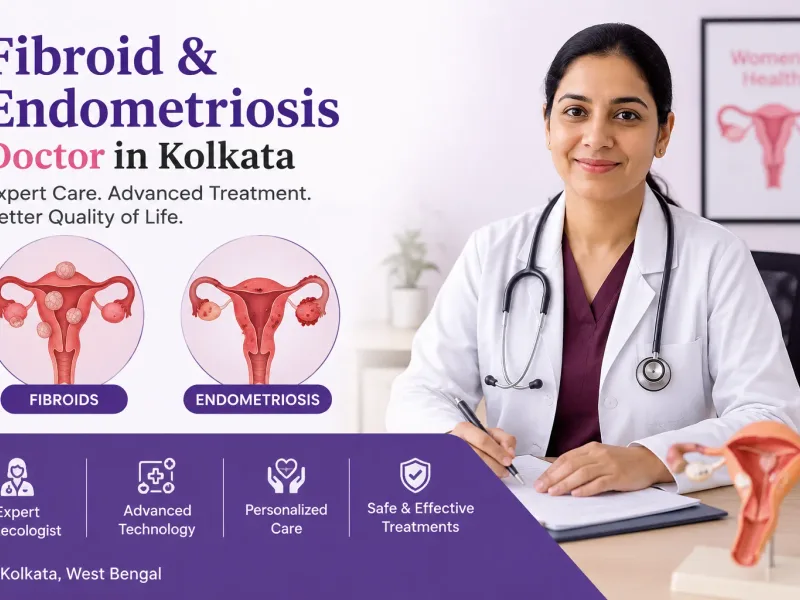
If you are searching for a Fibroid & Endometriosis doctor in Kolkata, choosing an experienced gynecologist with expertise in minimally invasive gynecological surgery is essential. Uterine fibroids and endometriosis are two common but different conditions that can cause pelvic pain, heavy menstrual b
July 31, 2026