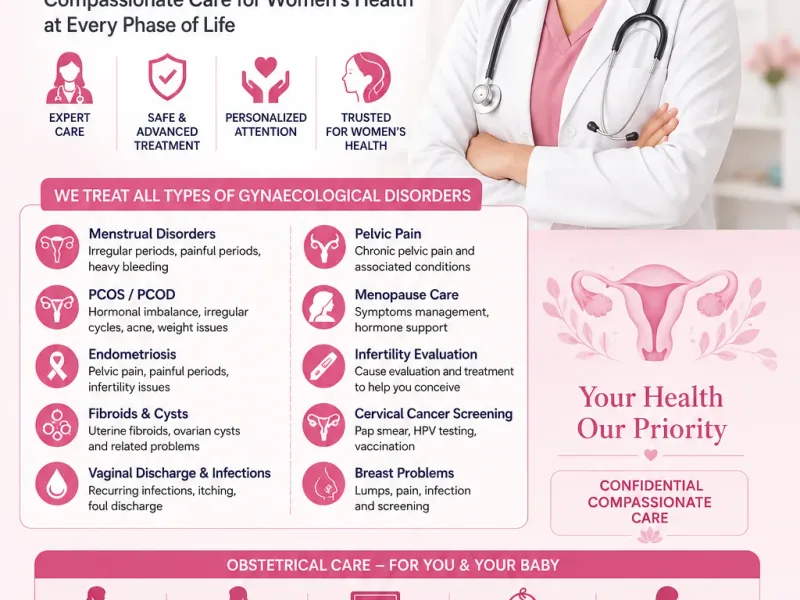
Gynaecological and obstetrical disorders are among the most prevalent health conditions affecting women of reproductive age. The prevalence of gynaecological morbidities in India increased from 25.68% to 28.74% between the fourth and fifth National Family Health Surveys, and many cases remain undiagnosed or untreated. For women in Kolkata — where lifestyle, environmental, and socioeconomic factors intersect — understanding these conditions is the first step toward getting the right care.
This guide covers every major category: from common hormonal disorders to pregnancy complications that require immediate attention.
Gynaecological disorders affect the female reproductive organs — the uterus, ovaries, fallopian tubes, cervix, and vagina. They range from benign but disruptive (like fibroids) to serious and requiring urgent treatment (like ovarian or cervical cancer). Gynecological disease accounts for roughly 4.5% of the global disease burden — more than malaria, tuberculosis, or ischemic heart disease — yet women often delay seeking care due to stigma or a lack of information.
Hormonal & Menstrual Disorders
Polycystic Ovary Syndrome (PCOS)
PCOS is a condition related to hormonal imbalance where cysts may develop on the ovaries. It is one of the most common reproductive-age disorders, causing irregular periods, excess androgen (male hormone), weight gain, and difficulty conceiving. The global prevalence of PCOS is estimated to be around 8–9%. In Indian urban settings, rates may be higher due to sedentary lifestyles and dietary patterns.
Diagnosis involves a combination of blood tests, ultrasound, and clinical assessment. Management focuses on lifestyle changes, hormonal medication, and — for women trying to conceive — ovulation induction under specialist supervision.
Dysmenorrhoea
Primary dysmenorrhoea is period pain without an underlying cause. Secondary dysmenorrhoea points to conditions like endometriosis or fibroids. Severe, worsening period pain should never be dismissed as "normal" — it warrants gynaecological evaluation.
Amenorrhoea
Missing periods (outside pregnancy) can result from extreme weight loss, excessive exercise, thyroid dysfunction, or early menopause. It needs investigation, not patience.
Structural Disorders of the Uterus and Ovaries
Uterine Fibroids
Uterine fibroids are the most common benign tumours of the female reproductive tract and can cause a range of symptoms including abnormal uterine bleeding, pain, pressure symptoms, and subfertility. They affect approximately 20–30% of women and can be detected by ultrasound in up to 70–80% of women by the time of menopause.
Fibroids vary enormously — from tiny and symptomless to large masses causing bladder pressure and heavy bleeding. Treatment ranges from hormonal medications to minimally invasive procedures (like uterine artery embolisation) to surgical removal (myomectomy).
Endometriosis
Endometriosis occurs when tissue similar to the uterine lining develops outside the uterus. It causes chronic pelvic pain, painful intercourse, and in many cases, infertility. Endometriosis is associated with about 50% of infertility cases globally.
It is notoriously underdiagnosed — the average diagnostic delay is several years. Women experiencing severe cyclical pain should specifically ask for an endometriosis evaluation.
Ovarian Cysts
Most ovarian cysts are functional (formed during ovulation) and resolve on their own. Persistent or complex cysts — particularly in post-menopausal women — need further imaging and possible surgical review to rule out malignancy.
[REVIEWER: add clinical insight here — e.g., your experience distinguishing functional from pathological cysts during ultrasound, and when you recommend watchful waiting vs. intervention]
Reproductive Tract Infections
Genital tract infections are a significant and often silent driver of gynaecological morbidity. In a population-based study of women in rural India, infections of the genital tract contributed to half of all gynaecological morbidity.
Common infections include:
Bacterial vaginosis — the most common vaginal condition, caused by bacterial imbalance
Vulvovaginal candidiasis — fungal infection causing itching and discharge
Pelvic Inflammatory Disease (PID) — an infection of the upper reproductive tract (uterus, fallopian tubes) that can cause infertility if untreated
Sexually transmitted infections (STIs) — including chlamydia, gonorrhoea, and HPV (human papillomavirus, which causes most cervical cancers)
Early treatment prevents long-term complications. Women with recurrent infections should be screened for STIs and underlying immune or hormonal conditions.
Gynaecological Cancers
The main gynaecological cancers in India are:
Cervical cancer — the second most common cancer in Indian women; largely preventable through HPV vaccination and regular Pap smears
Uterine (endometrial) cancer — linked to obesity, diabetes, and oestrogen excess; usually presents with post-menopausal bleeding
Ovarian cancer — often called a "silent" disease because symptoms are vague (bloating, pelvic discomfort) until advanced stages
Annual gynaecological check-ups, including Pap tests and pelvic examination, are the most reliable tools for early detection.
What Are Obstetrical Disorders?
Obstetrical disorders arise specifically during pregnancy, childbirth, or the immediate postpartum period. They are a leading cause of maternal mortality worldwide.
Common Obstetrical Complications
Preeclampsia and Hypertensive Disorders of Pregnancy
Preeclampsia and other hypertensive disorders contribute to approximately 16% of maternal mortality globally. It is a serious condition characterised by high blood pressure that can lead to haemorrhage, strokes, organ failures, and seizures if left untreated or treated too late.
Hypertensive disorders in pregnancy include gestational hypertension, preeclampsia, and eclampsia — a spectrum from elevated blood pressure to life-threatening seizures. Regular blood pressure monitoring at every antenatal visit is critical.
Gestational Diabetes Mellitus (GDM)
Gestational diabetes is a form of diabetes diagnosed during pregnancy, caused by insulin resistance — when the body doesn't respond correctly to insulin. A study among pregnant women at an Indian tertiary care hospital found a GDM prevalence of 20%, with cases significantly more common in urban participants and those with higher BMI.
Most women with well-managed GDM deliver healthy babies. Uncontrolled GDM, however, increases the risk of a larger-than-normal baby, difficult delivery, and type 2 diabetes in the mother later in life.
Ectopic Pregnancy
The fetus will not survive in an ectopic pregnancy. Surgery and/or medication are necessary, as well as careful monitoring. Causes include endometriosis and scarring to the fallopian tubes from a previous sexually transmitted infection.
Ectopic pregnancy is a medical emergency. Sudden one-sided pelvic pain with a missed period requires immediate investigation.
Miscarriage (Spontaneous Abortion)
Complications from spontaneous and induced abortions — including miscarriage and ectopic pregnancies — are among the direct causes of maternal mortality. Recurrent miscarriage (three or more losses) needs specialist evaluation for chromosomal, anatomical, or clotting disorders.
Postpartum Haemorrhage (PPH)
Haemorrhage — mostly occurring during or following childbirth — is responsible for nearly a third (27%) of maternal mortality globally. PPH remains a major concern in India and requires immediate hospital-based management.
Preterm
Delivery before 37 weeks is the leading cause of neonatal mortality. Risk factors include infections, uterine abnormalities, and multiple pregnancies. Close antenatal monitoring can identify high-risk pregnancies early.
[REVIEWER: add clinical insight here — e.g., red-flag signs in your antenatal clinic that prompt you to escalate care, or your approach to managing high-risk pregnancies in the Kolkata urban context]
When Should You See a Gynaecologist?
Do not wait for symptoms to become severe. See a specialist if you experience:
Periods that are unusually heavy, painful, or irregular
Pelvic pain outside of menstruation
Unusual vaginal discharge or bleeding
Difficulty conceiving after 12 months of trying (or 6 months if you're over 35)
Any bleeding after menopause
Swelling or pressure in the lower abdomen
During pregnancy, report immediately: headaches with visual disturbance, severe swelling of hands and face, reduced fetal movements, bleeding, or leaking fluid.
FAQ
What is the most common gynaecological disorder in India?
PCOS, uterine fibroids, and reproductive tract infections are among the most prevalent. Research shows gynaecological morbidity affects over 28% of Indian women, with infections of the genital tract being a major contributor. Many cases go undiagnosed because women delay seeking care.
Can PCOS affect pregnancy?
Yes. PCOS is a leading cause of ovulation-related infertility. However, with the right hormonal treatment and lifestyle management, most women with PCOS can conceive. Early diagnosis and specialist guidance significantly improve outcomes.
What are warning signs of preeclampsia during pregnancy?
Sudden high blood pressure, severe headaches, blurred vision, swelling of the face and hands, and upper abdominal pain are key warning signs. Preeclampsia typically develops after 20 weeks. It requires immediate medical attention and close monitoring.
Is gestational diabetes permanent?
No — GDM usually resolves after delivery. However, it signals an elevated risk of developing type 2 diabetes later in life. Women who had GDM should have blood sugar tested at 6–12 weeks postpartum and annually thereafter.
How often should women get a gynaecological check-up?
Most guidelines recommend an annual gynaecological examination from the time a woman becomes sexually active or turns 21. Pap smear screening for cervical cancer should begin at age 21 and be repeated every 3 years (or every 5 years with HPV co-testing after age 30).