

Emergency & Help
24/7 Emergency & General Advisory
🚨 24/7 Medical Emergency
Non-Emergency Advisory
10:00 AM – 6:00 PM, Mon–Sat
For appointments & general queries.
24/7 Emergency & General Advisory
🚨 24/7 Medical Emergency
Non-Emergency Advisory
10:00 AM – 6:00 PM, Mon–Sat
For appointments & general queries.
Laparoscopic hysterectomy is a minimally invasive surgery to remove the uterus through small incisions, offering faster recovery and less pain than traditional open surgery. For women in Kolkata navigating this decision, finding an experienced and empathetic gynecologist matters as much as the proce
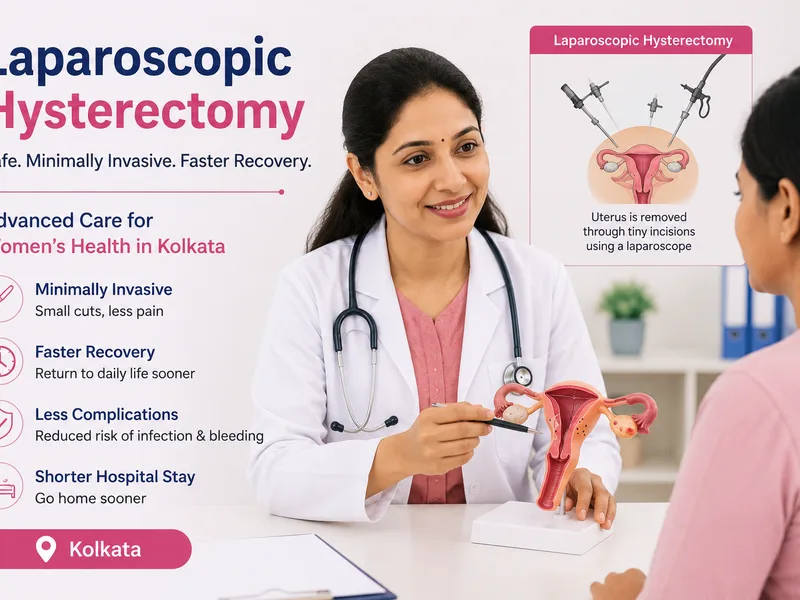
A laparoscopic hysterectomy is a minimally invasive surgical procedure to remove the uterus using a small camera and thin instruments inserted through tiny abdominal incisions. Compared to open surgery, it causes significantly less pain, requires a shorter hospital stay, and allows most women to return to normal activities within two to four weeks — roughly half the time of a traditional hysterectomy.
For women in Kolkata seeking this procedure, the choice of surgeon is critical. A growing number of skilled gynecologists — including experienced women doctors — now offer this advanced approach across the city's hospitals and clinics.
The surgeon inserts a laparoscope — a thin tube with a high-definition camera — through a small incision near the navel. Two or three additional small cuts allow specialized instruments to access and remove the uterus. The uterus is taken out either in sections through the laparoscopic tube or through the vagina.
Women can choose to keep the cervix in place (a laparoscopic supra-cervical hysterectomy) or have the entire uterus and cervix removed (a total laparoscopic hysterectomy). Keeping the cervix makes the operation somewhat faster and safer for some patients.
The entire procedure is performed under general anesthesia. The majority of patients are able to go home the same day as their surgery.
A hysterectomy is only considered when other treatments have not provided adequate relief and when the patient does not wish to become pregnant in the future. Common reasons a gynecologist may recommend it include:
Uterine fibroids — non-cancerous growths that cause heavy bleeding or pelvic pressure
Endometriosis — tissue that grows outside the uterus, causing chronic pain
Adenomyosis — when the uterine lining grows into the muscle wall, causing heavy, painful periods
Abnormal uterine bleeding that hasn't responded to medication
Uterine prolapse — when the uterus descends into the vaginal canal
Certain gynecological cancers, though this is assessed case by case
It may not be possible in cases where the uterus is larger than a four-month pregnancy, or if the patient has had multiple prior lower abdominal surgeries. Your surgeon will review your full history before recommending this approach.
[REVIEWER: add clinical insight here — for example, a brief note on how you counsel patients who are uncertain about the decision, or what distinguishes candidates for laparoscopic versus open surgery in your practice]
The evidence strongly favors minimally invasive techniques for appropriate candidates. Because laparoscopic surgery uses smaller incisions, patients typically experience less pain, less bleeding, and a reduced risk of infection, and can return to work or normal activities more quickly. For most women, recovery lasts two to three weeks — significantly shorter than the six to eight weeks required after a traditional hysterectomy.
Research published in Frontiers in Medicine also shows that enhanced recovery protocols applied to laparoscopic hysterectomy can reduce hospital stay by more than two days in routine clinical practice, with improvements in pain control and postoperative nausea as well.
Cosmetically, the results are also better — the small incisions leave minimal visible scarring compared to the long abdominal cut of open surgery.
Understanding the terminology helps when discussing options with your doctor:
Total Laparoscopic Hysterectomy (TLH) — The uterus and cervix are both removed entirely through laparoscopic technique.
Laparoscopic-Assisted Vaginal Hysterectomy (LAVH) — The laparoscope helps detach the uterus, which is then removed through the vaginal opening. This is often used when the uterus is slightly enlarged.
Laparoscopic Supra-Cervical Hysterectomy (LSH) — The uterus is removed but the cervix is left in place. This is a shorter procedure with a slightly lower complication risk, though patients still need cervical screening afterward.
Your gynecologist will recommend the most appropriate type based on your diagnosis, uterus size, and medical history.
Before surgery: There will be a pre-operative appointment that includes a history, physical examination, blood tests, and a consultation with the anesthesia team. Patients should not eat or drink anything after midnight the night before surgery.
During surgery: The procedure is performed under general anesthesia, typically lasting one to three hours depending on complexity.
After surgery: The shorter hospital stay is one of the major advantages, and most women can return to light activity within two to three weeks. Strenuous activity and sexual intercourse are usually avoided for six weeks. Vaginal spotting and mild cramping are normal in the first few weeks.
[REVIEWER: add clinical insight here — any practical advice you give patients about managing the first week at home, warning signs to watch for, or common concerns women raise post-operatively]
Kolkata has a well-developed network of gynecological surgeons, including experienced women doctors who specialize in laparoscopic procedures. When evaluating a specialist, consider:
Surgical volume and experience — Ask how many laparoscopic hysterectomies the surgeon performs per year and their complication rate. Experience with complex cases — large fibroids, severe endometriosis — matters significantly.
Hospital affiliation — Choose a surgeon operating out of a hospital with a dedicated gynecological surgery unit and ICU backup, such as AMRI Hospitals, Apollo Gleneagles, Belle Vue Clinic, or Fortis Hospital Kolkata.
Communication style — A good surgeon explains your options clearly and does not pressure you toward surgery. You should feel comfortable asking questions.
Certification — Look for a surgeon with an MS or DNB in Obstetrics and Gynecology, ideally with additional training in gynecological endoscopy or laparoscopic surgery.
Surgeons with FOGSI (Federation of Obstetric and Gynaecological Societies of India) certification and more than 15 years of laparoscopic experience are generally well-regarded benchmarks for quality in this specialty.
Some women specifically prefer a female gynecologist for this procedure for reasons of comfort and ease of communication — a valid and respected preference. Several experienced women doctors in Kolkata offer laparoscopic hysterectomy and are affiliated with reputable hospitals across the city.
Is laparoscopic hysterectomy safe?
Yes, for most women it is considered safer than open surgery. It carries fewer risks of infection, blood loss, and post-operative complications. Like any major surgery, it does carry some risks — including rare injury to nearby organs — which your surgeon will discuss with you beforehand. Always ensure your surgeon has substantial laparoscopic experience.
How long does recovery take after laparoscopic hysterectomy?
Most women return to light daily activities within two to four weeks. Full recovery, including resuming strenuous exercise or sexual activity, typically takes six weeks. Recovery is generally faster than open surgery, where six to eight weeks is standard.
Will I go through menopause after a hysterectomy?
Not automatically. If the ovaries are not removed during the procedure, the woman will not experience surgical menopause and will not need hormone therapy. If the ovaries are removed — due to cancer risk or an abnormal growth — menopause symptoms may begin immediately.
Can a laparoscopic hysterectomy treat uterine fibroids?
Yes. Fibroids are one of the most common reasons this procedure is performed. However, if you wish to preserve fertility, a laparoscopic myomectomy (fibroid removal without removing the uterus) may be discussed as an alternative. Talk to your gynecologist about what best suits your situation.
How do I find a qualified laparoscopic hysterectomy surgeon in Kolkata?
Ask your GP for a referral, or contact major hospitals directly to find surgeons with a dedicated laparoscopic gynecology practice. Verify qualifications (MS/DNB in OBG), hospital affiliation, and experience with your specific condition. A second opinion is always reasonable for elective surgery.
Visit Hospital
Near You

A cesarean section (C-section) is a surgical delivery in which a baby is born through an incision in the mother's abdomen and uterus. In Kolkata, several experienced obstetricians and well-equipped hospitals offer C-section services for planned and emergency deliveries. Understanding when a C-sectio
July 31, 2026
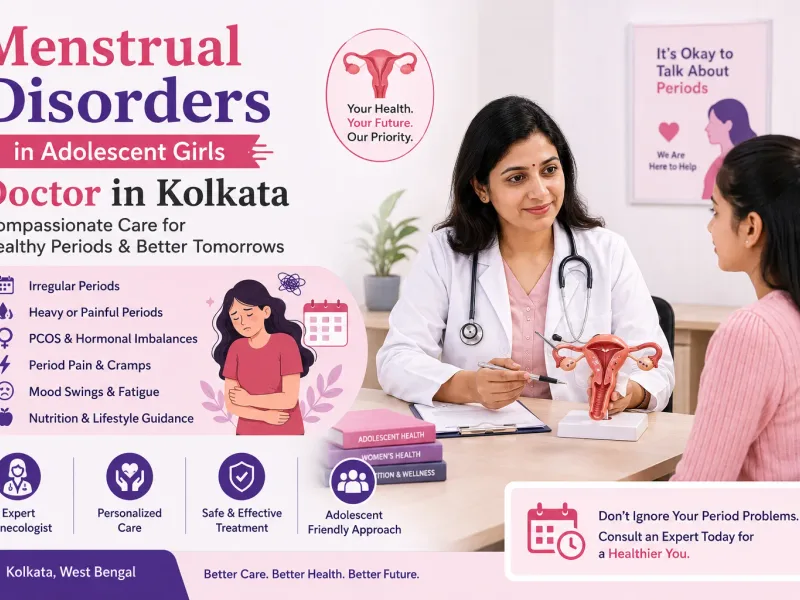
If you are searching for a Menstrual Disorders in Adolescent Girls Doctor in Kolkata, early evaluation by an experienced gynecologist can help identify the underlying cause of irregular or painful periods. While menstrual irregularities are common during the first few years after puberty, persistent
July 31, 2026
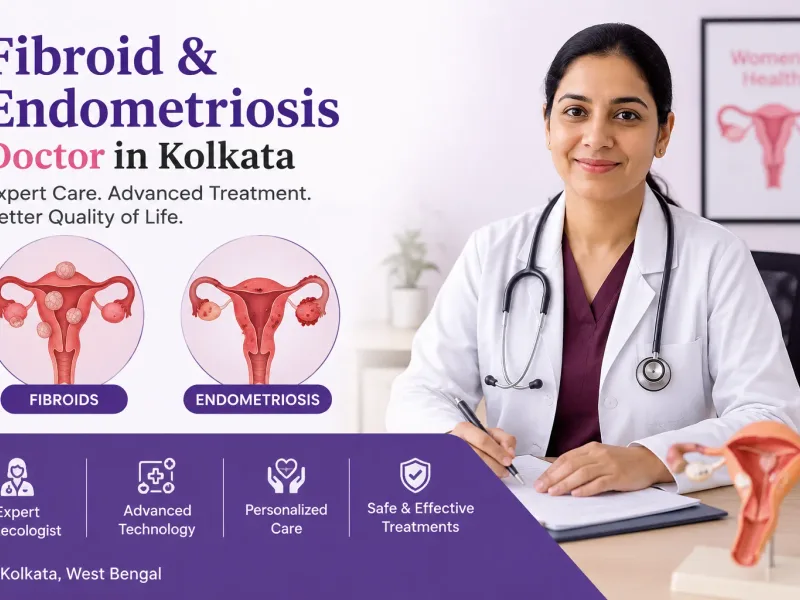
If you are searching for a Fibroid & Endometriosis doctor in Kolkata, choosing an experienced gynecologist with expertise in minimally invasive gynecological surgery is essential. Uterine fibroids and endometriosis are two common but different conditions that can cause pelvic pain, heavy menstrual b
July 31, 2026